

Home Blog Page 418

The Squad He Left Behind: Rescue Volunteers Remember St. Thomas Rescue Chief Carl Fleming

A procession of uniformed first responders filed by the casket of the late St. Thomas Rescue Chief Carl Fleming on Saturday. (Source photo by Judi Shimel)

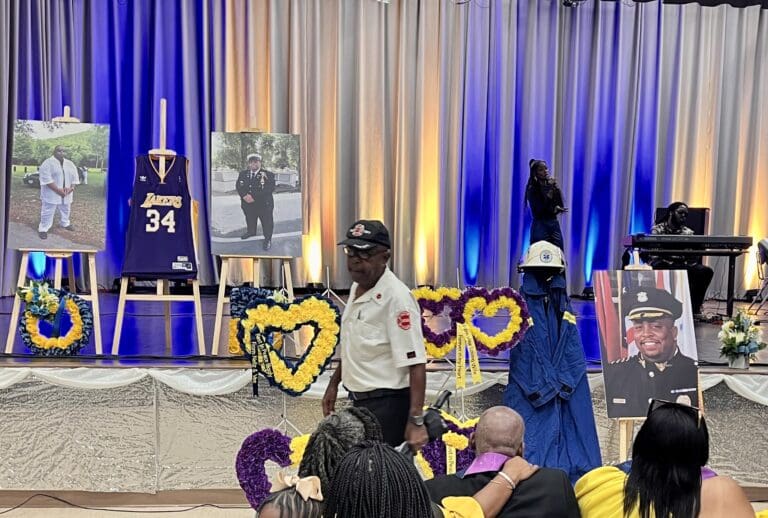
As Police Week winds down in the Virgin Islands, first responders in the St. Thomas-St. John District paid their respects to one of their own. The funeral service for Capt. Carl Fleming, Sr., who served with St. Thomas Rescue, was underway in the auditorium at the Bertha C. Boschulte Middle School on Saturday.

Fleming died April 8 at the age of 58.

As the viewing ended and the service began, uniformed EMTs, rescue responders, and firefighters marched silently past the casket. They took their seats in the back of the hall as the services began.
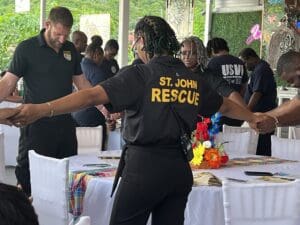
Saturday was a day to remember first responders on St. Thomas and St. John. (Source photo by Judi Shimel)

Outside the auditorium doors, members of the squad Fleming called his “A Team” spoke quietly among themselves. Rescue groups in service on St. Thomas, St. Croix, and St. John are volunteer organizations sometimes called community first responders.

Across the United States, some community responders are affiliated with ambulance services; others are not. The number of active groups is unclear, according to the National Institutes of Health.

And like rescue groups in other areas, local volunteers often have full-time duties as first responders. Victor Adams is one of them.

“I came into contact with Bigley — or Carl Fleming — approximately 18 years ago when I joined the EMS system,” Adams said, “and from the time I joined, he’s been like a big brother to me — mentoring, showing me the ropes.”

Former rescue volunteer Michael Wheatley became a fire captain in West Palm Beach, Fla. Outside the venue where the funeral took place, he described Fleming as “a family man, a community man — a rescue man.”

St. Thomas Rescue founder and President Patrick Benjamin described the group’s contribution to emergency response as “very good.” A veteran volunteer of 40 years, Benjamin said he and Fleming spent years working side by side.

“St. Thomas Rescue is highly trained. We started with first aid — basic first aid. We had to learn CPR, EMS – paramedics,” the president said, adding that some former volunteers are now in the States working as fire chiefs, nurses, and in emergency rooms.

Since he first joined the St. Thomas squad in 1996, Fleming trained and gained expertise at vehicle extractions — pulling victims out of the wreckage at auto accidents. Keridon Williams, a 20-year veteran, said the chief promoted training opportunities for all volunteers.

Today, the organization has about 50 active members.

“St. Thomas Rescue — it still is — a volunteer organization where back in the day, we would have only heavy rescue operations. So, any type of motor vehicle accident, it was rescue who was being called out in the middle of the night … to rappel off the side of the mountains, or to cut people out of cars. Biggs was effective – he was an extrication expert, so he passed on all of those training and all of those tips and techniques to us and on to the younger generation,” Williams said.

Many on the squad said their work as volunteer responders gave their lives a sense of purpose. They credited Fleming for setting an example they could easily follow.

“You mentioned about which call he was on. The question is, which call he wasn’t on. He was always on call; if there was a call for service, he was there,” Adams said.

Appreciation for the community service of V.I. rescue groups was shown later in the day on Saturday as the Prayer House of Faith held an appreciation day for police, firefighters, and members of St. John Rescue. About two dozen first responders joined the Cruz Bay event held to mark the church’s 16th anniversary.
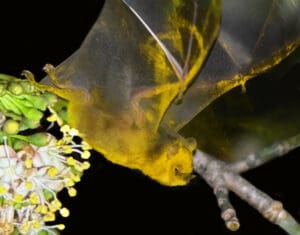
Amazing to Witness the Pollination of a Kapok Tree

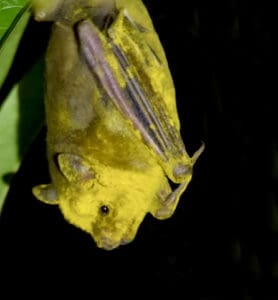
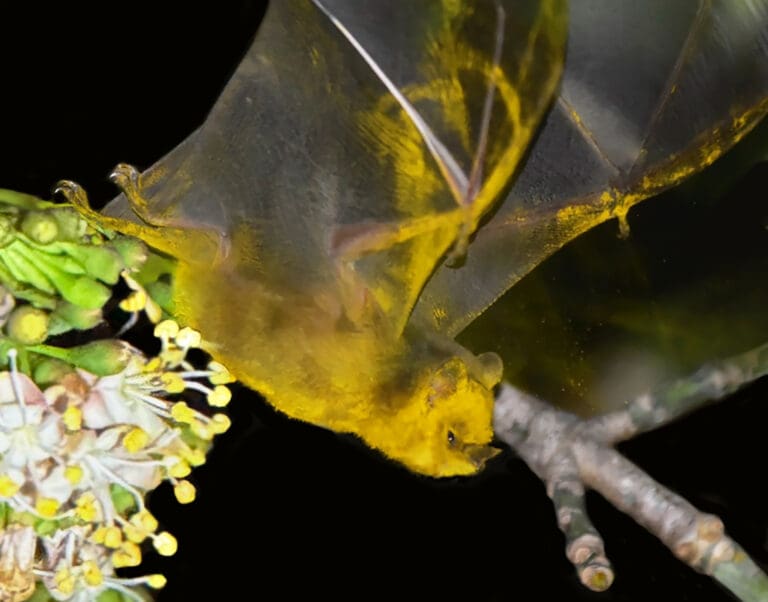
Kapok trees in the Virgin Islands attract local leaf-nosed fruit bats (Artibeus jamaicensis). (Photo Gail Karlsson)

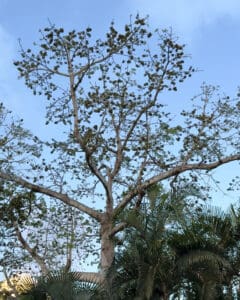
One morning at the Unitarian Fellowship meeting my friend Kim mentioned that the big kapok tree by her place nearby was in bloom, and invited us to come over that evening to check it out. We needed to wait until dark because the flowers only open up at night, to attract the nocturnal fruit bats that are their main pollinators.

This tree is huge, and dominates the skyline.

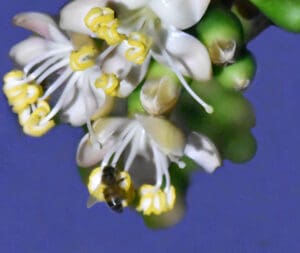
Large kapok (ceiba) trees can produce thousands of flowers all at once. (Photo Gail Karlsson)

I had read that kapoks, also known as silk-cotton trees (Ceiba pentandra), were viewed as sacred trees by the Tainos, the early inhabitants of the Caribbean islands who came up from South America. The Tainos were probably traveling in dugout canoes made from thick kapok tree trunks, and carrying the seeds with them. Reportedly, the Tainos revered the bats attracted to the kapok tree flowers as the spirits of the dead that offered a connection between those still living and the world beyond.

I had never actually seen the bats showing up at one of the trees. The kapoks don’t flower very often, and then it’s not always okay to go around looking for bats at night, especially on other people’s property. So we were grateful for this invitation.

When my husband and I arrived after dinner, it was already dark, a bit late, and it was hard to figure out what was going on. Small areas of the tree were being lit up by other people holding flashlights, and bats were frantically flying around the flowers that were already open. Someone pointed and yelled out ‘there’s one’’ and then that bat quickly sped off and other ones whizzed by out of the shadows. As they flew around they were knocking off dead flower heads, which showered down on us, along with occasional bits of nectar-scented poop. Good to have a hat on.

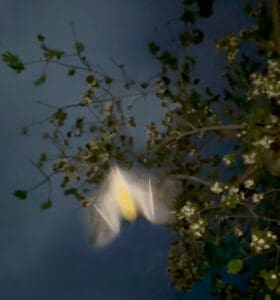
I had my telephoto lens with me, which requires two hands, and I couldn’t hold a flashlight as well. Also, I am not skilled at shooting in the dark, and had trouble focusing on the spots people were pointing at before the bat and circle of light had moved on.

It was challenging to try to focus my camera on bats flying around in the dark. (Photo Gail Karlsson)

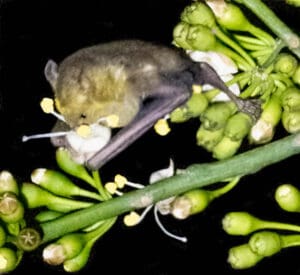
It was all very frustrating and confusing until the tenants on the third floor invited us to come up and look at the mid-level of the tree from their deck. Up there, the bats and flowers were much closer. And one of the tenants was kind enough to hold her flashlight on a few nearby bats long enough for me to get some in-focus photos of them drinking nectar from the center of opened flowers.

Getting close, with someone holding a flashlight steady, I finally got a good look at some of the bats. (Photo Gail Karlsson)

By about half an hour after we arrived, the bats seemed to slow down, maybe because they had already drunk a good bit of nectar from the flowers. Instead of zooming around like crazy, they started dropping down and lying on top of clumps of the opened flowers with anthers sticking up full of pollen.

This bat seemed to drop heavily onto some flowers. (Photo Gail Karlsson)

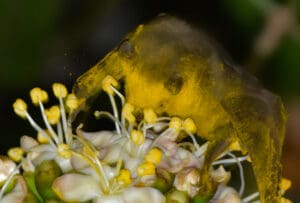
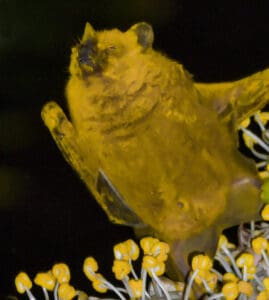
By then the bats’ faces and brown fur were covered with the yellow pollen.

The bats transport the pollen as they move around to other flowers. (Photo Gail Karlsson)

The blooming and pollination process lasts for a few weeks as different sets of flowers on the tree open sequentially. Even though it seemed like there might have been over 100 bats coming to feed, they needed to keep coming back to get around to pollinating all the flower bunches as they opened. The tree had to produce a lot of nectar to keep them coming. Once this frenzy of activity was finished, it might be years before the tree would have the strength to bloom again.

After that first night I went back a few more times to try to understand more about what was happening, arriving well before dark to be ready when the bats started coming.

I prepared by going to the hardware store to get a strong flashlight. They recommended one called ‘Big Larry’ and I enlisted my husband to hold it steady while I tried to get photos of the bats in flight. The people with the balcony were no longer there, so I tried to find a good viewing spot from the ground. There were some relatively low-hanging branches with flowers, but unfortunately, Big Larry’s beam could not really reach that far.

The next day I went back and found an even stronger flashlight – all business, no nickname.

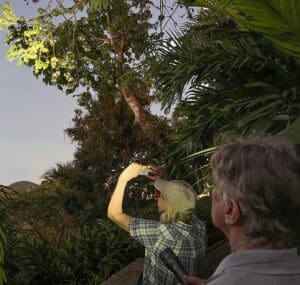
My husband held the flashlight as I tried to video the bats with my phone. (Photo Joan Farrenkopf)

That night I invited the visiting speaker for the Unitarian Fellowship to come with me, because she had missed the first night’s visit. It was particularly thrilling this time because when the bats came several of them swooped down low and circled us. In the dark I heard her exclaim “Mon dieu, il m’a touché”. When I looked over she was rubbing her arm and said she was so surprised she lost her English and reverted to her childhood French. Another night I promised a different tree-loving friend ‘a life-changing experience’ and she was not disappointed.

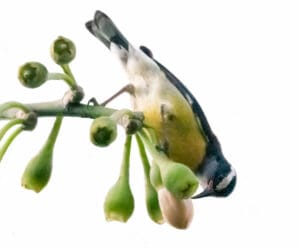
The bats were not the only creatures attracted to the tree’s flowers. When I went by one day in the late afternoon, I could see that bananaquits were investigating the buds. Some bananaquits seemed to be trying to pry open the flower’s tips. Others were more aggressive, poking their sharp beaks into the sides of the flowers as a short cut to getting at the nectar sac without providing any pollination services in exchange.

A bananaquit prepared to pierce a flower to reach the nectar. (Photo Gail Karlsson)

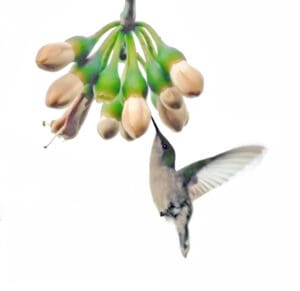
Later on, hummingbirds tried to sneak their long, skinny tongues into the flowers, just as the petals started to crack open.

An Antillean crested hummingbird explored the opening flower buds. (Photo Gail Karlsson)

At dusk, hummingbird moths and bees gathered around as the scent of the opened flowers started spreading through the area. I though the bees would be sleeping by then, but I guess this was an opportunity worth staying up for.

Bees stayed up as night fell to get a turn at the kapok flowers. (Photo Gail Karlsson)

What an adventure to stand underneath this marvelous tree at dusk and join the wild company drawn to its exuberant blossoming.

And then, when it got dark and the bats arrived, there was a wild frenzy that made my heart race. My time there certainly felt like a spiritual experience, connecting me with so many other ways of being in the world, in the night, on this island.

A pollen-covered bat stood still for an intoxicated moment before flying off. (Photo Gail Karlsson)

Gail Karlsson is the author of a photo book Looking for Birds on St. John, as well as two other books about nature in the Virgin Islands – The Wild Life in an Island House, and a guide book Learning About Trees and Plants – A Project of the Unitarian Universalist Fellowship of St. John. Follow her on Instagram @gailkarlsson and at gvkarlsson.blogspot.com.

Encouragement and Inspiration Served Up at UVI St. Thomas Commencement

Graduates cheer and wave their programs in celebration during the University of the Virgin Islands’ 2025 Commencement Ceremony. The joyful energy marked the culmination of years of hard work and dedication. (Source photo by Judi Shimel)

Graduates of the University of the Virgin Islands Orville Kean Campus heard words of praise and reassurance at commencement exercises held Friday on St. Thomas. They heard inspiring words from their guest speaker and shared a sigh of relief from the student chosen from among them to address the crowd.

They also watched as university officials awarded an honorary doctorate to an admired school administrator and military leader.

In spite of ups and downs and facing a changing and uncertain future, they had reached a milestone together — graduation day. More than 150 candidates for associate, bachelor’s, master’s, and doctoral degrees marched across the stage at the Elridge Blake Sports and Fitness Center to accept their diplomas.

UVI President Safiyah George encouraged them and the roughly 130 who graduated Thursday on St. Croix to put their talents to work by serving their community in the V.I.

Relatives, friends and fellow students filled the bleachers in the sports center, cheering on the graduates and cheering the words of guest speaker Hill Harper. Harper is known for his work as an actor in numerous television and film projects, but he is also recognized as a Harvard-educated attorney, author, and scholar.

Faculty members and distinguished guests look on with pride as graduates celebrate their achievements during a packed commencement ceremony, held before a lively crowd of family and friends. (Source photo by Judi Shimel)

The speaker urged graduates to view their commencement as one step toward a life they design for themselves as architects of their own futures.

“I would suggest to you that after you leave this auditorium, you think every day about opening yourself up, opening doors to new people, new ideas, and new information. The way we win in this world — the way we become creative — is to put ourselves out in front,” Harper said.

Actor, scholar, lawyer and author Hill Harper offers inspiration to the UVI Class of 2025 at Friday commencement exercises. (Source photo by Judi Shimel)

Joleen Buchanan thanked the Class of 2025 for giving her a chance to deliver brief remarks. “Let’s be real; nothing here came easy, but that’s what made us tough and tenacious,” Buchanan said.

To prepare her address, the class speaker said she took an informal survey of her fellow students about life in the UVI dorms, life as student commuters, cafeteria food and forming relationships with UVI faculty and staff.

For Harper, the guest speaker, it all added up to a sense of family in the UVI community —something he said would give graduates an advantage as they made their way out into the world.

“There’s a family feeling here that’s so palpable and powerful. You can leverage that here to attract people, but you can also leverage that to go places and spread, and be a leader with that same spirit,” he said.

Spirits in the audience rose moments later as George and the board of trustees Chair Henry Smock honored Ivanna Eudora Kean H.S. Principal Sally Petty with a sash and certificate as an honorary Doctor of Humane Letters. Petty, who also serves as brigadier general of the Virgin Islands National Guard, is one of two military leaders honored by UVI in 2025.

UVI board of trustees Chair Henry Smock and President Safiyah George award National Guard Brigadier General Sally Petty an honorary doctorate degree. (Source photo by Judi Shimel)

Both Petty and retired Adjutant General Deborah Howell are UVI alumnae. “We are proud to honor these two remarkable women and UVI alumnae who lives exemplify the highest ideals of leadership, courage, and service. Their accomplishments are an inspiration to our students and to the entire Virgin Islands community,” George said.

Op-Ed: The Real History of Indigenous People in the Virgin Islands, Part 2

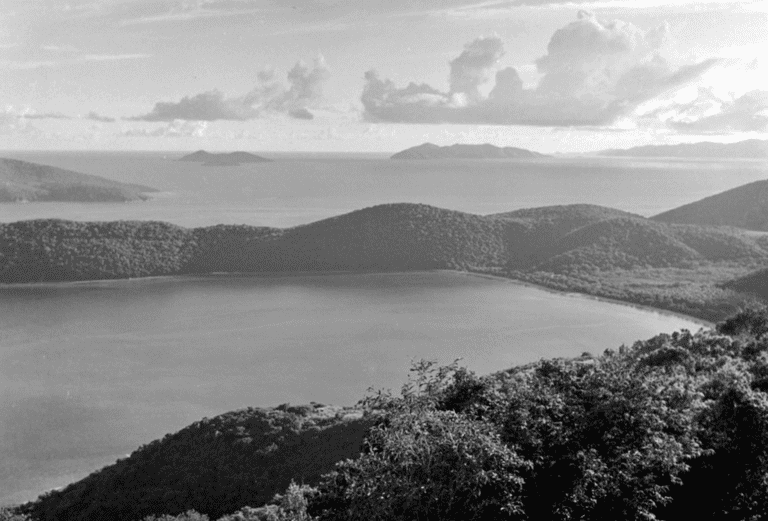
A view of the Magens Bay watershed in 1962, including the Peterborg peninsula, as seen from the Drake's Seat lookout. (Photo by Ray Miles)
A view of the Magens Bay watershed in 1962, including the Peterborg peninsula, as seen from the Drake’s Seat lookout. (Photo by Ray Miles)

This is the second and final of a two-part series article on the indigenous people of the Virgin Islands. At the end of the first article, I mentioned that there were no such names as Arawaks and Caribs Indians. According to historians, Arawak is a language not a people. Thus, what is known as Arawakan is a family of languages. These languages were widely spoken by indigenous people throughout the Amazon River Basin, the Orinoco Valley, Guianas, and in Columbus’s time and throughout the Caribbean region as well.

Olasee Davis
Olasee Davis (Submitted photo)

Many different ethnic or tribal groups spoke the Arawakan languages, depending on where they lived. For example, people in the Caribbean who speak English don’t called themselves Englishmen. The same goes for people who speak Spanish in the Caribbean — they don’t call themselves Spaniards. The various ethnic groups (Indians) in the Caribbean when Columbus arrived spoke the Arawakan-based language. However, they cannot all be called Arawak, according to archaeological findings.

Nonetheless, the Arawakan-speaking people began to colonize the Lesser Antilles from the Orinoco region of South America about 4000 B.C. As we learned in the first article, the Taino dominated the Greater Antilles. This ethic groups developed out of the early Arawakan-speaking settlers in the Caribbean, especially in the Greater Antilles.

Historians have divided the Taino region into three groups. The Western Taino includes central and eastern Cuba, Jamaica, and the Bahamas. Puerto Rico and Hispaniola were known as the Classic Taino, and the islands between the Virgin Islands and Antigua were known as the Eastern Taino. Archaeologists have learned that Arawakan languages were spoken by different ethic groups of indigenous people in the Caribbean region and not as we were taught in grammar school.

Now, the word Carib is not an indigenous name of the people that live in the Caribbean, South and Central America region. The earliest mention of Caribs is what Columbus’s journal on Nov. 26, 1492, noted, “All the people that he has found up to today, he says, are very frightened of those of Caniba or Canima.” If you noticed, Columbus mentioned a place where people live rather than the name of the people themselves. It was from this point that people and later a place came to be known as Caniba or Canima, modified in the Spanish writing calling the Arawakan-speaking indigenous people Caribi or Caribe and where they lived in the Caribbean.

The rest is history. The printing press of Europe got a hold of the name ‘Carib, like Indian’ and “West Indies,” although it was based on a mistake that remains forever in the human vocabulary. In today’s literature of the indigenous people of the Caribbean region, you will see the name Callinago, Kalinago, or Calliponam, which is what the natives called themselves. The island of Dominica is one of the few places in the Caribbean region where the Kalinago people still thrive today. Another myth is that the “Islands Caribs” ate people. That is another lie of the European printing press.

I want to mention some pre-Columbian sites in the northern Virgin Islands. Krum Bay on the south side of St. Thomas, known as “Sub Base,” has three pre-ceramic archeological sites. The three sites are Krum Bay 1 (VAm3-5), Cancel Hill ( VAm3-8), and Grambokola Hill (VAm3-7). These sites represent the earliest known human occupation in the northern Virgin Islands. However, the sites have been heavily impacted by industrial, military, and road construction since the 1940s.

The Tutu pre-Columbian site has been destroyed with a shopping mall or severely impacted. Botany Bay on the West End of St. Thomas was known historically for running slaves (Maroons) who escaped to Puerto Rico for freedom and is another pre-Columbian site. This site is gone with the wind of individual mansions built on the hilltops of Botany Bay Estate and possibly in the future a hotel development near the bay. This site also had “Native American Petroglyphs.’”

Workers excavate a pre-historic deposit site at Magens Bay in 1918. (Photo by Theodoor DeBooy and John T. Faris)

In 1976, the Magens Bay flatlands, at the foothills of the Magens Bay watershed, was listed as Magens Bay Archeological District on the National Register of Historic Places in the United States and the Virgin Islands. The area contains several artifacts exposed all over the ground, including an Indian village site dating back to about 700 A.D. However, the daily activities on the site relative to the recreation area, such as parking site and cleaning of the grounds, impact additional sites in the area.

A few years ago, probably in the 1970s or early ‘80s, a land use plan project was conducted in the watershed of Magens Bay to integrate the geological, faunal, botanical, sociological, and other disciplines into the investigation of the Magens Bay pre-Columbian site. During the investigation, about 60 acres of Peterborg, an arm of the Magens Bay watershed, was subdivided for development. From what I was told, there were no public hearings on the proposed development site. You don’t want to hear my comments. I will say this, however: we don’t care about our history.

Believe me, it is only a handful of residents of these islands that show interest in what remains of our natural, cultural, historical, and marine archeological resources of the Virgin Islands. There are pre-Columbian sites on Water Island as well as Hassel Island. Some of our surrounding cays, inlets, and small islands of the Virgin Islands once inhabited by indigenous people have pre-Columbian sites. For example, the eastern coast of Congo Cay off the northwest side of St. John is called on the Scorpion Survey map “Indian Inscription Point,” which refers to the petroglyphs carved in the rock.

On the island of St. John, there are several pre-Columbian sites, such as Cinnamon Bay and Trunk Bay, revealing the presence of the Taino people. I will say this: what makes these islands so rich in history are those pre-Columbian sites that remind us of a culture that existed for thousands of years before these islands were called by their colonial names of the United States of the Virgin Islands.

— Olasee Davis is a bush professor who lectures and writes about the culture, history, ecology and environment of the Virgin Islands when he is not leading hiking tours of the wild places and spaces of St. Croix and beyond.

Molloy Denies Government’s Bid for Stay To Consider Death Penalty in Dangleben Case

Chief District Judge Robert Molloy has denied the Justice Department’s request for a 120-day stay in the murder case of Richardson Dangleben Jr. in an opinion issued late Friday afternoon upbraiding the government’s last-minute bid to seek the death penalty more than a year after it said it would not.

Molloy said not only has the deadline long passed for the government to declare it would seek capital punishment, but doing so now would clearly disadvantage Dangleben who faces first-degree murder, assault and gun charges in the July 4, 2023 shooting death of V.I. Police Detective Delberth Phipps Jr. on St. Thomas.

Dangleben has pleaded not guilty, and federal prosecutors signaled last February that they would not seek the death penalty.

However, following a Jan. 20 executive order by President Donald Trump entitled “Restoring the Death Penalty and Protecting Public Safety,” U.S. Attorney General Pam Bondi notified all Justice Department employees that a “Capital Review Committee” would be evaluating all decisions to not seek such punishment in eligible cases charged during the Biden Administration that have not yet resulted in a conviction.

The V.I. Justice Department subsequently asked for a 120-stay in the Dangleben case, which Public Defender Matthew Campbell strongly opposed, writing in a brief on the matter in March that considering the death penalty now, more than a year into proceedings, had effectively pulled the rug out from under his client “based on a whim.”

Moreover, had he known the government might reverse course, Dangleben would never have requested a continuance when he was set to go to trial last October and the matter would now be moot, Campbell said.

On Friday, Molloy agreed.

“The Government has provided little to no evidence to support its request for a stay of proceedings. It argues that, because the trial in this matter has been continued without date, any delay as a result of a stay is not prejudicial to Defendant. However, the Government cannot dispute that the Court and the parties proceeded for over a year under the impression that the Government would not be seeking the death penalty. The matter was set for trial for a date certain and that date was continued, in part, because of Defendant’s reliance upon the Government’s notice not to seek the death penalty,” Molloy wrote in his nine-page opinion.

“Thus, Defendant now would be prejudiced by the change of position by the Government. Rather than addressing the elements necessary to support a motion for stay, as Defendant notes, the Government focuses on timeliness rather than any authority to withdraw or amend a ‘no-seek’ notice after such a notice has been filed,” the judge said.

Moreover, because Dangleben has been proceeding according to the “no-seek” decision, “he has been without the benefit of learned counsel for over a year and, thus, his trial preparation, as well as preparation for any re-review by the Capital Review Committee, is not what it would have been had a ‘no-seek’ notice not been filed,” Molloy wrote. “Consequently, despite the fact no trial date is currently set, the prejudice to Defendant cannot be overstated. Usually, when the death penalty is a consideration, learned counsel is appointed on behalf of the defendant at the earliest opportunity possible.”

In this case, learned counsel — an attorney expert in death penalty cases — was not appointed until Feb. 24, which Molloy said was unquestionably detrimental to Dangleben.

“Having Learned Counsel assist in persuading the government not to seek the death penalty is an immensely favorable outcome for the defense. In the matter at bar, relying on the United States’ representations not to seek the death penalty, Defendant did not immediately request the appointment of Learned Counsel. Thus, Defendant has no meaningful opportunity to submit mitigation evidence now in the timeframe the Government is seeking to make a decision. Defendant’s trial preparation, therefore, has been affected and any change to the United States’ position would be detrimental thereto,” Molloy wrote.

“The Court also finds that a stay would not simplify the issues and the trial of the case. … As mentioned above, the Government is requesting a 120-day stay in order to determine whether it will be seeking the penalty of death against Dangleben. This by no means simplifies any issue pending before the Court. In fact, to the contrary, if this case were to proceed as a death-penalty case, the complexities of this case will be multiplied exponentially. It is not lost on the Court that the Government, in effect, received a de-facto stay while the parties briefed this issue coupled with the Court’s consideration of the merits of a stay,” the opinion states.

“Nonetheless, the fact remains that the court-ordered deadline for filing a Section 3593 notice has expired. In sum, the Court finds that these considerations weigh against the granting of a stay,” Molloy wrote in denying the government’s motion.

A status conference is scheduled for 11 a.m. on May 20 at which both sides “shall be prepared to discuss the scheduling of all pending motions for disposition.”

AG Rhea Joins Bipartisan Coalition Opposing Federal Ban on State AI Regulations

Virgin Islands Attorney General Gordon C. Rhea has joined a bipartisan coalition of 39 attorneys general urging Congress to reject a proposed budget amendment that would prevent states from regulating artificial intelligence for the next decade, a press release announced Friday.

The letter, spearheaded by the attorneys general of Colorado, Tennessee, New Hampshire, and Vermont, opposes a U.S. House Energy and Commerce Committee proposal to prohibit state enforcement of any law or regulation concerning AI and automated decision-making systems, according to the press release.

“As technology evolves, it is crucial that states maintain the ability to protect their citizens from the risks of artificial intelligence,” Rhea said in a press release Friday. “Federal inaction shouldn’t leave consumers unprotected — our laws are essential to ensuring safety and fairness in a rapidly changing landscape.”

The attorneys general argue that state-level safeguards have long been developed through a process of careful deliberation and input from stakeholders, including consumers, industry leaders, and advocates, and must be preserved to respond to the rapid development and potential dangers of AI technology, the press release stated.

While AI offers significant economic and social opportunities, the letter highlights the urgent threats it also poses, including the spread of explicit content, election interference, deception, exploitation, and harassment. Without a robust federal framework to fill the void, the proposed moratorium would leave Americans vulnerable and eliminate state leaders’ ability to act on behalf of their residents, the release stated.

“If enacted, the amendment would strip away essential state protections without replacing them with a viable federal regulatory framework and silence state leaders who are best positioned to respond,” the letter states.

Joining Rhea and the four lead states were attorneys general from jurisdictions including California, New York, Texas, Illinois, and Washington, as well as U.S. territories such as American Samoa and the District of Columbia, the release stated.

The coalition urges Congress to reject the AI moratorium provision currently attached to the budget reconciliation bill, it said.

DOJ, Emory University Partner To Strengthen Forensic Response to Sexual Assault in V.I.

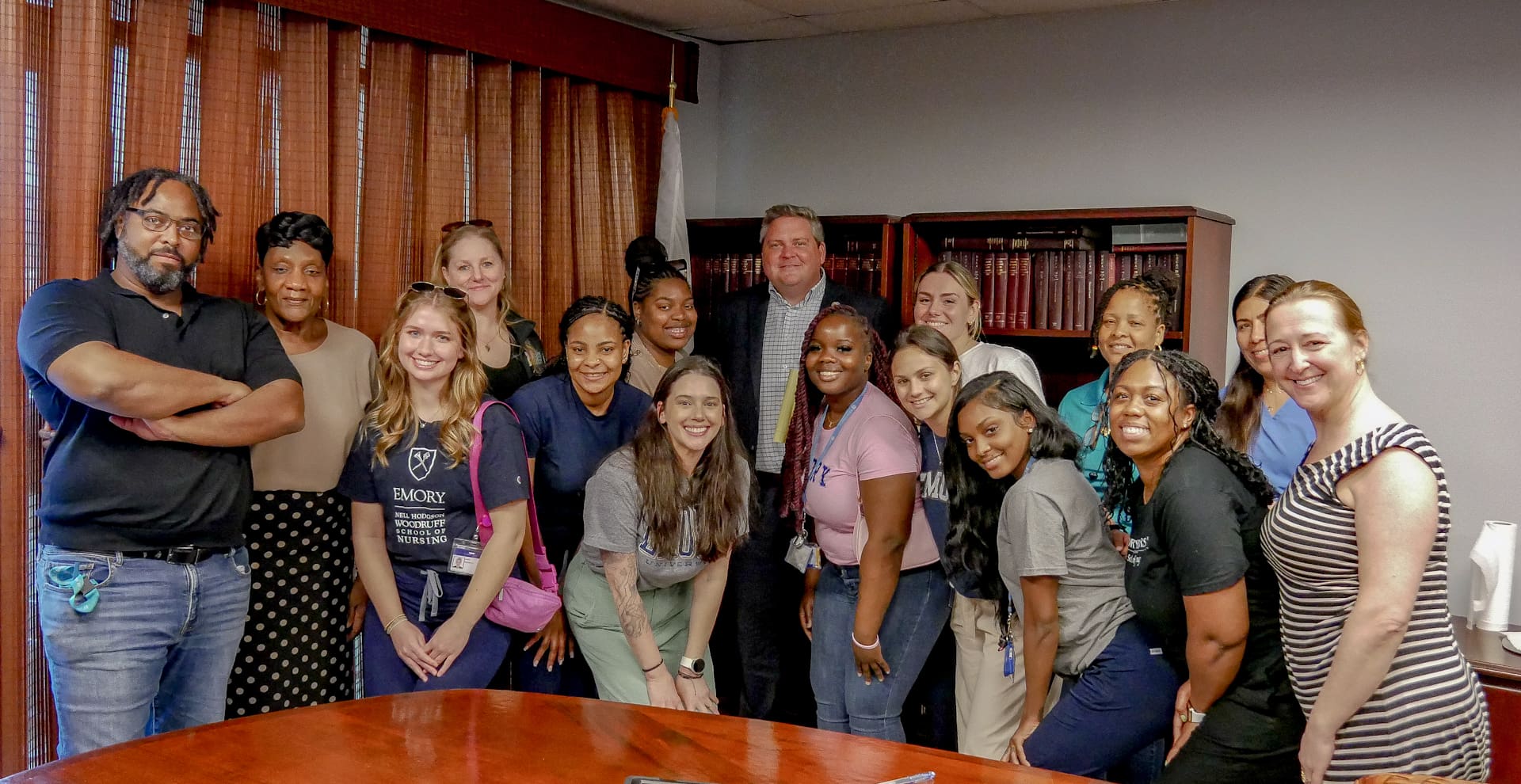
Representatives from the V.I. Department of Justice, Emory University’s School of Nursing, the Virgin Islands Police Department, and the Family Resource Center gather on St. Thomas during a recent visit to discuss the development of a Sexual Assault Response Team as part of the SAFE Program Grant initiative. (Photo courtesy DOJ)

Seventeen nurses in the U.S. Virgin Islands have completed specialized training to administer rape kits as part of a new partnership between the V.I. Justice Department and Emory University, Attorney General Gordon C. Rhea announced Friday.

The training, made possible through the Special Assistance Funding Program Grant, is a step toward creating a local network of Sexual Assault Nurse Examiners and establishing a coordinated Sexual Assault Response Team to improve the territory’s response to sexual violence, according to the press release.

“This partnership represents a significant step forward in how we support survivors of sexual violence in the Virgin Islands,” said Rhea. “By equipping our nurses with specialized forensic training and building a comprehensive response team, we are strengthening our commitment to justice, compassion, and healing for victims.”

The collaboration included a March 2025 site visit to St. Thomas by the Emory SAFE Program team, which conducted a community needs assessment. During their visit, the team, which included 10 nursing students, met with officials from the Justice Department, the Virgin Islands Police Department, and the Family Resource Center to share their findings. The assessment will help guide development of the SART model and enhance victim care and forensic evidence collection in sexual assault cases, the press release stated.

The DOJ’s Criminal Division in the St. Thomas-St. John district is leading the local implementation of the grant, the release stated.

Eleanor White Dies

0

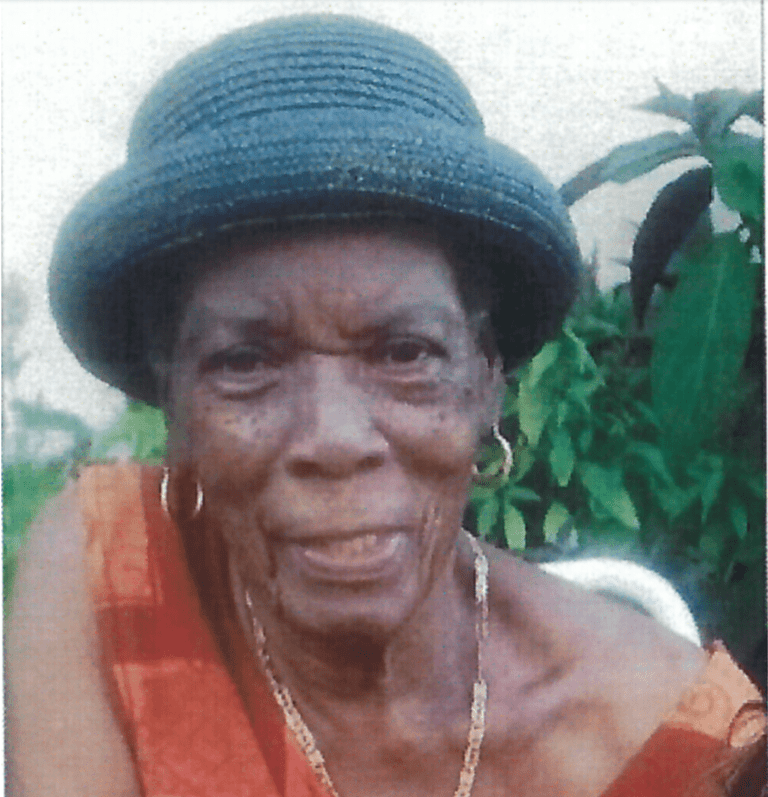
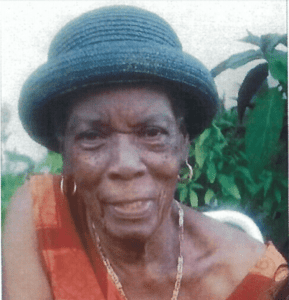
The family of Eleanor “Betty” White is saddened to announce her passing on April 25, 2025.

Eleanor White

Friends and family viewing will be held at Divine Funeral Services on May 16, between 3 p.m.-5 p.m. 

Funeral Services is scheduled to be on May 19, at Church of God Prophecy, Christiansted, St. Croix, viewing 9 a.m., service 10 a.m.  Interment follows to the Kingshill Cemetery. 

SPF Loan Program Closes $500,000 in Residential Solar and Battery Systems

The Virgin Islands Energy Office (VIEO) is proud to announce that this week it has closed on over a dozen renewable energy loans for homeowners through its Solar Plus Financing (SPF) pilot program. 

Michael Jaffurs, VIEO deputy director, alongside Wayne Crooke, Carol Crooke, K’Nisha Gumb, VIEDA loan officer, Joanna Williams, VIEDA loan assistant, and Nichola Richards sign documents Thursday at VIEO’s St. Thomas office during a SPF pilot program loan closing. (Submitted photo)

The seventeen low interest loans, which combined will enable the installation of over $500,000 worth of solar and battery energy storage systems, were all closed for $0 down.

Over the course of the coming weeks VIEO approved solar and battery vendors will work to complete the installation of renewable energy systems designed to save each participating homeowner a minimum of 10% off their old utility bills. The 10 percent minimum savings accounts for the net savings from the solar install plus the monthly financing repayment that will be applied directly to their bill. When finished, this latest wave of SPF funded installations will bring the program’s total installed capacity of solar to over 136 kW, alongside about 251 kWh of battery energy storage. 

Brenda Benjmain is no stranger to VIEO programs, having previously taken advantage of the Sun Power Loan 

program the agency ran during the 2010s to install a solar water heater. With a utility bill that routinely crossed north of $700 a month, Benjamin said that applying for a low to no interest renewable energy and battery storage loan from VIEO was a “no brainer.” She praised VIEO’s staff for the attentiveness they showed throughout the loan process, especially since getting finally approval took longer than she expected. Benjamin credited her ability to successfully navigate the application process down to being unafraid to make follow up calls to VIEO staff, and a dedication to double checking her paperwork for completeness prior to submitting it. 

SPF closed its application window in October of 2022 after eliciting strong interest from the public and garnering  over 350 applications. The program is funded and administered by VIEO in partnership with the Virgin islands Economic Development Authority (VIEDA) who manages the loans over their 15 year life cycle, and the Virgin Islands Water and Power Authority (WAPA) who is responsible for recouping the loan repayments by directly charging the consumer on their utility bill. 

The homeowners who’ve applied for SPF have on average submitted plans that call for 5 kW of PV and 13.5 kWh 

of battery energy storage solutions (BESS) to be installed. When fully charged these renewably powered batteries will be able to meet the home’s energy demands for hours at a time, perfect for weathering the types of service interruptions most common in the territory. During the application process enrollees had their home’s energy profiles analyzed to ensure that the system’s that they invested in would be able to realize a 10% savings over their historic utility bill during the life of the 1 percent interest loan.

Alexis Leycock is a new homeowner and said that she wants to do everything she can in her power to make sure she was in control of her utility bill. She said that she immediately recognized SPF as a “great offer” and is pleased with the size of the solar and battery system that she was able to purchase with VIEO’s help.

“I am excited that my bill will be lowered,” Leycock said.

36th Legislature of the Virgin Islands’ Calendar

MAY 20

Committee on Government Operations, Veterans Affairs and Consumer Protection

12 P.M.

Earle B. Ottley Legislative Hall, St. Thomas.

BLOCK I

Bill No. 36-0007 A Resolution honoring and commending James Sasso for distinguished service in the mortuary and funeral service industry. 

Invited Testifiers:

Mr. Glen Kwabena Davis, Resident

Mr. Patrick Farrell, Executive Director, Office of Veterans Affairs

Ms. Ty-Shel Sasso Carr, Relative

Ms. Bernice Turnbull, Resident

Jelani Sasso, Relative

Kyza Callwood, Resident

BLOCK II

Bill No. 36-0026 An Act amending title 23 Virgin Islands Code, chapter 10, by adding a subchapter VI to establish the “Virgin Islands Meteorological Office” within the Virgin Islands Territorial Emergency Management Agency. 

Invited Testifiers:

Mr. Daryl D. Jaschen, Director, Virgin Islands Territorial Emergency Management Agency

Ms. Sanaa A. Burke, Meteorology & Climate Science Major, University of Delaware

BLOCK III

Bill No. 36-0029 A Resolution honoring and commending Sonya Hough, the creator of the St. Croix “Crucian” Hook Bracelet and proprietor of one of the first hand-wrought jewelry stores in St. Croix. 

Invited Testifier:

Pam Hough, Daughter of Sonya Hough

MAY 23

Committee on Budget,  Appropriations and Finance

10 a.m.

Earle B. Ottley Legislative Hall, St. Thomas

BLOCK I

Bill No. 36-0032 An Act amending title 33 Virgin Islands Code, subtitle 3, chapter 111, section 3080 by limiting the salary amount used to compute the service retirement annuity for the Governor and the Lieutenant Governor of the Virgin Islands

Invited Testifiers:

Honorable Kevin McCurdy, Commissioner, VI Department of Finance

Mr. Angel E. Dawson, Jr., Administrator, Government Employees Retirement System

Ms. Cindy L. Richardson, Director, Division of Personnel

Bill No. 36-0068 An Act appropriating $5,000,000 from the General Fund of the Treasury of the Government of the Virgin Islands to the Virgin Islands Police Department for the purchase and installation of rapid-shutter motion cameras throughout the territory

Invited Testifier:

Honorable Mario M. Brooks, Commissioner, VI Police Department

BLOCK II

The Committee on Budget, Appropriations and Finance will receive testimony on the following lease agreements:

Bill No. 36-0062 An Act approving the lease agreement between the Government of the Virgin Islands, acting through its Commissioner of the Department of Property and Procurement, and the United States Department of Commerce, National Oceanic and Atmospheric Administration for a portion of the telecommunications tower located on Parcel R-22 of Tract 1 Estate Nazareth, No. 1 Red Hook Quarter, St. Thomas

Invited Testifier:

Mr. Vincent Richards, Assistant Commissioner, VI Department of Property and Procurement

Bill No. 36-0089 An Act approving the lease agreement between the Government of the Virgin Islands and PEO Productions, LLC d/b/a WSTA Radio, for Parcel No. 121 Submarine Base, No. 6, Southside Quarter, St. Thomas, Virgin Islands, Parcel No. 167 Subbase, No. 6, Southside Quarter, St. Thomas and Parcel No. 171 Subbase, No. 6, Southside Quarter, St. Thomas 

Invited Testifiers:

Mr. Vincent Richards, Assistant Commissioner, VI Department of Property and Procurement

Mr. Peter Ottley, President, WSTA Radio

MAY 27, 2025

Committee on Health, Hospitals and Human Services

10 a.m.

Earle B. Ottley Legislative Hall, St. Thomas.

BLOCK I 10:00 A.M. – 1:00 P.M.

Bill No. 36-0050 An Act repealing and reenacting with amendments title 27 Virgin Islands Code, chapter 20, relating to the regulation of the profession of social work and social workers

Bill No. 36-0051 An Act amending title 27 Virgin Islands Code, chapter 20 by establishing the Virgin Islands Board of Social Work Licensure

Bill No. 36-0043 An Act amending title 19 Virgin Islands Code, part VI, chapter 53, subchapter IV, section 1481 by increasing the penalties for violation of sanitation laws

Invited Testifiers:

Honorable H. Nathalie Hodge, Commissioner, Department of Licensing and Consumer Affairs 

Honorable Averil E. George, Commissioner, Department of Human Services

Ms. Juliette Millin, Chairperson, Virgin Islands Board of Social Work

Ms. Yvonne Woods, PhD, MSW, CSW, Program Director and Chairperson, Virgin Islands Board of Social Work 

University of the Virgin Islands 

Honorable Justa Encarnacion, Commissioner, Department of Health

Ms. Sophia Joseph Parrilla, PhD., Clinical Director, Island Therapy Solutions 


BLOCK II 1:40 P.M. – 4:00 P.M.

The Department of Human Services will provide a detailed overview on the status of the territory’s Head Start program. The presentation will highlight key aspects of early childhood education and support services, as well as examine the potential impact of proposed federal cuts on the program. 

Invited Testifier:

Honorable Averil E. George, Commissioner, Department of Human Services

MAY 28, 2025

Older Americans’ Mock Session

10:00 A.M.

Earle B. Ottley Legislative Hall 

MAY 29, 2025

Committee on Disaster Recovery, Infrastructure and Planning

10:00 A.M.

Frits E. Lawaetz Legislative Conference Room, St. Croix.

BLOCK I 

The Committee will receive testimony from the Office of Disaster Recovery on the status and effectiveness of ongoing disaster recovery efforts funded through FEMA in the aftermath of Hurricanes Irma and Maria, with a focus on the following key areas: 

• A comprehensive status update on FEMA-funded disaster recovery projects 

• The Envision Tomorrow Program 

• An evaluation of the Super Property Management Office and whether it is achieving its intended purpose. An assessment of the effectiveness of bundling projects to expedite recovery efforts 

• A discussion of the challenges faced in executing projects in the Virgin Islands, including workforce constraints, permitting delays, procurement issues, or federal coordination 

• A reflection on the eight-year recovery timeline since Hurricanes Irma and Maria, highlighting both progress and remaining obstacles 

Invited Testifier: 

Adrienne L. Williams-Octalien, Director, Office of Disaster Recovery 

BLOCK II 

The Committee will receive testimony from the Department of Planning and Natural Resources on the implementation of the Comprehensive Land and Water Use Plan, including a review of: 

• Progress made to date 

• Current or anticipated challenges 

• The projected timeline for next steps in the implementation process 

Invited Testifier: 

Honorable Jean-Pierre Oriol, Commissioner, Department of Planning and Natural Resources

MAY 30, 2025

Committee on Government Operations, Veterans Affairs and Consumer Protection

10:00 A.M.

Earle B. Ottley Legislative Hall

Jobs - Click Here