


The 250th anniversary of the American story is approaching and an important question emerges: who is represented in the history we honor—and who is overlooked?
The popular American story of Emancipation is often told through a lens rooted in the legacy of the American Revolution and extending from the 1863 Emancipation Proclamation to Juneteenth. That narrative presents freedom as the gradual fulfillment of ideals first declared in 1776. From the beginning, though, the nation’s founding was marked by contradiction: a revolution for liberty that allowed slavery to endure. This familiar story bypasses a distinct legacy of self-liberation that unfolded nearly two decades earlier on our own Caribbean shores.
On July 3, 1848, thousands of enslaved Crucians refused to wait for distant authorities to decide their fate. Organized by Moses Gottlieb, known as “General Buddhoe,” more than 9,000 laborers marched on Fort Frederik, demanding immediate freedom. Their disciplined and unified action forced Governor-General Peter von Scholten to declare universal emancipation. It remains one of the clearest examples in the Caribbean of enslaved African descendants collectively seizing their own liberty.
Juxtapose this legacy to the American Revolution, where ideals of freedom coexisted with the continued enslavement of African descendants. During the war, both British and American forces used the promise of liberty as a strategic tool. Lord Dunmore’s 1775 proclamation offered freedom to enslaved people who fled to British lines, prompting thousands to take that path. At the same time, Black soldiers served in the Continental Army, including in units like the 1st Rhode Island Regiment.

For African Americans, freedom during the Revolution was uncertain and conditional—shaped by war, allegiance, and shifting policy. Liberty, under these conditions was often tied to the outcome of imperial conflict. On St. Croix, by contrast, it was demanded directly—asserted at the gates of colonial authority.
Despite these different paths, the aftermath of emancipation followed a similar pattern. In the Danish West Indies, freedom did not dismantle the plantation system. The Labor Act of 1849 imposed strict controls on wages, contracts, and mobility, binding newly freed people to plantation labor under coercive conditions. Resistance continued, culminating in the 1878 Fireburn, when women like Queen Mary Thomas led a mass uprising against the system that had replaced slavery.
On the mainland, the end of slavery in 1865 brought a similar struggle. Reconstruction briefly expanded rights, but those gains were eroded by Jim Crow laws and sharecropping, systems designed to preserve economic control and racial hierarchy. Across both contexts, emancipation marked a beginning—not the fulfillment—of freedom.
Today, this dual history is reflected in two distinct commemorations: Juneteenth (June 19th), nationally, and Emancipation Day (July 3rd) in the Virgin Islands. Both recognize the end of slavery, yet they tell different stories—one of delayed federal enforcement, the other of collective self-liberation. As the country marks its 250th anniversary, rooted in the American Revolution, it is important to expand the boundaries of national memory. The story of American independence is incomplete if it overlooks the experiences of those in the territories.
So, where do we go from here? To truly honor the dual legacies of 1776 and 1848, our national narrative must evolve from passive acknowledgment. We must bridge the gap between mainland and territorial history by ensuring that the stories of General Buddhoe, the 1st Rhode Island Regiment, and the Queens of the Fireburn are part of the national dialogue and are essential chapters in the broader American struggle for freedom.
This history also requires that we deal with present-day issues. For more than a century, the Insular Cases have upheld a framework in which millions of Americans who reside in U.S. territories lack full constitutional protections and voting representation. These decisions continue to shape our reality today.
By comparing the pension files of Black Patriots with the names inscribed in the Book of Negroes and the handbills of Fort Frederik, a broader, more complete history of American agency comes to light. It is a history that proves freedom was both negotiated in the trenches of the American republic and demanded at the gates of Caribbean forts. As the country looks ahead to its next 250 years, bringing together these distinct legacies is how we truly forge a more comprehensive future.
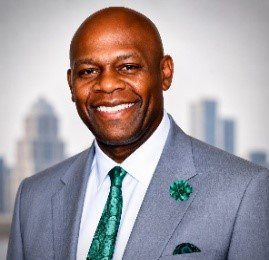
Moleto A. Smith Jr. is a respected Virgin Islands leader, community advocate, and policy strategist based in St. Thomas, U.S. Virgin Islands. His work frequently centers on optimizing systems to drive results, ensure community transparency, and preserve the vital cultural legacy of the Territory. The views expressed are his own.