


Wednesday Will Be Partly Cloudy, Scattered Showers, Breezy, 86°F – EXCESSIVE HEAT –
Updated 6/16/26 at 3:31 p.m. AST
Weather updates are posted by Jesse Daley, who has been reporting on weather for the Source since 2022 and holds an Undergraduate Certificate in Weather Forecasting from Pennsylvania State University.
VI SOURCE WEATHER UPDATES
! A VI Source Weekly Weather Video is available here!
! VI Source article: 2026 Atlantic Hurricane Season Officially Begins as Forecasters Urge Continued Preparedness
WEDNESDAY’S WEATHER FORECAST: 6/17/26
Happy Wednesday!
According to the National Weather Service (NWS), the weather in San Juan, Puerto Rico, Wednesday is forecast to be mostly sunny to partly cloudy, with a chance of scattered showers. The temperature is forecast to rise to around 86°F (30°C), and the heat index is expected to continue to be high. Heat alerts could be issued. Winds will be gusty, coming from the east, at approximately 15 to 21 mph, with gusts reaching 26 mph. The chance of rain on Wednesday is 30%.
For Wednesday night, conditions are expected to be partly cloudy with isolated showers. The low temperature is forecast to fall to about 77°F (25°C). Winds will be gusty, coming from the east, at approximately 17 to 20 mph. The chance of rain on Wednesday night is 20%.
“Mostly stable weather will continue Tuesday night and Wednesday, with a brief increase in showers and isolated thunderstorms by Thursday. Warm-to-hot conditions will prevail for the rest of the week, particularly over urban areas and lower elevations of the islands. Breezy to locally windy conditions will continue across coastal areas of the islands for the next several days. Unsecured objects may blow around. Moderate concentrations of Saharan Dust will arrive by Thursday, bringing hazy skies, reduced visibility, and poor air quality,” the NWS said.
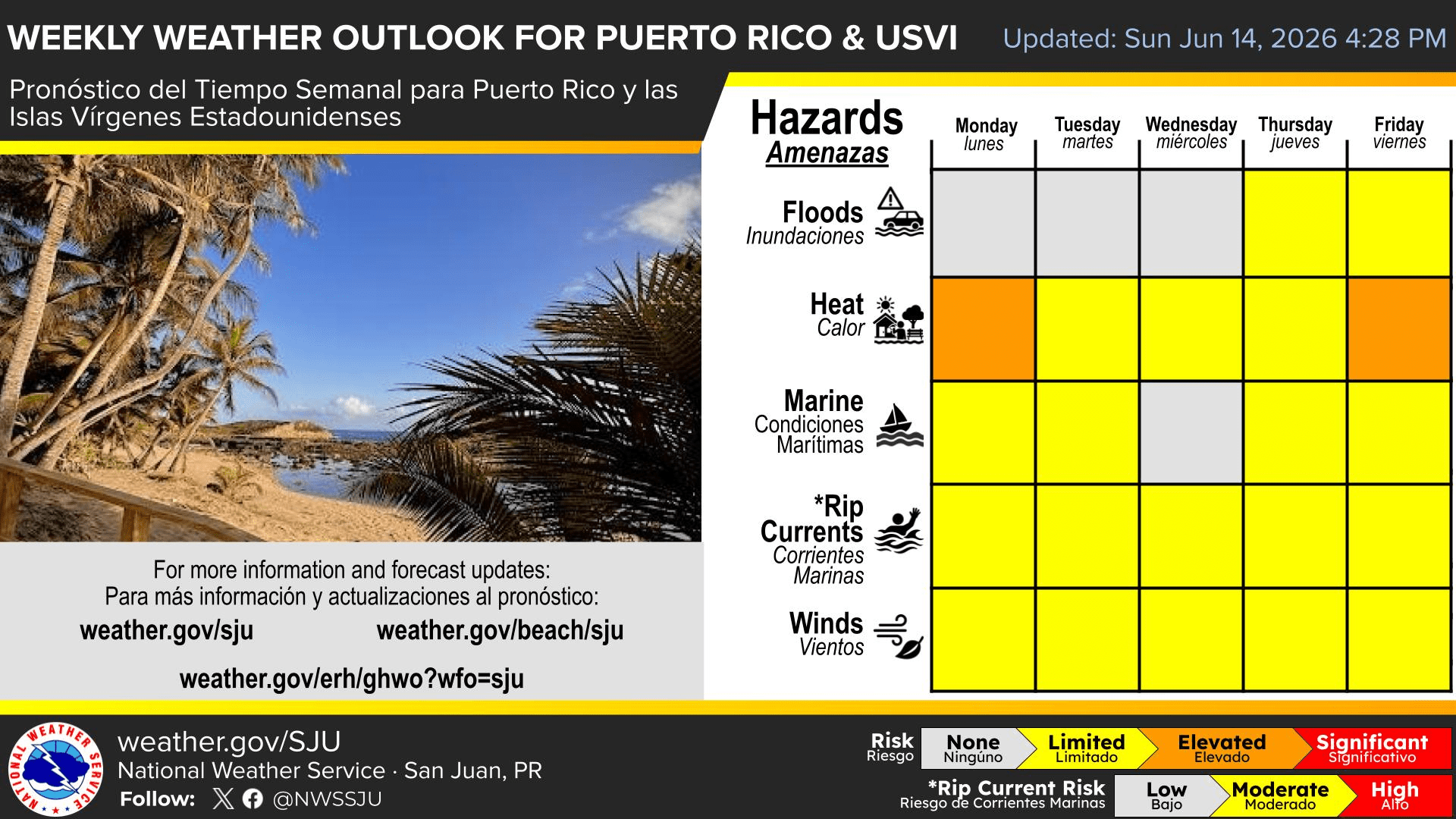
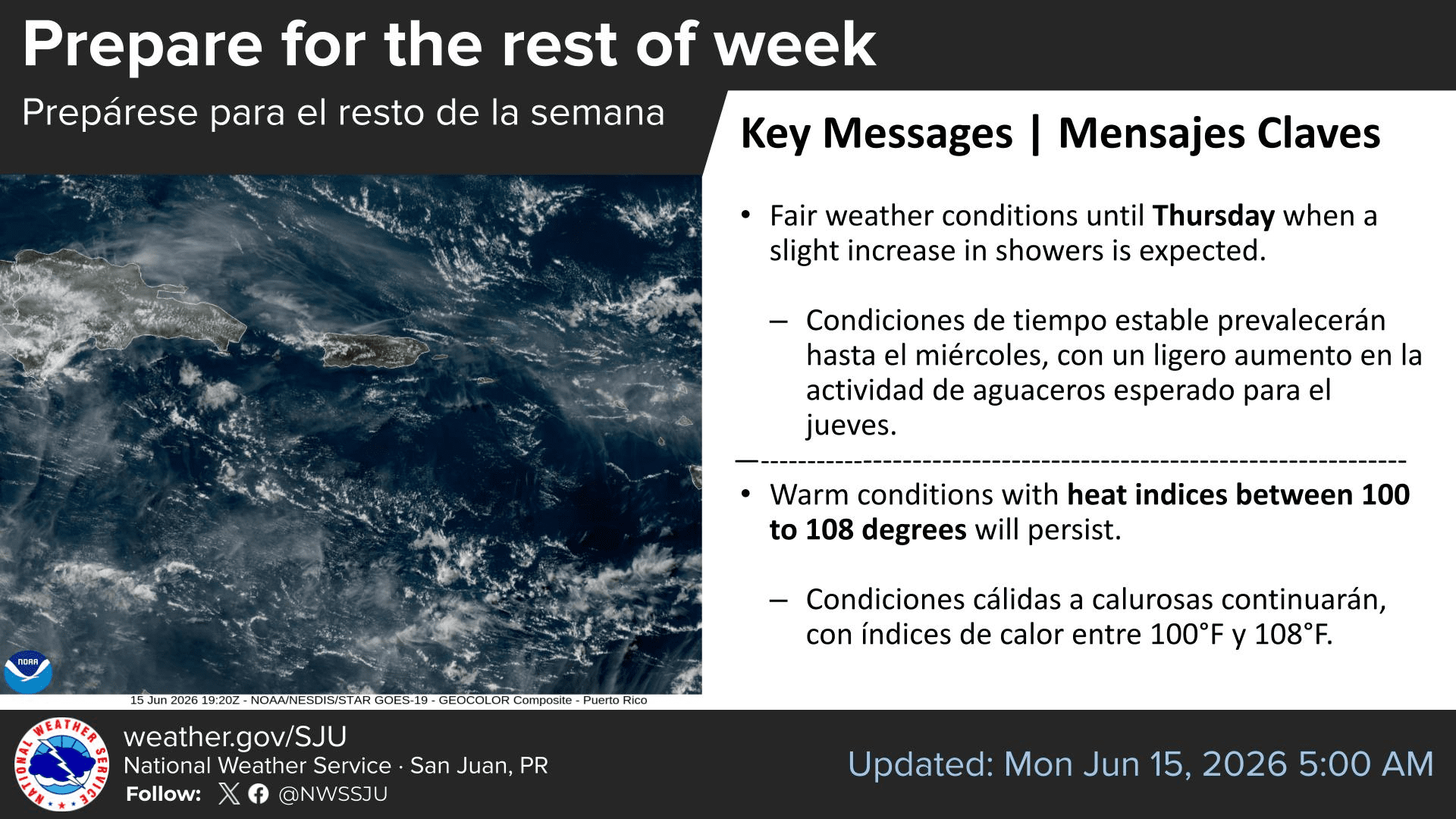
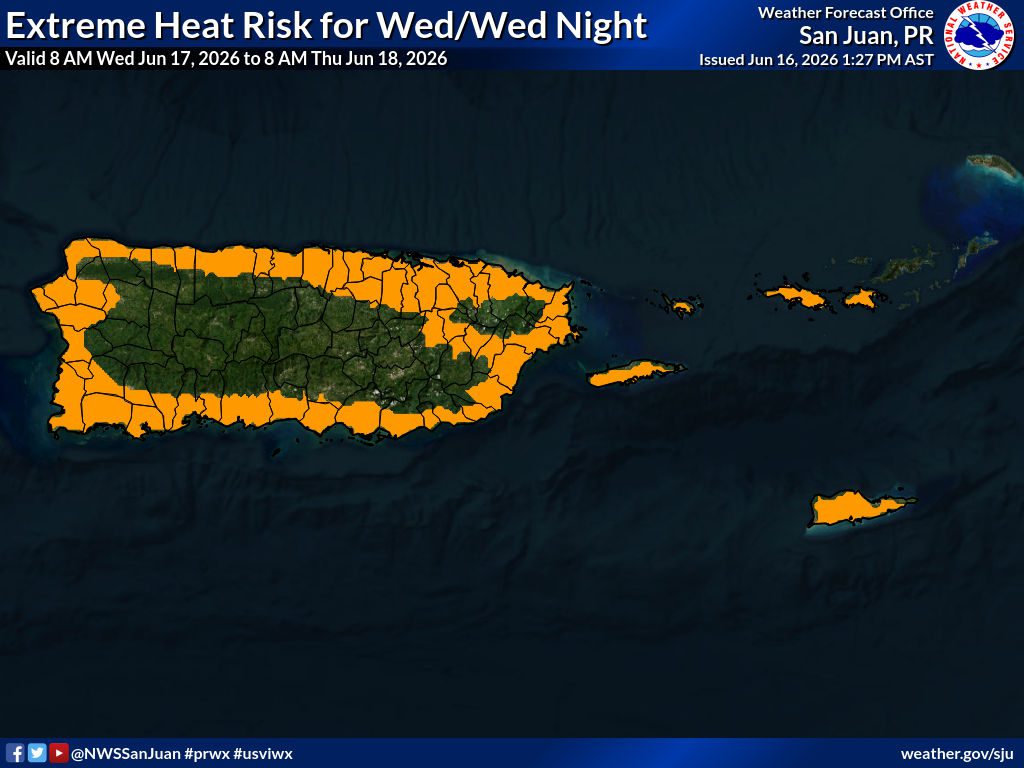
Yellow = Limited Risk Orange = Elevated Risk Red = Significant Risk
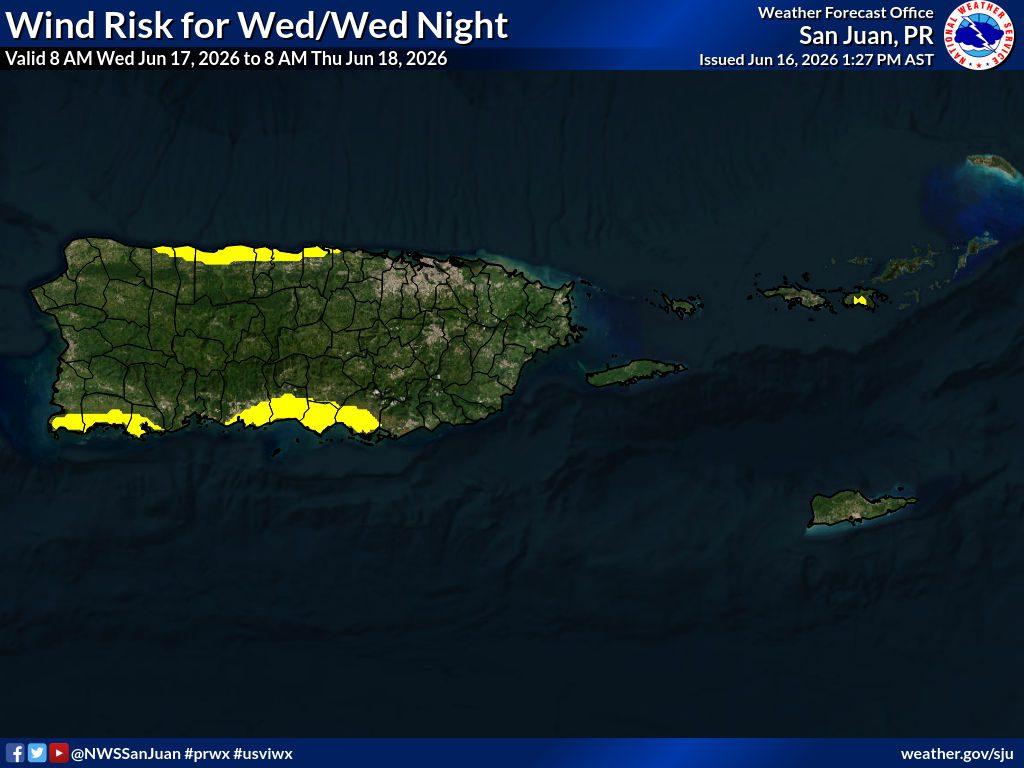
Yellow = Limited Risk Orange = Elevated Risk Red = Significant Risk
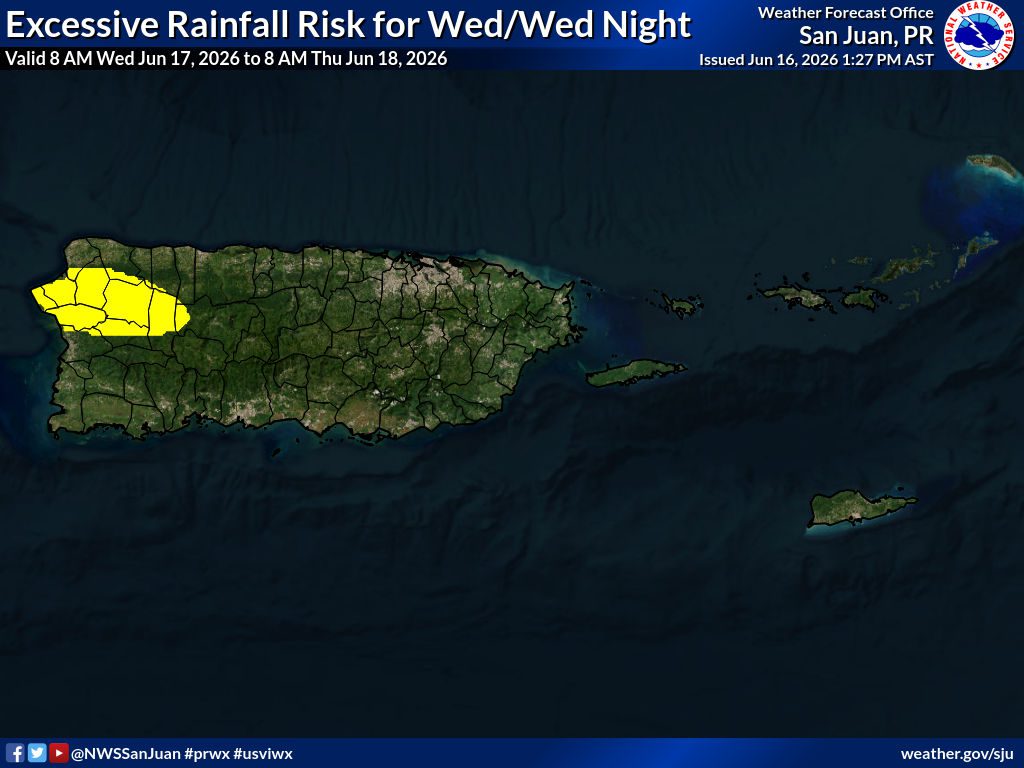
Yellow = Limited Risk Orange = Elevated Risk Red = Significant Risk
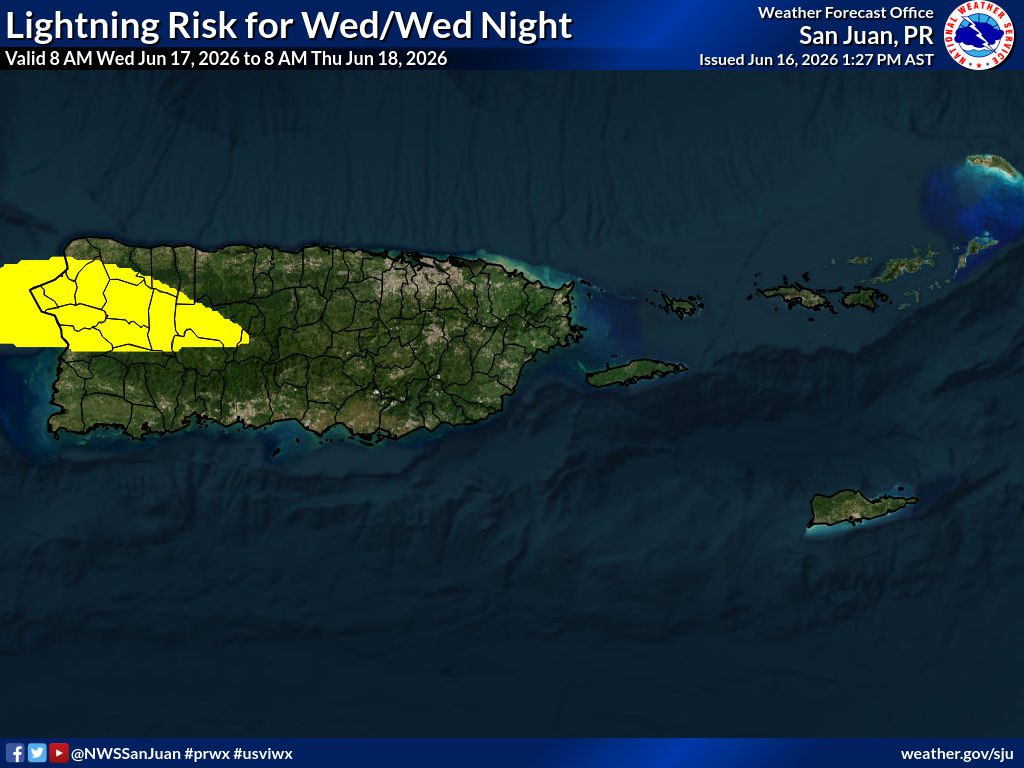
Yellow = Limited Risk Orange = Elevated Risk Red = Significant Risk
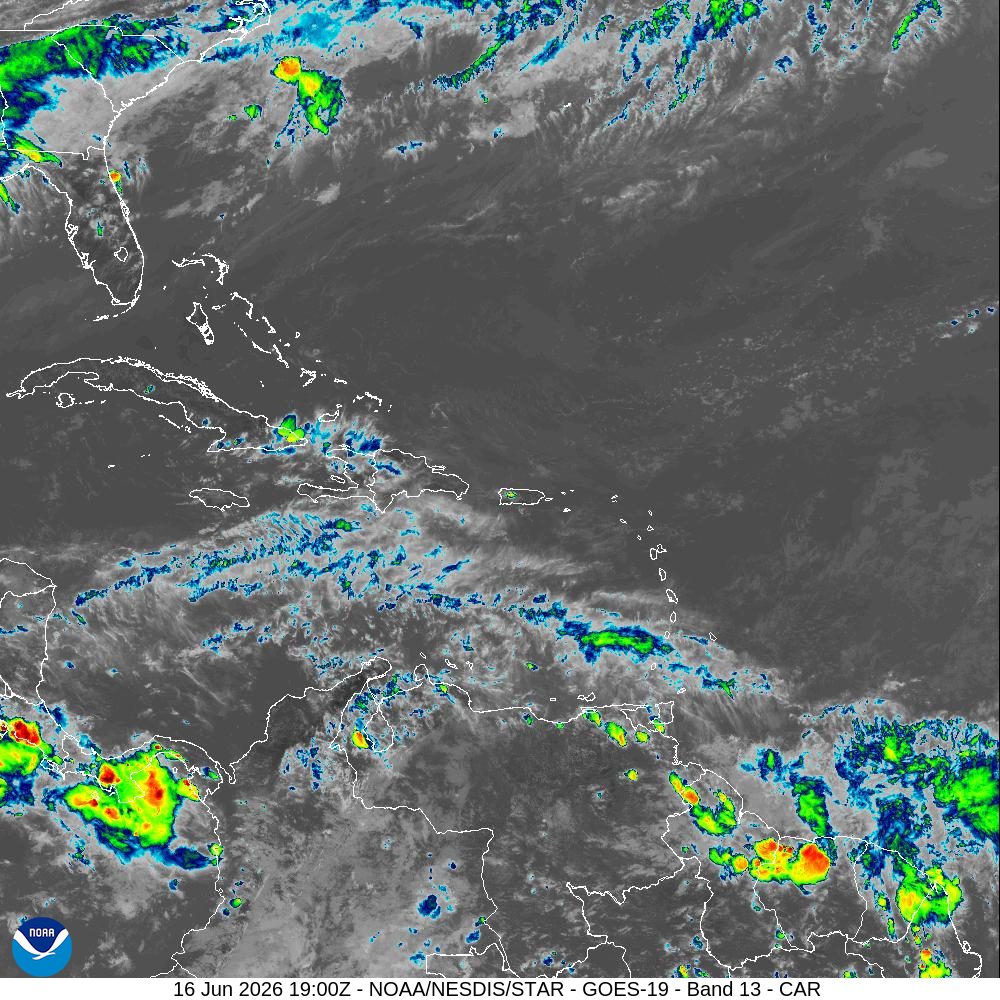
Below: Infrared satellite imagery obtained at 3:00 p.m. AST on Tuesday indicates a partly cloudy sky to mostly sunny across the USVI.
MARINE WEATHER UPDATE
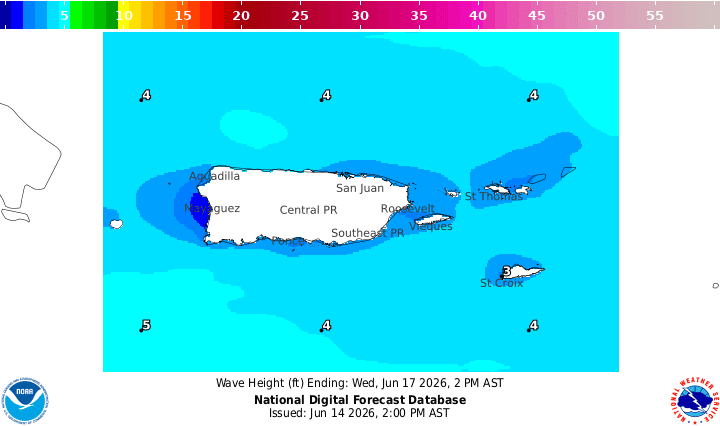
National Weather Service forecasters report that wave heights on Wednesday are expected to build from between 3 and 5 feet.
The NWS provided the following details:
“A broad surface high pressure over the Central Atlantic will maintain breezy to locally fresh E-ESE winds for the next several days, resulting in choppy seas that may lead to hazardous conditions for small craft. Shower activity is expected to increase by Thursday as a tropical wave approaches the Caribbean basin, likely to bring localized heavy rainfall, gusty winds, and reduced visibility. A dense layer of Saharan dust should arrive by Thursday as well, bringing hazy skies, reduced visibility, and poor air quality,” the NWS explained.
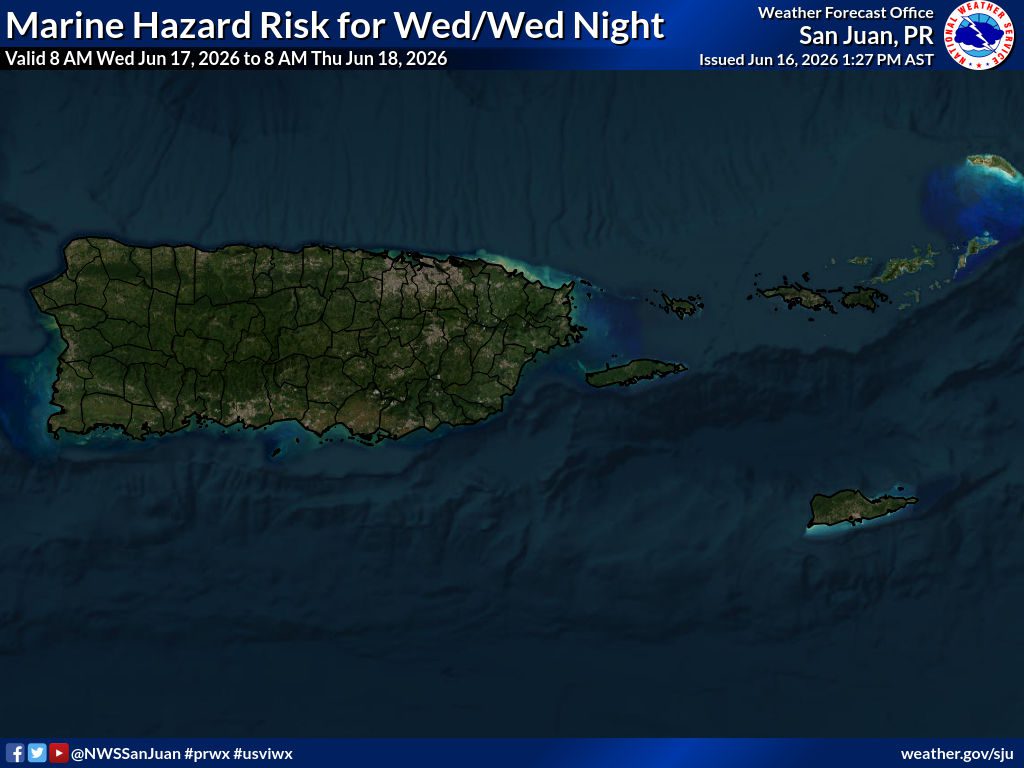
Yellow = Limited Risk Orange = Elevated Risk Red = Significant Risk
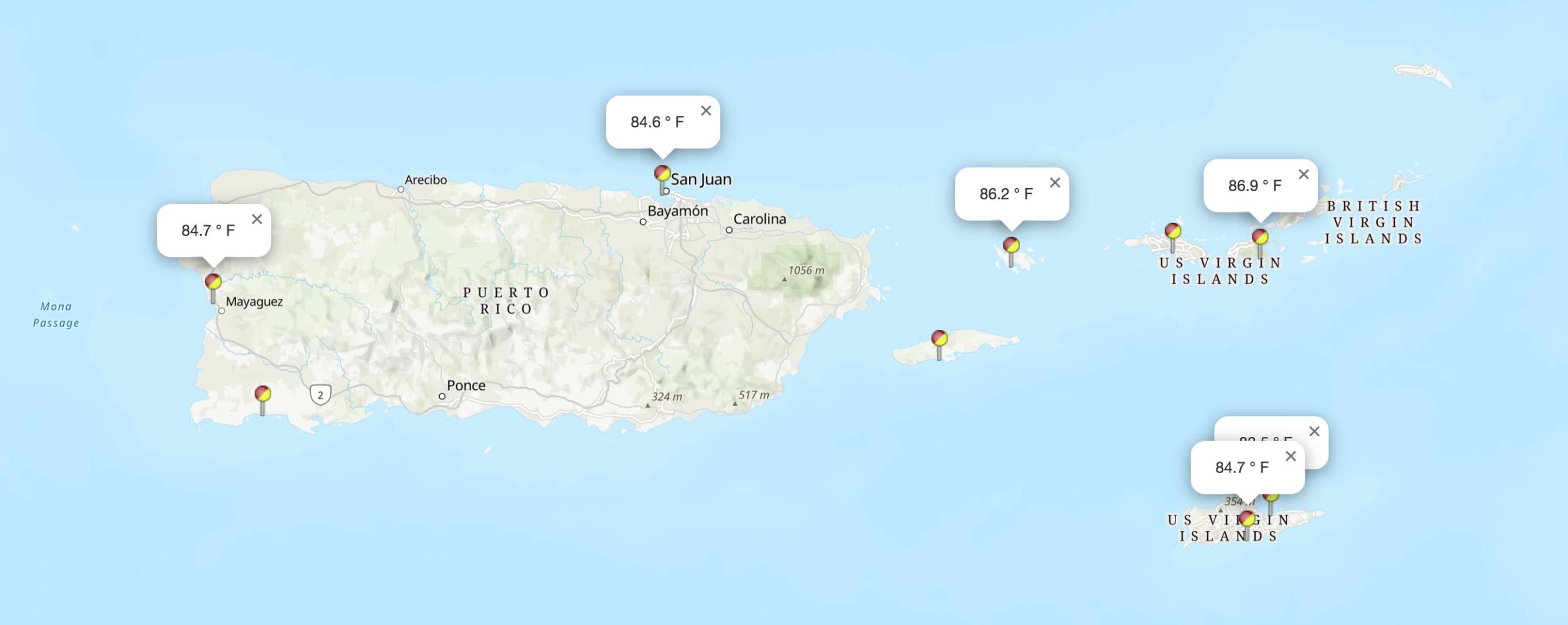
The water temperature is approximately 84°F, roughly 28-29°C.
NOAA Ocean Water Temperature Map: 6/16/26:
Risk of Rip Currents:
The NWS explained that the risk of rip currents is projected to be low to moderate across the USVI on Wednesday.
The NWS provided the following details:
“A moderate risk of rip currents continues across the northern beaches of Puerto Rico, including Culebra, and St. Croix in the U.S. Virgin Islands; low elsewhere. Beachgoers should exercise caution, as life-threatening rip currents are possible along the beaches under moderate risk. The risk will gradually increase and spread across the islands as winds strengthen, with most beaches going under a moderate risk this Father’s Day weekend. Besides rip currents, beachgoers are encouraged to remain weather alert, as afternoon showers and isolated thunderstorms can be expected for the rest of the workweek, which may move over coastal areas of northwestern Puerto Rico and bring wind gusts and lightning. Moderate concentrations of Saharan Dust will arrive by Thursday, resulting in hazy skies, reduced visibility, and poor air quality,” the NWS said.
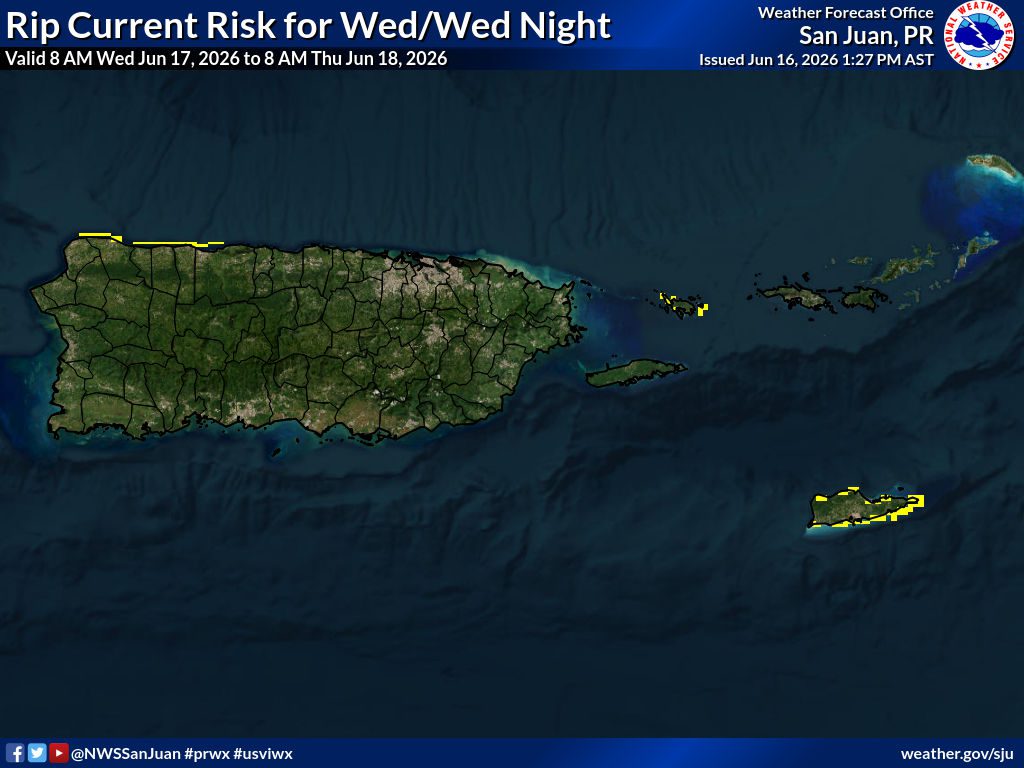
Clear = Low Rip Current Risk Yellow = Moderate Rip Current Risk Red = High Rip Current Risk
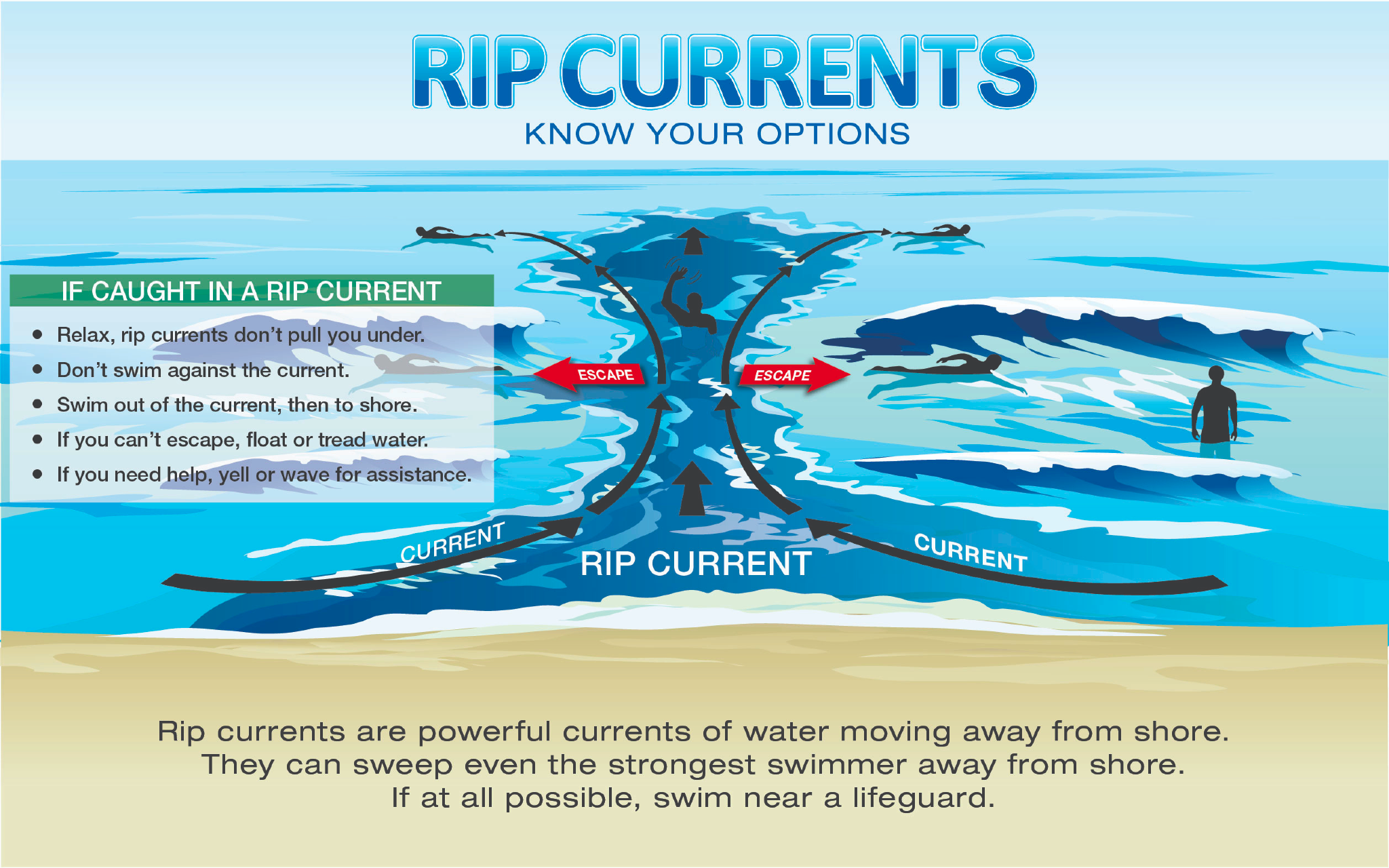
The NWS reminds swimmers that even when there is a lower risk of rip currents, they “can still form near structures like groins, jetties, reefs, and piers.” More information is available here.
Swimmers are encouraged to exercise caution and understand how to escape the pull of a dangerous rip current.

TROPIC WATCH
Tropical Activity:
The 2026 Atlantic hurricane season began on June 1, 2026, and will run until Nov. 30.
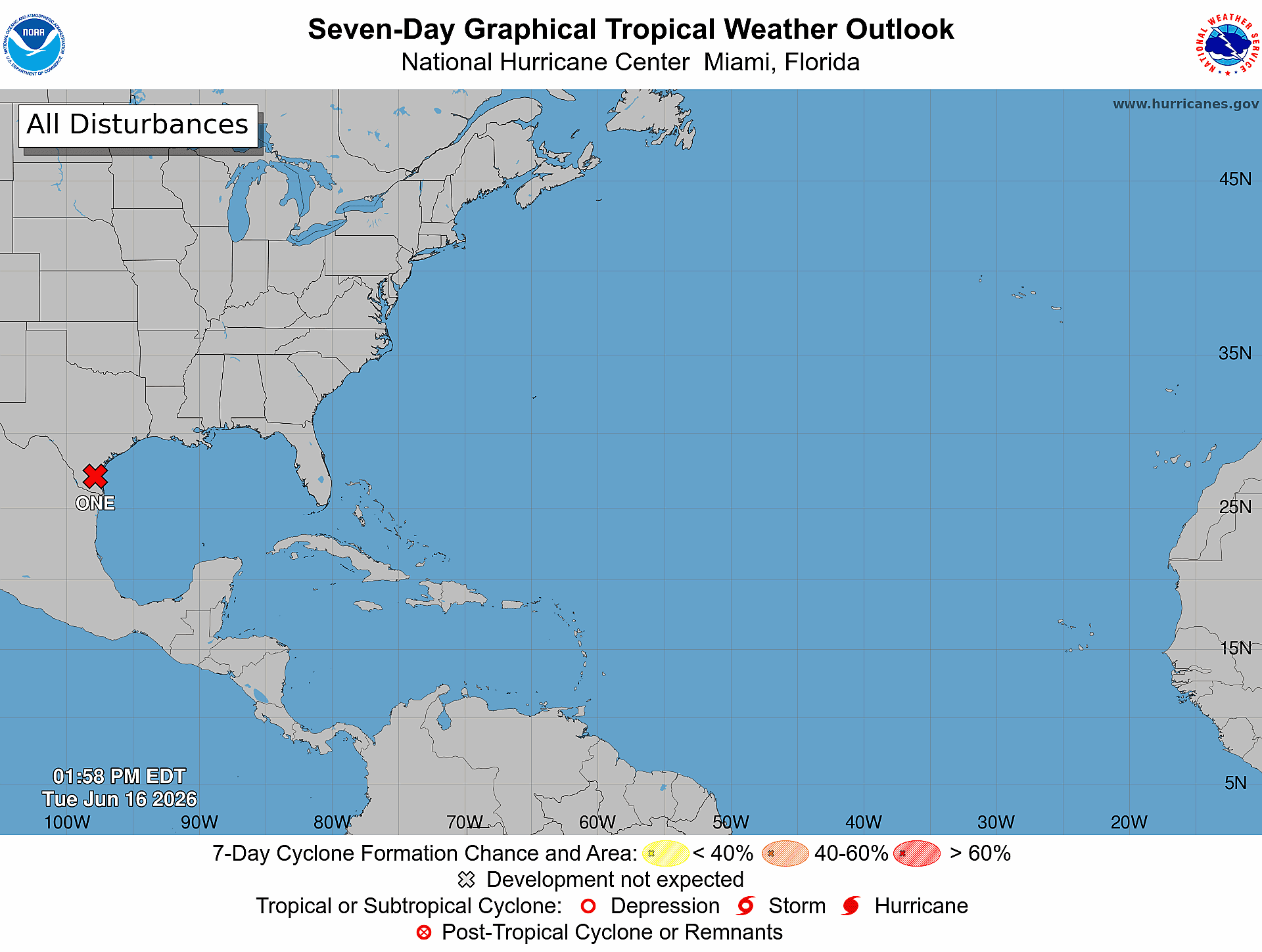
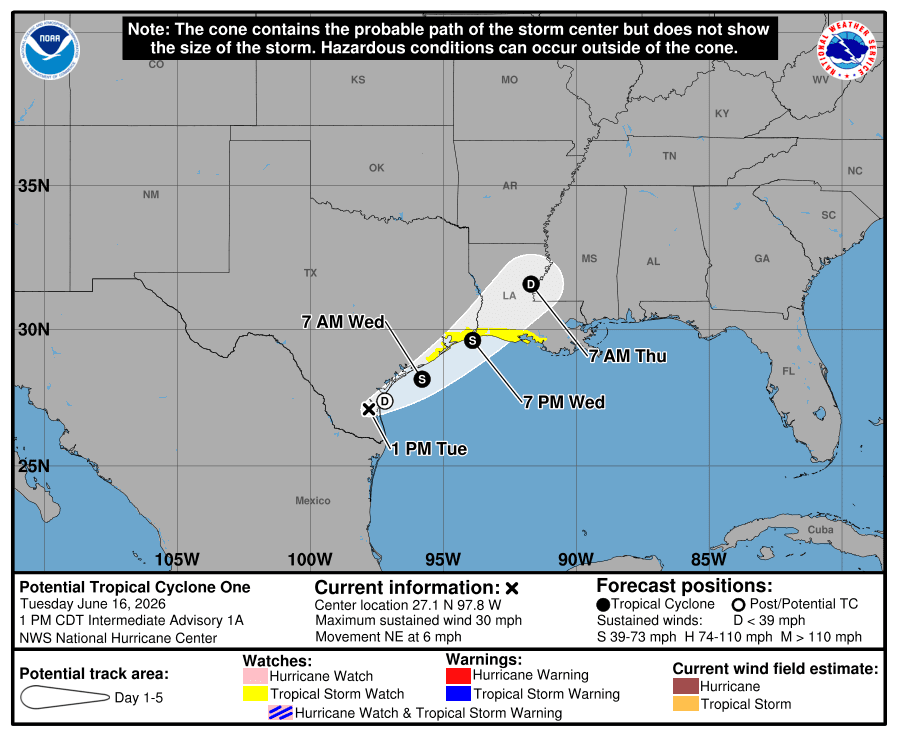
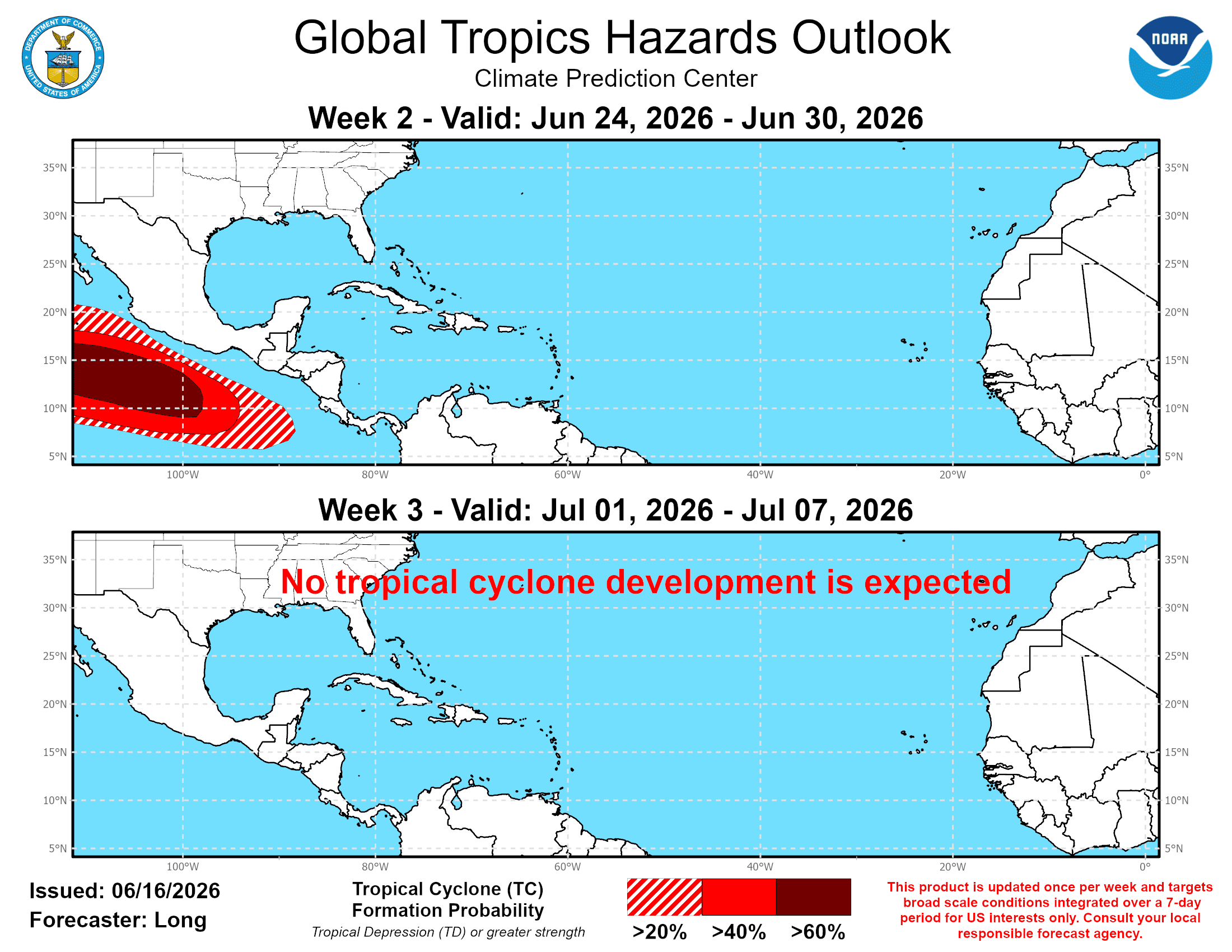
The National Hurricane Center is monitoring Potential Tropical Cyclone One near the Gulf with a high chance of cyclonic development. The system is expected to intensify into Tropical Storm Arthur, the first-named cyclone of the 2026 Atlantic hurricane season. Travelers to and from the Gulf region should monitor flights for any possible delays or cancellations.

VI Source article: NOAA Outlook Calls for Below-Normal Atlantic Hurricane Season, But Preparedness Remains Critical
VI Source article covering AccuWeather’s 2026 Atlantic hurricane season forecast is available here!
Additionally, a VI Source article covering Colorado State University’s 2026 Atlantic hurricane season forecast is available here!
Super Typhoon Sinlaku recently caused extreme damage to the U.S. territories of Guam and the Northern Mariana Islands. Read more and learn how to help in a VI Source article here.
OBSERVATIONS
Sunrise: 5:44 a.m.
Sunset: 6:58 p.m.
Preparation for extreme weather events in the Caribbean, such as earthquakes and tropical cyclones, is important. Residents and visitors in the USVI are encouraged to stay updated on weather events on the V.I. Source Weather page and sign up for alerts from the National Weather Service and the Virgin Islands Territorial Emergency Management Agency.
Article Series: “Extreme Weather in the Caribbean”
- Part 1: Caribbean Earthquakes and Tsunamis
- Part 2: Caribbean Volcanoes
- Part 3: Rip Currents
- Part 4: Hurricanes
- Part 5: Wildfires
- Part 6: Flash Floods
- Additional articles about earthquakes in the Caribbean are available here and here!
- From Calm to Catastrophic: The Threat of Rapid Hurricane Intensification
- Three Decades After Marilyn, Forecasting and Emergency Preparedness Have Evolved in the USVI
- Please remain prepared for earthquakes and flash flooding across the USVI.
- Three Decades After Marilyn, Forecasting and Emergency Preparedness Have Evolved in the USVI
An on-camera interview between Source weather reporter Jesse Daley and Daryl Jaschen, the director of VITEMA, is available here!