


On June 15, the Federal Emergency Management Agency (FEMA) held a seminar in San Juan, Puerto Rico, to discuss climate change and disaster preparedness issues in the USVI and Puerto Rico. The conference centered around sharing information about climate impacts that both territories may expect as time moves forward, discussing plans for responding to extreme weather events, and how the islands are preparing and becoming more resilient.
During the day-long event, numerous speakers from multiple organizations highlighted the unique risks the Caribbean region faces due to a changing climate. A common theme among the presenters involved the importance of participation at the community level, and how the awareness and participation of all individuals in both territories will impact the results of adjusting to climate change.
Expected Impacts of Climate Change to the USVI and Puerto Rico
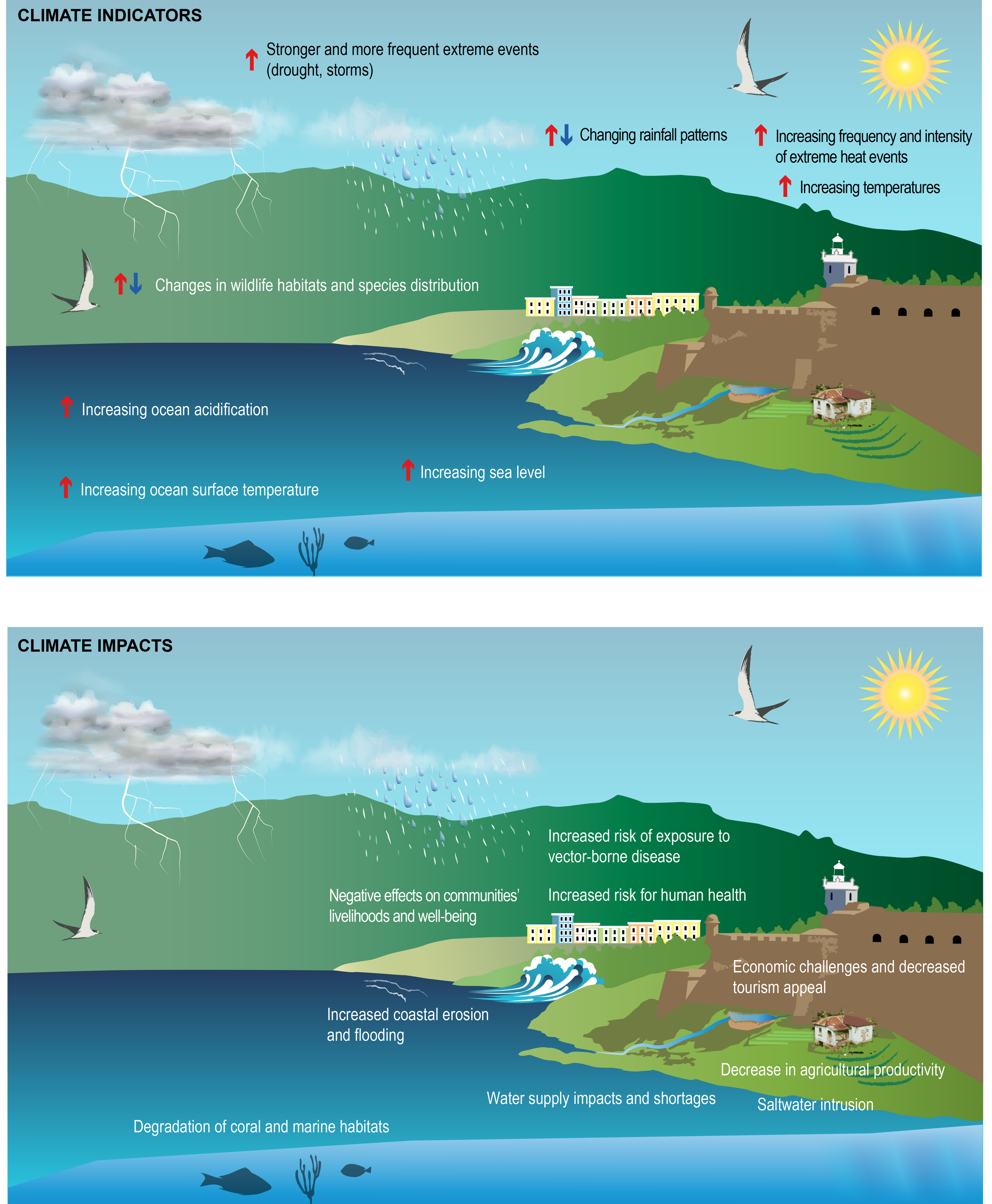
Ada Monzón, WAPA TV Chief Meteorologist in Puerto Rico, provided a compelling presentation outlining some of the challenges the region is expected to experience in the coming years. Monzón discussed global temperature rise and warned that vulnerable populations across Puerto Rico will be adversely affected by issues such as sea level rise, increasing heat, and more extended periods of drought.
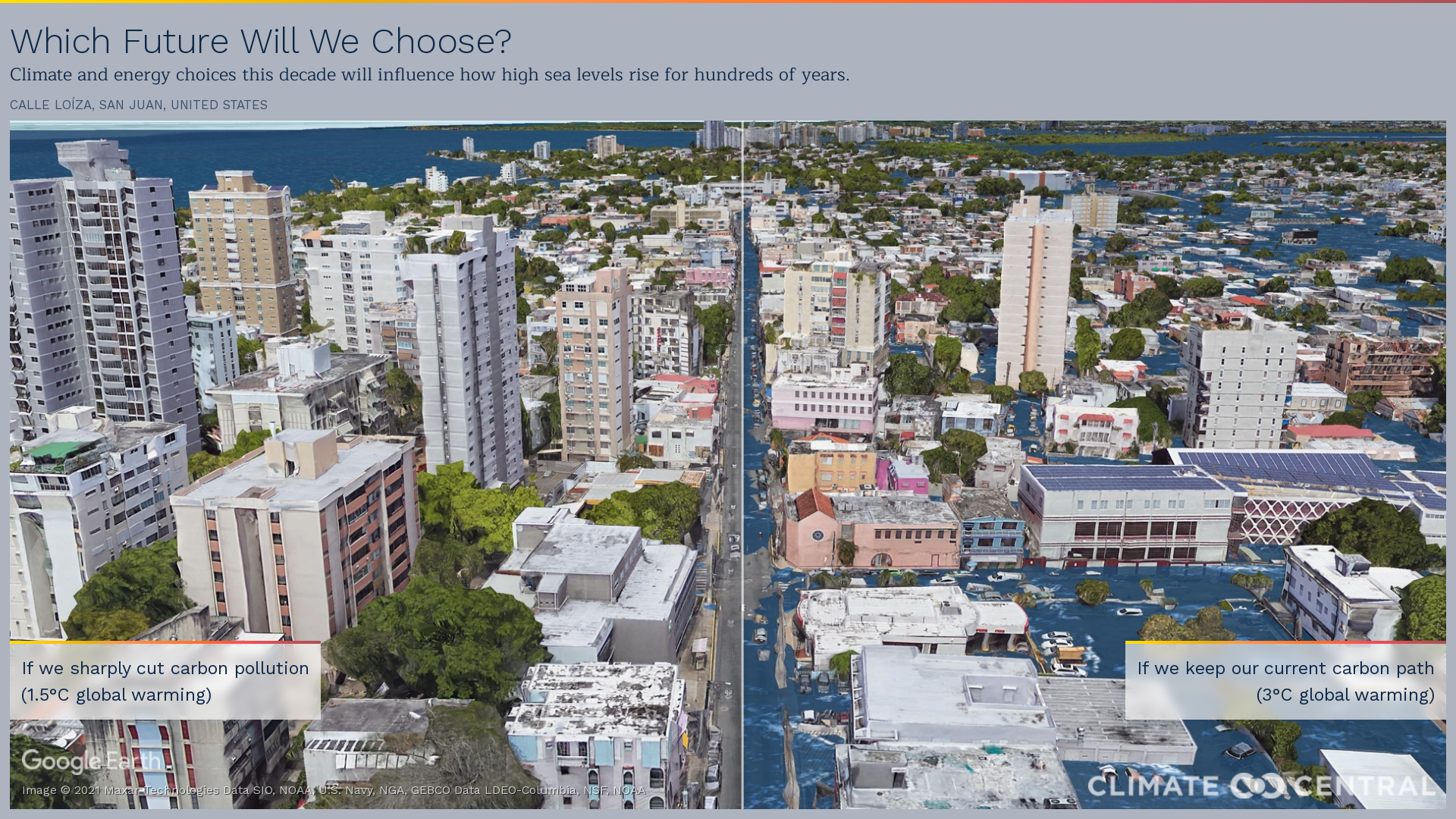
During her speech, Monzoìn displayed images from “Climate Central,” a non-profit group devoted to studying and communicating the effects of climate change. Monzón presented segments from the organization’s website, which reveal the potential consequences of rising seas in areas across San Juan.
Monzoìn noted that climate education is vital, and she encouraged community members to get involved, explaining that everyone plays a role in helping to raise awareness and assist the community.
“We are resilient, but challenges are increasing,” Monzón warned.
Ernesto Morales, a Warning Coordination Meteorologist at the National Weather Service in San Juan, PR, followed Monzón’s presentation. Morales commented on preparation for hurricanes and stressed that sea level rise is extremely important to address.
In a recent Source interview, Morales offered insight regarding climate change impacts.
“We know that the effects of climate change over the Caribbean area are higher temperatures, sea level rises, and more extreme [weather] events,” Morales said.
In addition to severe weather, economics was also mentioned during the seminar. For example, the cost of removal of sargassum seaweed has been increasing dramatically at resorts on St. Thomas over the past few years, and climate change could be partly to blame.
In a recent interview with the Source, Yuyuan Xie, Ph.D., a research scientist at the University of South Florida, highlights the subject of climate change related to the sargassum proliferation.
“There is no scientific consensus on exactly what caused the sargassum increases in the past decade in the Atlantic Ocean, but climate change may be part of the reason, as it affects precipitation, ocean circulation, and dust events, among others. This is still a research topic,” Xie stated.
Planning for the Future
The FEMA seminar provided a plethora of information, and it is clear that many individuals are working tirelessly to help protect the islands and prepare for the future. Pioneers ranging from the community level to the U.S. Government are prioritizing the issue.
Kristen Lepore, from the Department of Health and Human Services Region 2, spoke about some of the work the White House has done to pave the way for more resiliency in the U.S. Caribbean.
“Much planning and devotion have been made toward assisting individuals that will be facing hardships due to climate change down the pipeline. This is major work, and it’s not a theoretical issue,” Lepore explained.
In closing remarks, Russell Fox, the FEMA Region 2 Federal Preparedness Coordinator, commended the work being done across all sectors.
“We know it’s going to get worse, but this is a great first step,” Fox noted.
Read more about FEMA’s work on the agency’s website here.