

The following stories are part of a series highlighting experiences with racism on the U.S. mainland and elsewhere. Some of the stories have focused on Black men and women who grew up in predominantly Black communities in the Caribbean; some who grew up on the mainland and later made their home in the U.S. Virgin Islands. These stories are about the latter.
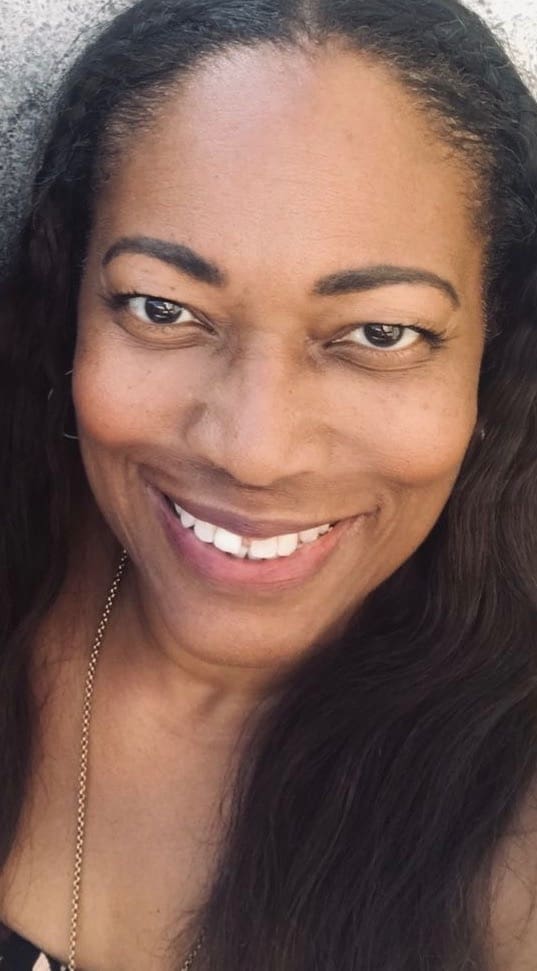
Lorna Nichols didn’t have racism on her radar growing up in urban Washington, D.C. She remembers there being about three white kids in her public school.
“Private schools were different,” she says.
She does recall a trip to Myrtle Beach with her family when she was a kid where she had a vague sense of being treated differently.
“Maybe we got passed over on some rides, or some looks on people’s faces.”
But those memories didn’t mean anything to her until her older brothers, who she says “got it,” would say to her later in life, “Do you remember … ?” Nichols says, she didn’t, not really.
She says she always wanted to know “people from other cultures.” So much so, she says, “that I forced myself to put myself in front of them. I wasn’t afraid.”
Her mother likely influenced her in that pursuit. “My mother wouldn’t let me go to [Historically Black] Howard University because it wasn’t diverse enough.” She was heartbroken.
“I cried.”
Her stepfather had gone to Howard with Virgin Islanders Sen. Adelbert Bryan, former Gov. Roy L. Schneider and well-known musician Larry Benjamin. This influenced her eventual move to the Virgin Islands many years later.
Meanwhile, at the University of Maryland, Nichols avoided separating herself by turning down invitations to join both a Black sorority and a white one. However, she does remember friends saying, “Lorna’s not really Black.” And soon came the racial jokes – sometimes under the breath, but not always.
“When I finally got it,” she says she became defensive and wanted to confront the slurs and snide jokes. She went as far as to join the Black student union, “and the needle went the other way.”
But not too far and not for too long. “I was popular,” she says, “but I stayed to myself.”
She got through college largely unscathed by issues of race.
Out of school and footloose, she was bent on making a career in media. She moved in and out of some interesting places, including a stint interning with Howard Stern, the outspoken, wildly popular radio personality of the ’80s.
Like Stern, Nichols had a dream of being in radio. When she was “passed up” in Washington D.C., she says she headed west of the nation’s capital “further and further,” finally landing in West Virginia.
She became Becky, the Farm Girl, at a station serving a rural, farming community.
“I could do a southern accent really well.”
That was fine until Becky became so popular.
“They wanted me to do personal appearances at county fairs and stuff like that.”
With the color handwriting on the wall, Nichols told the station, “You better find a real Becky,” and departed.
From there she bounced around again, this time from one television station to another. When the doors remained mostly closed for her, she says she still didn’t see racism as the issue. “I was accepting of the disappointment; I just wanted to try harder.”
Eventually, switching several gears, in 1989 she found herself with her then-husband, in Laurel, Maryland, where she started a food delivery business.
“My biological dad was a chef,” she says. He had the first soul food restaurant “just over the line” into D.C. She spent a lot of time at the restaurant as a kid.
She remembers taking refuge there in 1968 during the riots following Martin Luther King Jr’s assassination.
“It was a sad time. I still remember the smell of tear gas,” but as a pre-teen, she says, “I didn’t feel like that had anything to do with me.”
Living adjacent to a golf course 20 years later in Laurel, a mostly white community, Nichols still never felt disenfranchised. “I played golf.” It would be several years later, when she moved to St. John, that prejudice showed itself in her life.
“I always loved St. John; I loved the water, the fish … I wanted all that.”
But when she started to sense that she wasn’t welcome as a stateside Black woman, her militancy rose again, fueled by the sense that, “people wondered ‘what is she doing here.’” She says people avoided waiting on her and excluded her from social activities.
Undaunted, she founded a catering company. She got her foot in the door with the “villa people.” Back then, she recalls, everything was done by fax. She had five people working for her.
“There was a white girl named Holly.” When they would work a party together, Nichols recalls with a laugh, inevitably the clients would walk up to Holly and say, “Thank you Lorna.”
“We had an agreement to never tell them I was the owner.”
Eventually, she landed a job with a local radio station, “The Breeze.” She commuted from St. John to St. Thomas, where she also worked with Bob Austin on “The Sale Channel.” Coincidentally, her sidekick on the show geared toward tourists was the son of Larry Benjamin, whom her stepfather had known in college.
As people began to “know who I was, it got different.” Eventually, she left her sister on St. John running the catering business and moved to St. Thomas.
Today she says, “I love it here. I have paid my dues.”

Karrl Foster has no idea why, as a child, he was bused to the Collinwood neighborhood on the east side of Cleveland where he grew up.
“I didn’t live that far away from a school that was walking distance. But they sent me to Collinwood,” which Foster describes as being an Irish-Italian neighborhood at the time.
One thing “they” did tell him was, “Don’t ever miss the bus.”
The bus ride wasn’t very long. He says he and his friends would hop off at the “chocolate shop” grab their candy bars and head to the school.
But one day he did miss the bus. So, he walked.
“When I arrived at the chocolate shop, Frank Stone and Salvador Marienelli were hanging out in front.” Foster says, he went in, got his treat and headed off.
“All I remember hearing was, ‘hey nigger’ and then they started chasing me.” He ran and ran some more. The school was 2,000 yards away.
“Finally, I said ‘fuck it’ and dropped my books and turned around to face them.” Fists up, ready to defend himself, Stone and Marienelli, backed away. “They said, ‘We don’t want to see you walking down the street again’ and turned and walked away.”
Foster says he wasn’t particularly threatened or even aware of the incident being racial. “I just felt like these guys had a problem.”
Collinwood, he recalls, however, was a hotbed of racial tension. In 1970 riots broke out when hundreds of white students took aim at Collinwood High School with rocks, breaking windows and threatening a teacher with a club. The Black students who had taken refuge on the school’s third floor arming themselves with table legs and blocking the stairways were eventually escorted to buses and spirited away.
Foster’s uncle, Carl Stokes was Cleveland’s mayor at the time. It was in Stokes’ home, where Foster often spent his weekends, that’s where years earlier he experienced his first threat of racial violence.
“I was about 8,” he says. “I was at my uncle’s house when he got a call saying, ‘turn off the lights’ and we jumped behind the couch.” There had been some sort of threat made to his uncle and family. He says, “We stayed there for 25 minutes while cops and detectives swarmed all over the place.”
Finally, when the police left, “We went to bed, and stayed away from the windows.”
Still, Foster says, “That was not a defining moment for me.”
Foster’s father lived in Michigan. Detroit to be exact. “Detroit was Cleveland on steroids.”
He went through the Detroit riots, too. But, he says, Blacks had much more power in Detroit. The attitude was more offensive, more of the “don’t fuck with me,” stance.
But mostly Foster went through his early years in the United States protected from the unrest and intimidation.
He remembers, “One day my three best friends and I went to see the Cleveland Indians play the Yankees. We were really excited. We had great seats.”
At some point, his friend Spike elbows him and says, “See that guy right there,” pointing to a white man looking out of place in a suit. A little while later, Foster feels a tap on his shoulder, “Karrl, you okay?”
His friend wonders, “How did he know your name.”
Foster was equally baffled, but much later in life, he found out “My cousins were used to this. They went to school with a bodyguard.”
Foster’s mother worked in Stokes’ office, so it was his routine to go to city hall after school. “I got a chance to meet a lot of amazing people,” which remains far more in highlights of his childhood than the other incidents. “There were no other kids hanging out in the mayor’s office.”
Foster’s other uncle Louis Stokes served 15 consecutive terms in the U.S. House of Representatives, heading several crucial congressional committees.
Foster’s stateside experiences with racism and white cops were not particularly notable or frightening to him back then. Along with living in Cambridge, Massachusetts, while attending Harvard, he spent a fair amount of time in New York City.
He recalls being harassed by a white cop on a subway platform when he was smoking a ginseng cigarette. The police officer told him if he was from New York, he should know you couldn’t smoke on the platform.
“How would I know,” he said, “I usually take taxis.”
Foster says, “If they were going to dick with me, I was going to dick with them,” adding, “but I wouldn’t do that now.”
Even when he and a couple of friends were slammed against a chain link fence by cops in Cleveland who were looking for some youth who had jumped a woman earlier that evening a few blocks away, he says, “That could have scared the shit out of me.” But it didn’t.
While Foster says, “I always assumed we were different,” that had no visceral effect on him until he came to the Caribbean.
He was shaken to the core upon arriving to run a culinary operation at an upscale hotel in Jamaica when none of the staff he was overseeing would even look him in the eye, much less cooperate in any way with him.
“It wasn’t until the manager told them my mother was from Jamaica that the attitude changed.”
However, he was eventually run out of Jamaica by a police chief who had taken a particular disliking to him, which intensified after Foster was named in an article in the men’s magazine GQ about the hotel where he was working.
The excuse was the hotel owners had failed to obtain the required work permit for Foster.
“His name was Joe Quinan. When he said to me one day after a verbal tussle over the work permit, ‘have you ever seen the inside of a Jamaica prison,’ I packed my bag and went back to New York.”
When he landed on St. Thomas some time later to run the kitchen at Sugar Bay Resort on the east end, his greeting was equally cold. When he was introduced to the staff and tried to shake hands with them, they wouldn’t respond.
“I just didn’t get it. In our house, there was a mix of everybody. We got together and there was just love.”
He says he understood what was going on as a Black man in America. “There was shit going on outside, but inside it was love.”
Eventually, he understood what was going on in the V.I. too. He realized the people at Sugar Bay had “seen people in and out throwing around their weight and then leaving.”
After decades now on St. Thomas he says, “They just had to get to know me.”
Other stories in the series:
Racism is Defined by Experience: Prologue
Racism is Defined by Experience: Chapter One
Racism is Defined by Experience: Chapter Two
Racism is Defined by Experience: Chapter Three
Racism is Defined by Experience: Chapter Four
Racism is Defined by Experience: Chapter Five
Racism is Defined by Experience: Chapter Six
Racism is Defined by Experience: Chapter Seven
Racism is Defined by Experience: Chapter Eight
Racism is Defined by Experience: Chapter Nine