

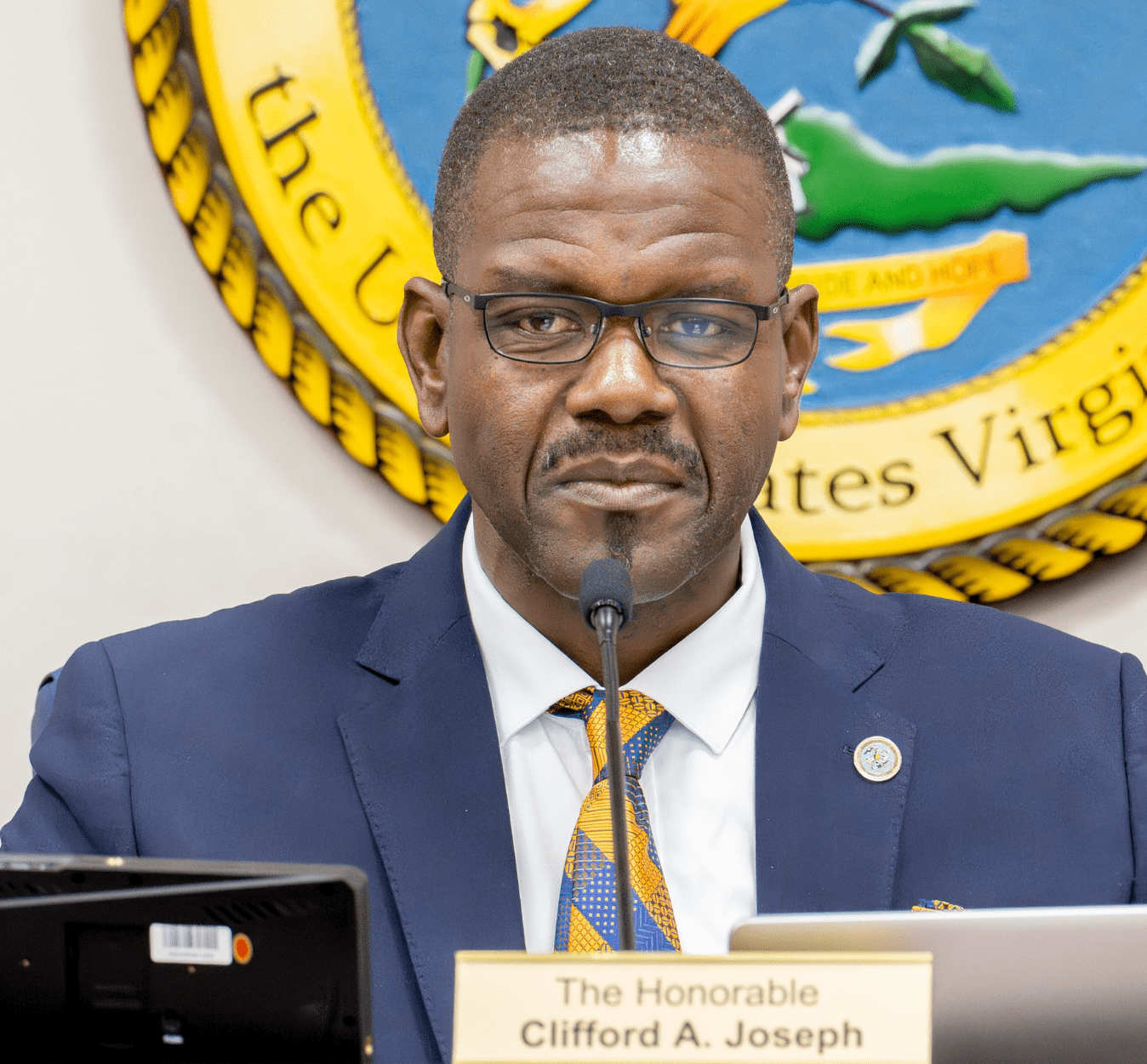
The Senate Homeland Security, Justice and Public Safety Committee on Thursday advanced legislation to strengthen enforcement of the Virgin Islands’ traffic violation point system, while holding a separate measure on civil liability for damage to government property.
Senators voted to forward Bill No. 36-0224 to the Rules and Judiciary Committee and to hold Bill No. 36-0139 in committee “until the call of the chair.”
Bill 36-0224 would shift authority to suspend driver’s licenses based on accumulated points from the Superior Court to the Bureau of Motor Vehicles, while keeping traffic violations and point assignments under judicial review. Courts would still determine violations and assign points, while the BMV would carry out suspensions once motorists reach established thresholds.
Sponsor Sen. Avery L. Lewis said the bill updates an existing system.
“The Virgin Islands already has a moving violation point system. Drivers already accumulate points for violations. This is not a new program, not a new penalty system, and not a new burden on drivers,” he said. “This legislation promotes accountability, encourages driver education, rewards safe driving habits, reduces unnecessary burdens on the courts and provides the Bureau of Motor Vehicles the tools necessary to act efficiently while preserving the rights of every motorist.”
Under the proposal, the point system would shift to a rolling 12-month period instead of a calendar-year structure. Drivers could also reduce points by completing approved driver-improvement courses in some cases, and a $25 fine would increase to $200.
BMV Director Barbara Jackson-McIntosh said the current process slows enforcement because suspensions must go through the Attorney General and the courts even after violations are established.
“When a driver repeatedly violates the traffic laws and accumulates excessive points, the Bureau of Motor Vehicles cannot efficiently suspend that license,” she said. “That process creates delays, burdens the court system, consumes government resources, and allows dangerous drivers to remain on the road longer than they should.”
She said the courts would still determine violations and assign points.
“The adjudication comes from the court … We are only enforcing what is sent to us from the court,” she said.
Jackson-McIntosh said the bureau would implement a three-step warning system at six, nine and 12 points, with suspension at the final threshold.
Sen. Ray Fonseca raised due process concerns, while Sen. Franklin Johnson said enforcement remains the key issue in traffic safety.
“We could put all the laws that we want and make them and pass them … but if there’s no enforcement to them, then it’s for null,” Johnson said.
After advancing the traffic bill, the committee turned to Bill 36-0139, which would establish civil liability for people who willfully or negligently damage government property, including vehicles, fencing, lighting and other public assets. The measure would require those responsible to pay for repairs or replacement rather than leaving costs to taxpayers.
Sponsor Sen. Avery L. Lewis said it is a question of accountability.
“If you damage public property through negligence and willful misconduct, you should be held accountable,” he said, noting that government property belongs to the public.
Property and Procurement Commissioner Lisa Alejandro said the bill is unnecessary, citing existing law that already allows recovery of damages through wage withholding, civil claims and other enforcement tools.
“From our review of the bill, DPP recognizes its intent,” she said. “Existing statutes and established processes already address these objectives. The department does not believe the additional statutory authority is warranted, given its duplicative nature.”
Patricia Lynn Pryor, of the Department of Justice, agreed, saying existing law already provides remedies for damage to government property and warning that overlapping statutes could create confusion.
“The Virgin Islands Code already allows for causes of action and remedies for both negligent and intentional destruction of government property,” she said. “Duplicative laws should be avoided as they are an inefficient use of resources that can lead to significant problems, including inconsistency in the law, and as a result, arbitrary enforcement.”