


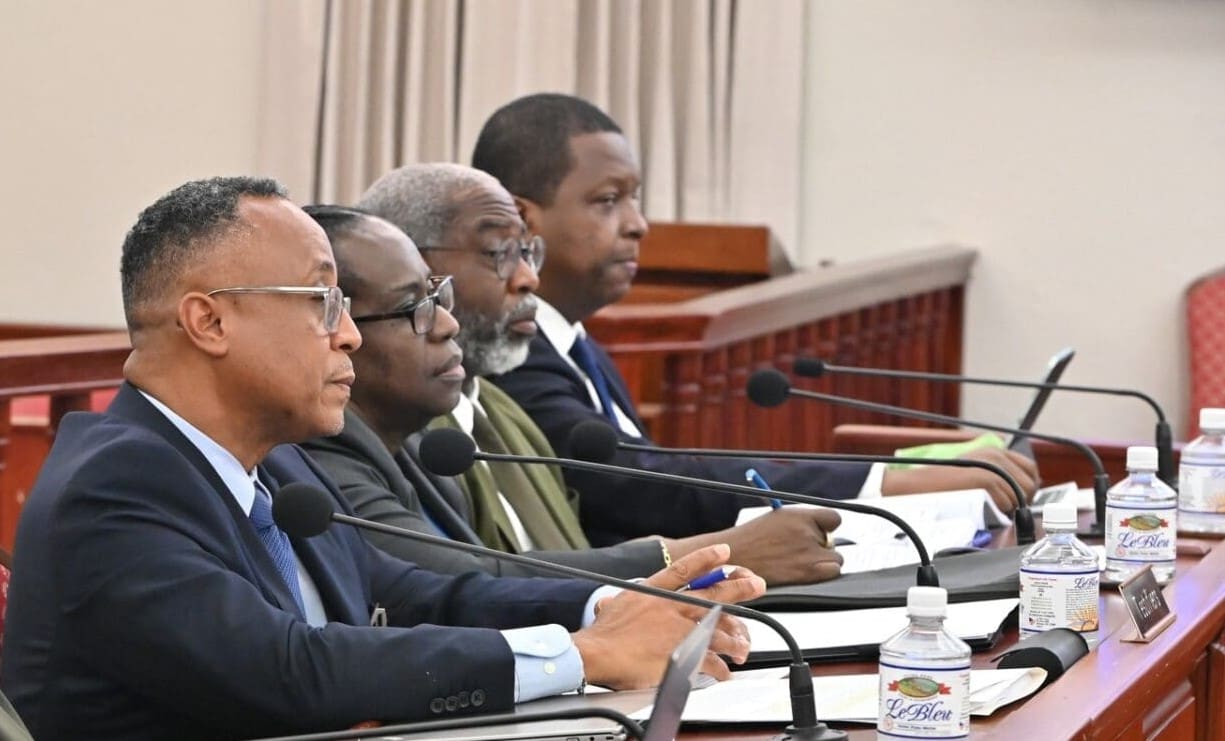
Members of the Government Employees’ Retirement System Board of Trustees acknowledged Thursday that the government might have a hard time raising another $13 million in contributions, but they mandated it anyway.
The board can raise employer contributions by 3 percent, and they did that in their monthly meeting.
When Angel Dawson, the system administrator, presented a budget overview to the Senate earlier this month, he mentioned the proposal. He wasn’t met with opposition, but Sen. Donna Frett-Gregory told Dawson that the government is facing revenue challenges.
The GERS resolution calls for an increase in the employer’s contributions from 23.5 percent to 26.5 percent based on an employee’s salary. No proposed increase for the employee contribution is included.

According to an explanation from GERS, if an employee earns $25,000 per year, the employer (the government) currently pays 23.5 percent for that employee, totaling $225.96 bi-weekly ($5,875 annually). With the increase of 3 percent, the amount will increase by $28.85 bi-weekly…for a new contribution total of $254.81 bi-weekly ($6,625 annually).
On Thursday, the trustees also approved the budget presented to the Senate on Sept. 3. Trustee Andre Dorsey asked for a synopsis for public transparency.
The operating budget for fiscal year 2025 is $16,842,809, an increase of $207,126 from fiscal year 2024. The total capital budget for the fiscal year 2025 is $5,860,355, representing a reduction of $339,445 compared to the fiscal year 2024. The proposed GERS budget for fiscal year 2025 is $22,703,164, representing a reduction of $132,319 compared to 2024.
CFO Denise Jeremiah testified that August collections of $12,677,279 were 47 percent of what was needed to disburse $26,696,542. She added that the year-to-date withdrawal from the investment portfolio was $145 million.
The U.S. Government Accountability Office says GERS “remains one of the lowest funded public pension plans in the U.S. While most public plans in our review had enough funding to cover 60 to 111 percent of plan liabilities as of 2021, USVI’s plan had enough to cover about 10 percent.”
Trustees attending the meeting were Dorsey, Nellon Bowry, Dwane Callwood, Leona Smith, and Vincent Liger.