

Home Blog Page 304

Education Update: From Facilities to Funding, Lawmakers Press for Answers on Readiness

0
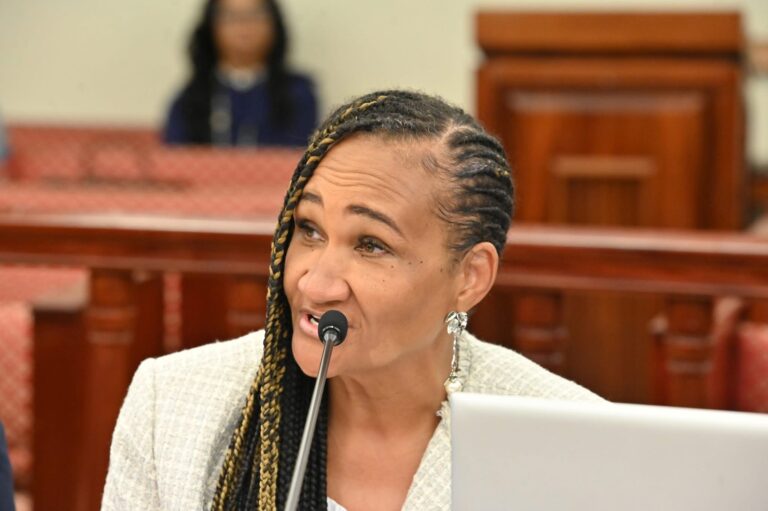
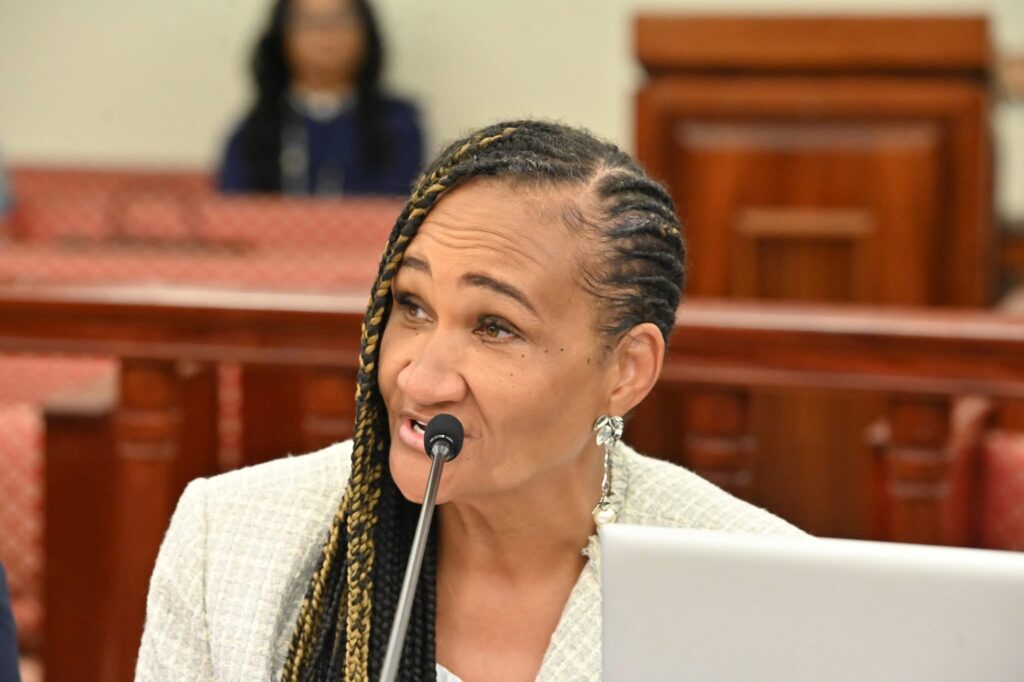
Education Commissioner Dionne Wells-Hedrington testifies before senators on school readiness, funding, and student support during an Aug. 29 hearing. (Photo by the VI Legislature)

A few weeks after the start of the new school year, V.I. Education officials found themselves defending both progress and persistent gaps during a Senate Committee on Education and Workforce Development hearing Friday. Senators pressed leaders on everything from mold remediation at John H. Woodson Junior High School to chronic absenteeism, student safety, and the department’s ability to sustain critical services once federal relief dollars expire.

The session came less than a day after an early-morning fire damaged the Department of Education’s St. Thomas headquarters. Commissioner Dionne Wells-Hedrington said the blaze started around 1:15 a.m. Thursday in a storage room where outdated IT equipment was housed. It destroyed the room and spread into a restroom, but did not reach the adjacent server room, which powers internet access for schools and offices across the district.

“We are very aware of the vulnerability we now face,” she told lawmakers, adding that had the fire hit the servers, internet would have been out in schools across the district, along with the department offices. While it’s secure for now, she said she’s been working with Education’s provider to explore cloud backup options.

Meanwhile, Bureau of School Construction and Maintenance Director Craig Benjamin said he met with the Fire Service the following morning and is awaiting their official report. Senators, however, worried about roof damage over the server area, with Sen. Kurt Vialet warning that heavy rain could cause additional problems.

Looking at other repairs, Benjamin reported that on St. Croix, mold remediation at Woodson had been completed and new air conditioning units were being installed in classrooms, with the library and main office already outfitted. Test results on air quality were due after the Labor Day holiday, and the department said in a release Sunday night that a staggered reporting schedule should have students back in the classrooms on Sept. 8. Senators Friday acknowledged progress, including the long-awaited replacement of Woodson’s library air conditiong unit, which had been out of service for more than three years. “There’s a lot of frustration, but also a lot of good happening that we don’t always see,” Vialet said.

Friday, senators also touched on what they described as the “silent crisis” of chronic absenteeism. Both territorial superintendents said each district has six attendance counselors and itinerant staff, about 11 in total, who conduct home visits.

“We do see improvements when those visits are made,” said St. Croix Insular Superintendent Carla Bastian-Knight. “When we don’t, that’s when we tap into Human Services.”

Still,Vialet argued that referrals alone aren’t enough. “The first time we file a child neglect case with Human Services, then you’re going to see improvement,” he said, noting that some kindergarteners had not yet reported to school two weeks into the term. “It comes back on Education because we see it in the test scores. We have to work to see how there can be coordination between Human Services and Education.”

The point, he said, was underscored by safety incidents during opening week, when videos surfaced of an altercation at Charlotte Amalie High School and a neighborhood fight days later with students in Eudora Kean uniforms. Officials Friday confirmed that the students involved had been suspended and the cases accelerated for further disciplinary review. St. Thomas-St. John Insular Superintendent Stephan Jurgen, in further questioning from Vialet, said it’s not Education’s intention to give anyone a “pat on the back.”

Those behavioral concerns, senators added, reflect the strain on the system’s limited mental health capacity. Wells-Hedrington acknowledged that staffing remains thin, with only a handful of psychologists and social workers spread across districts. Agreements with outside providers, including Master Key and Liberty Place, are helping to fill gaps, but coverage is inconsistent. Bastian-Knight said the department is embedding more social-emotional learning supports and trauma-informed training for staff. “This generation is carrying more than we can see, and it’s showing up in behavior, attendance, and engagement,” she said.

To address academic deficiencies alongside behavioral needs, the department has rolled out a Multi-Tiered System of Supports (MTSS) across all grades. The model groups students by need and offers escalating interventions in English Language Arts and Math. Jurgen said the shift allows schools to move away from one-size-fits-all instruction.

 “We are now addressing how many years behind a student is and tailoring support to that need,” he said. Bastian-Knight added that the framework is not new—it was previously known as Response to Intervention—but said this time it comes with more coaching and oversight. Vialet pressed officials to ensure follow-through, and to hold administrators accountable in running their schools properly.

Meanwhile, staffing levels remain a concern across the territory. Wells-Hedrington testified that as of the start of the school year, the department carried 51 teacher vacancies, up from 46 last year, along with shortages in critical support positions such as paraprofessionals, attendance officers, and school psychologists. She explained that recruitment efforts are ongoing, with new hires coming in from off-island contracts and stateside recruitment fairs, but the pipeline remains too thin locally.

To stabilize the workforce, the commissioner pointed to several initiatives. One is a new partnership with the University of the Virgin Islands to expand teacher preparation programs, including scholarships and support for paraprofessionals to pursue certification. Another is the department’s “grow your own” strategy, which identifies high school students interested in teaching and supports them through college, with the expectation they return to the classroom.

“We have to build from within,” Wells-Hedrington said, with Sen. Carla Joseph highlighting that only two students recently graduated from the University of the Virgin Islands, and asking the plan for building sustainability.

To address the long-term gap, Wells-Hedrington said the department is working with the governor’s policy office and Career and Technical Education to create a career pathway beginning in eighth grade, where students would take exploratory courses, earn dual credits, and graduate high school with enough credits for an associate’s degree in education. From there, they could transition seamlessly into a bachelor’s program and enter the workforce sooner.

“The goal is to launch the pathway next school year,” Wells-Hedrington said. Beyond teachers, the commissioner noted efforts to recruit more specialized staff, including licensed counselors and social workers, through targeted federal grants and partnerships with community providers. In addition, the department has rolled out new incentives for hard-to-fill positions, such as relocation stipends and bonuses for teachers in high-demand subject areas like math, science, and special education.

On the basic needs front, officials said school lunch operations are fully up and running, with hot meals being served for the first time in years. Wells-Hedrington confirmed that kitchens are staffed and supply chains are steady, though aging equipment remains a challenge. Federal USDA funds have been tapped to replace outdated appliances and improve food service. But lawmakers were quick to point out that some schools still lack fully operational kitchens.

Sen. Franklin Johnson, in particular, pressed Benjamin for answers on why kitchens at Claude O. Markoe on St. Croix and Eulalie Rivera on St. Thomas remain incomplete. “If you don’t have a kitchen with tools and utensils, you can’t cook,” Johnson said. “This is unacceptable. I want a date.”

Benjamin responded that both kitchens are federal funded American Recovery Act projects, but delays from change orders, theft, and repairs slowed progress, though both projects, he added, are being accelerated, with contractors working on the weekends. Benjamin said the funding was held up previously but the Bureau had recently received the “greenlight” to begin.

Bastian-Knight added that Markoe’s renovation is a fully funded ARPA project that has been extended by multiple change orders, while Rivera’s kitchen was on track until thieves stripped out brand new equipment and damaged tile. “It was my understanding a community partner had offered to help replace what was stolen, but whether that’s happened I cannot say. What I can confirm is the funding for the project is there.” Benjamin said replacement equipment is in storage until electrical and tiling work are completed.

Johnson, visibly frustrated, reminded officials this was not the first time the issue had come before the committee. “It’s been going on too long,” he said.

The exchange highlighted the critical role of federal funding in sustaining the system. Wells-Hedrington said the department is currently managing more than $49 million in ARPA allocations. Those dollars, she explained, are underwriting everything from kitchen renovations and HVAC upgrades to MTSS implementation, summer learning programs, and expanded mental health services.

“ARPA has allowed us to move forward on projects that would otherwise have remained on a waiting list,” she said. But she also underscored its temporary nature: “We are putting these dollars into infrastructure, into people, into systems that our students need right now. But these dollars are time-limited. We have to make sure that the investments we’re making are sustainable once the federal relief expires.”

Fort Christian Lot Paid Parking System Scheduled to Take Effect Tuesday

0

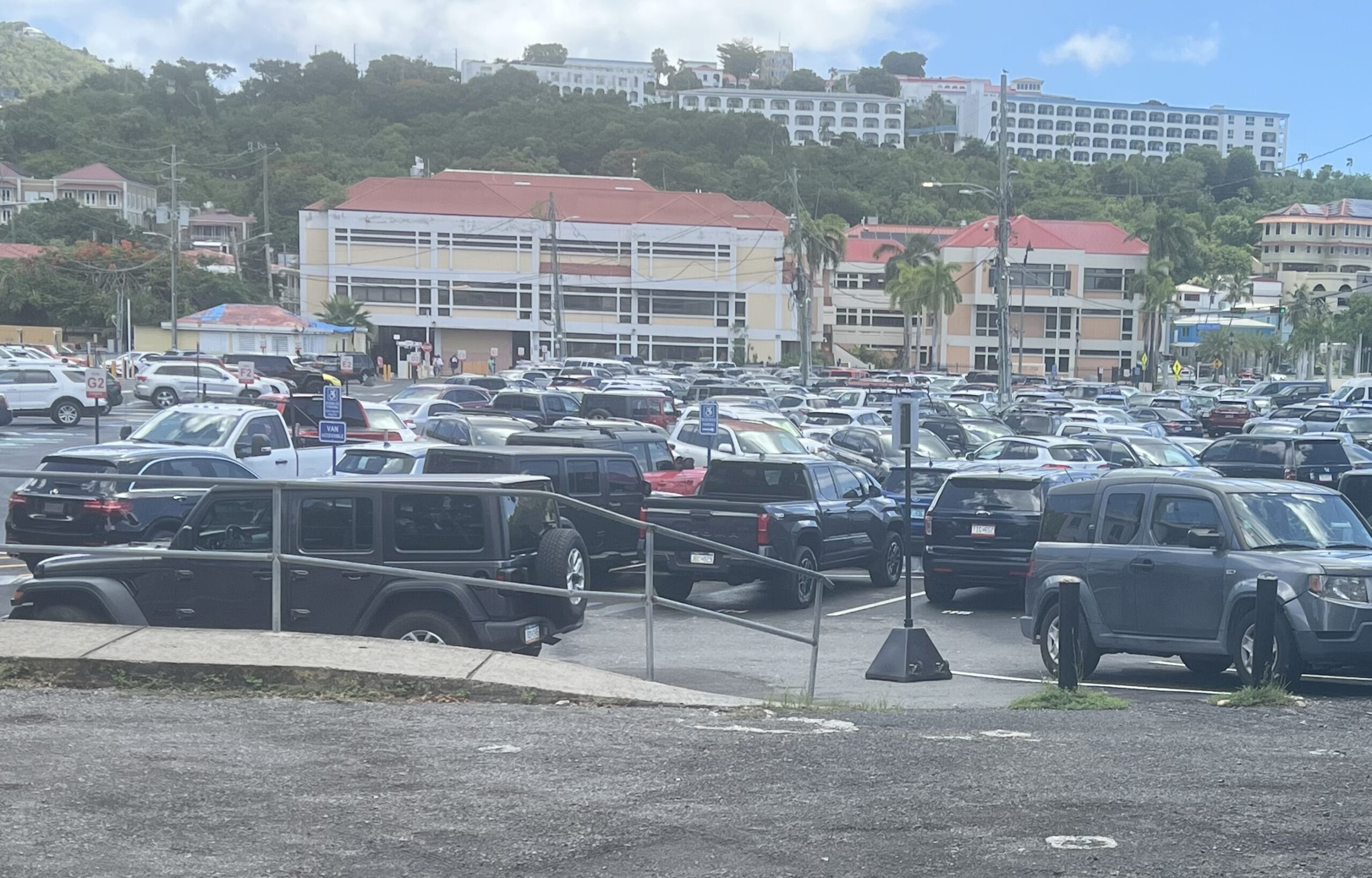
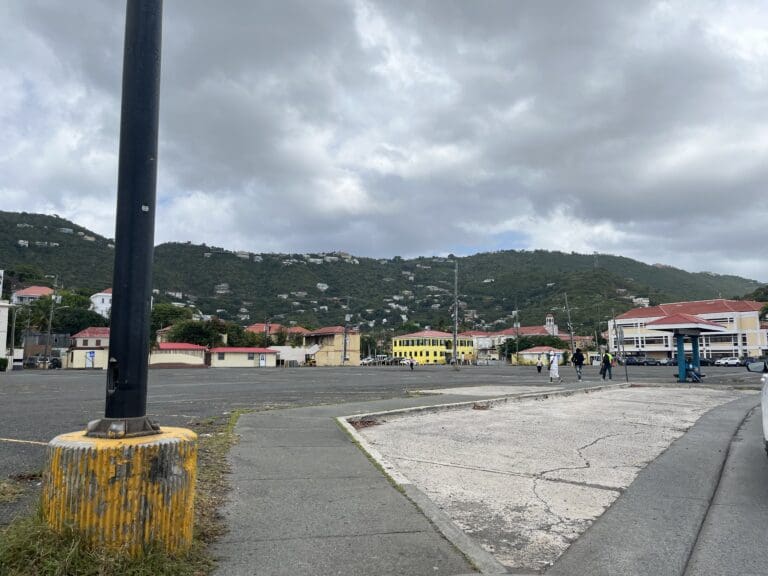
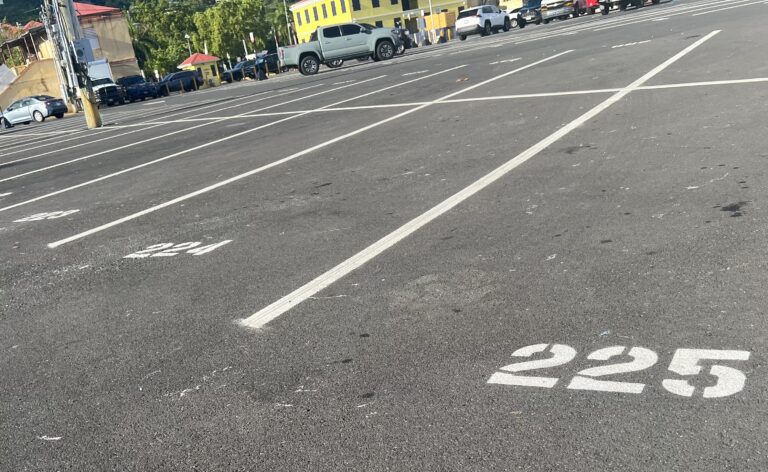
After several months of vacancy, hundreds of motorists have returned to the Fort Christian Parking Lot in Charlotte Amalie on St. Thomas.

(Source photo by Judi Shimel)

 In anticipation of a new paid parking system starting Tuesday, Public Works officials are advising anyone parked over the weekend to remove their vehicles by Monday.

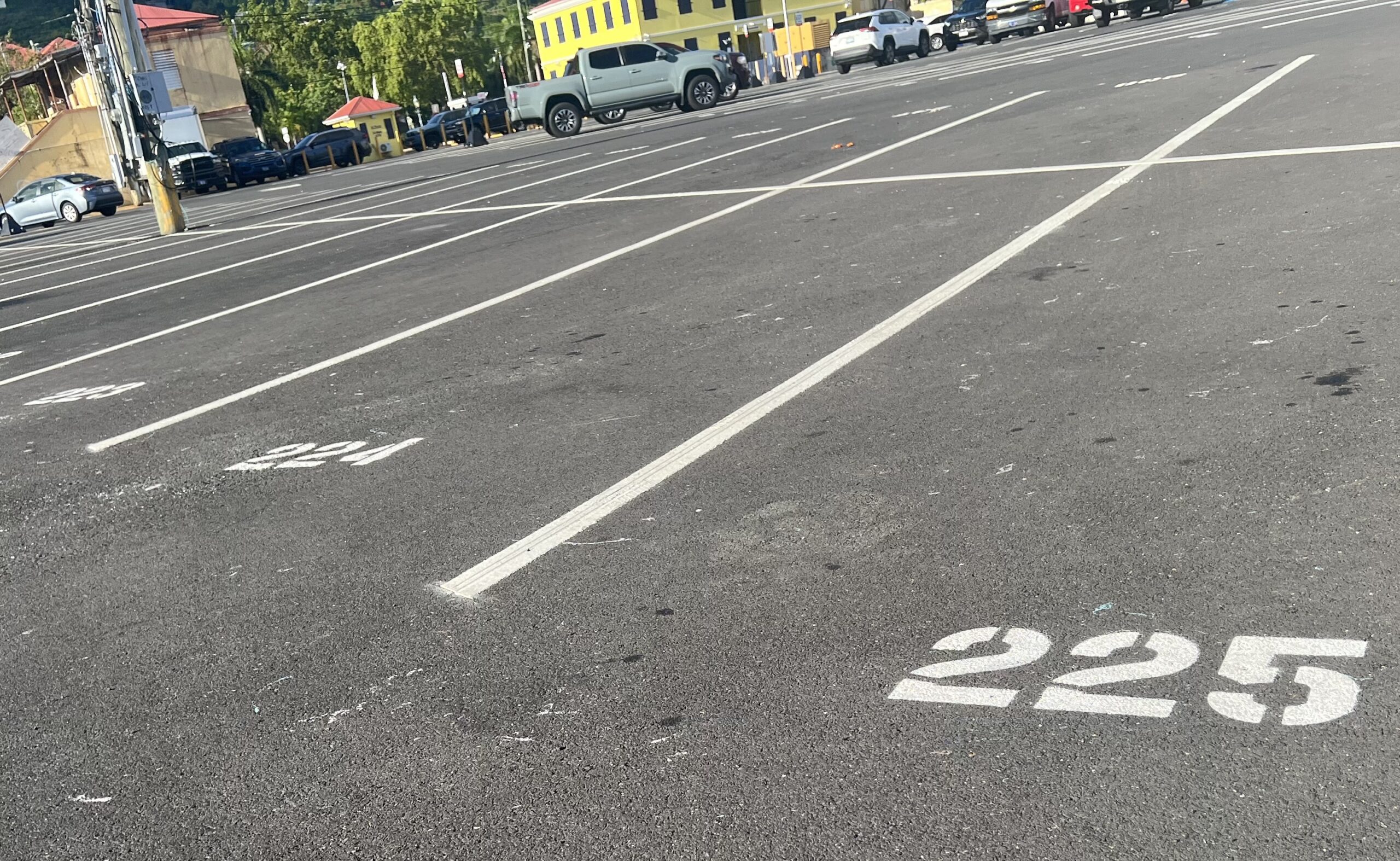
Those who fail to comply will be subject to fees for parking overnight, effective as of midnight Tuesday. Public Works Commissioner Derek Gabriel says the new paid parking system is part of a modernization project that features numbered parking spots, accommodations for disabled drivers that meet federal compliance, and charging stations for electric vehicles.

(Source photo by Judi Shimel)

“This is something that we have been working on. I want to say since in 2024, right? We realized that the parking lot had been over 30 years since the parking lot had been paved … and there were a number of potholes, drainage issues, utility utilities that the underground utilities that needed to be repaired. And so we finally were able to make that happen this year,” Gabriel said.

The commissioner said the paid parking system is modeled after similar systems on the U.S. mainland, with inspiration taken from the parking lots managed by the V.I. Port Authority. With encouragement from Government House, the project included clearly marked spaces for designated disabled parking, along with signage directing users to newly-installed ramp access from the lot to the sidewalk in the northwest corner.

(Source photo by Judi Shimel)

“For us to be finally ADA compliant, because we weren’t before these renovations that we recently made in the parking lot,” the commissioner said.

Repaving the lot was one of the first items on the task list, but allowing WAPA to upgrade its underground infrastructure and installing water systems for Carnival booths were also given priority. Underground infrastructure has been installed for the charging stations, which are expected to be in service by the end of the year.

Early work on the drainage system helped avert major flooding in the parking lot during the recent Carnival season. The year before, heavy rains produced enough flooding for promoters to cancel stage shows during the fete in 2024, he said.

(Source photo by Judi Shimel)

Numbered parking spots along with section markers were installed to help motorists remember where they parked. They also play a role in the new paid parking system, Gabriel said. For those who frequent the lot and pay by the month or more, parking spots can be tracked through the payment system. “We’re going to have it’s going to allow for payment input. But not only that, but we also are encouraging the public to get our monthly daily and annual passes. And of course, those passes also correspond to specific spaces,” the commissioner said.

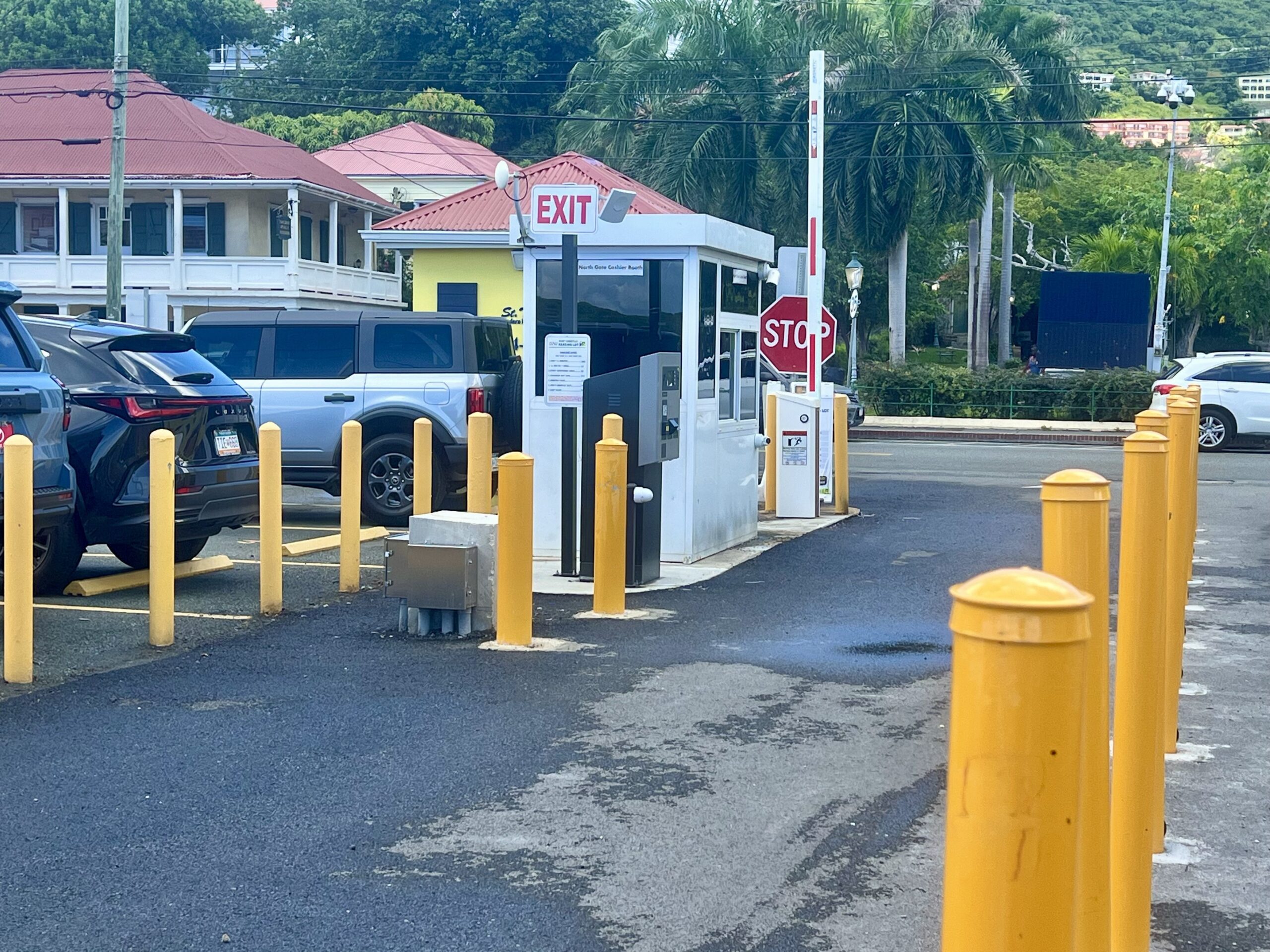
Those who pay annually will receive stickers to place on their vehicles, which will allow them to bypass the toll booths.

(Source photo by Judi Shimel)

Booth attendants will remain in place for those who wish to pay cash between 8 a.m. and 5 p.m. The new system also allows Public Works to charge and collect fees before and after business hours.

Gabriel expressed confidence that motorists will adapt to the new system within a few days of regular use. He added that equipment and plans are already in the works to perform a similar upgrade at the Strand Street Parking Lot on St. Croix.

John H. Woodson Jr. High Eyes Sept. 8 Reopening Pending Safety Clearance

0

The Virgin Islands Education Department announced that John H. Woodson Jr. High School is expected to reopen for students on Monday, Sept. 8, provided mold testing and air quality results confirm the campus is safe.

The school, which did not open alongside others on Aug. 13, remained closed due to critical summer repairs, including roof work and mold remediation. The Bureau of School Construction and Maintenance has completed roof repairs and remediation, with air conditioning installations slated for completion this week, according to a press release issued by the department.

“Out of an abundance of caution, the Department will not reopen the school until confirmation is received that the campus is safe for all faculty, staff, and students,” officials stated.

The proposed reopening schedule begins with staff returning on Thursday, September 4, for classroom prep, orientation planning, and document coordination. Student orientation is scheduled for Friday, September 5, and full classes are set to resume the following Monday — pending satisfactory environmental results, the press release said.

Officials noted the delay has created challenges for the school community. “We understand the inconvenience and uncertainty this delay has caused, and we deeply appreciate the patience, understanding, and support of the John H. Woodson school community,” the release said.

Op-Ed: The Reality of Horseracing in the V.I. and The Impact on Future Racing

Editor’s Note: The views and opinions expressed in this op-ed are those of the author and do not necessarily reflect the official policy or position of the Virgin Islands Source or its editorial staff. 

Horse racing action from 2011 at St. Croix’s Randall ‘Doc’ James Racetrack. (Source file photo)

Once again the Virgin Islands horseracing is in the spotlight. After attending the hearing last week before Judge Douglas Brady in the case of Arturo Watlington Jr. v. Hugo Hodge Jr., Laura Palminteri and Sheldon Turnbull, as members of the St. Thomas and St. John Horseracing Commission and their Racing Secretary Kareen Thomson, some troubling facts were brought to light.

Dr. Palminteri testified during the court hearing before Judge Douglas Brady on Thursday Aug. 28, 2025 under oath that she has been hired by the St. Thomas-St. John Horseracing Commission to conduct pre and post-race inspections of racehorses that participate at the Clinton E. Phipps racetrack, while having full knowledge that her and the racing commission’s actions are a conflict of interest in violation of Title 3 VIC Chp. 37 sub-section 1100-1108. Other members of the St. Thomas-St. John Horseracing Commission may have conflicts as well, giving the appearance of worst case scenario fraud and corruption and in the best case scenario conflict of interest – either way, the optics aren’t good.

Six years ago while I was serving as Chairman of the V.I. Horseracing Commission, I notified the V.I. attorney general about clear instances of conflict of interest by two sitting St. Thomas commission members, though no action was taken then and I am quite sure that in spite of the self-admitted conflict of interest, no action will be taken now.

Prior to horseracing resuming at the Clinton E. Phipps racetrack in April of this year there were very important questions that the St. Thomas-St. John Horseracing Commission to date has fail to answer even though they were claiming transparency:

  1. On the preliminary findings
  2. Who conducted the assessment of the track and are they qualified and reputable?
  3. Where is the report?
  4. How was a determination made on the cause of the injuries?
  5. What were the injuries?
  6. Was a necropsy done on any of the horses to include horses that died on non-race days?
  7. How was it determined that Horse Condition caused the injuries / fatalities?
  8. What specifically is meant by “Horse Condition”? Pre-existing injuries, disease, malnutrition, not fit for racing, a combination of some or all of these factors?
  9. Why was there conspicuously missing was any mention of doping? Performance Enhancing Drugs (PED’s), Medications, Steroids, and other substances that negatively impact horse condition? Is this because doping is normalized in the Virgin Islands and the effects are obvious?
  10. Why is Dr. Laura Palminteri conducting “Fit to Race Examinations”? Is she an Equine Veterinarian qualified to conduct “Fit to Race Examinations”? How can a member of the racing commission be directly involved in providing any services for the horsemen or the promoter when they are charged with regulating horseracing? Which is clearly a Conflict of Interest.
  11. Do other members of the St. Thomas-St. John Horseracing Commission have any interest in the horses or are providing goods or services in any shape or form while regulating horseracing.

When Gov. Albert Bryan Jr. approved Bill 35-0190, Amendment 35-292 repealing the Anti-Doping Law Act 8722 Section 6, he is quoted in his transmittal letter to then Senate President Novelle E. Francis Jr. dated April 25, 2023, “Although I have approved section 6 of the Bill, the section suspending the provisions of Title 32 V.I.C Chp. 11 Subchp II, relating to Horseracing Anti-Doping, I must remind the public that while the law is being suspended here, the Horseracing Commission of the VI has made it clear that they will not sanction any races that do not conform to Anti-Doping rules for horseracing”.

Since that time several races have been conducted at the Clinton E. Phipps racetrack and multiple horses had to be euthanized due to injuries. Therefore, the question that should be asked is what changed to allow horseracing at the Clinton E. Phipps racetrack without anti-doping or industry rules and regulations. Evidently the governor was not as sure about his racing commission as he thought he was. Clearly, the commission did not share his sentiments, and as they try to distance themselves from this debacle of multiple breakdowns and fatalities over the last 15 months, the facts clearly show they are complicit in causing them.

Suspending the Anti-Doping provision of the law did not suspend the Racing Commission’s regulatory authority. The St. Thomas-St. John Horseracing Commission’s acquiescence to the horsemen to allow them to race unsound racehorses without Anti-Doping is due to inept and feckless leadership of the St. Thomas-St. John Horseracing Commission and it’s members. Contrary to any statements made, it is my opinion that doping is a primary cause of the injuries and breakdowns. This is largely due to the self-admitted practice of doping injured horses to race them in the Virgin Islands. When injured horses are drugged the injury progresses to catastrophic injuries, breakdowns, and fatalities.

Attorney Watlington stated in court that there were no rules governing horseracing in the territory and that the public interest is of no consequence because we have no pari-mutuel wagering during horse races on St. Thomas. Attorney Watlington also stated, “The only thing we have here is illegal gambling.”

Those statements were factually correct but extremely disturbing. Ask yourself: what reputable promoter would want to get involved and invest any money with self-admitted illegal gambling and horseracing with no rules in the US Virgin Islands? Although I don’t support, he was correct in his assertion and I agree that is the case. However, that is also the source of the problem.

Dr. Palminteri testified that on more than one occasion she cleared the horse in question (Guillaume) to race “against my better judgement”. This indicates that horses are allowed to race base on how Dr. Palminteri feels about it at any given time and not by any established rules or regulations. This is what happens when the horsemen and elected officials support deregulation and resist structure and discipline in horseracing. With that said, Dr, Palminteri’s decision has merit when taken into consideration the following: the age of the horse; number of races ran; the fused ankles (according to Dr, Palminteri); and the prescribed treatment of injecting his ankles with various medications. All of these can be considered to be leading indicators that predict a very high potential for catastrophic injuries or death to the horse and rider.

It was also gratifying to hear testimony from Dr. Palminteri that she was driven by her conscience to finally take preemptive action in the interest of the health and welfare of a horse being raced in the territory.

This case clearly indicates the critical need for horseracing governed by established rules and regulations. Industry best practices should be the benchmark and not the easiest practices. What most of the well-established racing districts throughout the United States and Canada follow are the ARCI model Rules. The territory should seriously consider adopting those rules to insure that we have sustain horseracing in the territory and attract legitimate racing promoters.

The horses on St. Thomas USVI are being raced under cruel conditions while they are being injured and dying. The message from the St. Thomas-St. John Horseracing Commission is that they intend to continue this cruelty. It is also my opinion based on statements made that unregulated medicating and doping and track surface are the two primary causes of these injuries closely followed by poor nutrition and training practices.

The fact of the matter is that doping is a crutch used by what passes for trainers in the Virgin Islands: untrained, unschooled, incompetent, and inept. They simply can’t train racehorses. Sound horses trained by competent people do not need to be doped. Substandard horses trained by incompetent grooms pretending to train racehorses and impersonating legitimate trainers NEED doping and they have said as much to the Virgin Islands legislature.

The position taken by the St. Thomas-St. John Horseracing Commission in January that “horse condition” is the cause of the injuries and fatalities only further erodes any confidence in their ability to effectively regulate horse racing and insure the safety of the horses and riders because by Dr. Palminteri’s own testimony, she was approving unsound horses to race against her better judgement. The Horseracing Commission is fully aware that unsound horses are being medicated and doped to run in the races on St. Thomas. The horsemen have testified to this before the V.I. Legislature. This is a matter of record, yet there have been no corrective actions taken or recommended to address what is clearly a primary cause of these incidents. How does the St. Thomas-St. John Horseracing Commission reconcile allowing unregulated medicating and doping of racehorses while ensuring horse safety? That is impossible as both are mutually exclusive.  You can’t have both, it’s one or the other.

This is obviously unsustainable. This is intuitive. This is common sense. So, clearly there is no common sense being employed by the St.  Thomas-St. John Horseracing Commission, who think they are promoting horseracing, but in reality are killing the sport.

While this is unpleasant to hear and to say, it is accurate and exactly how we are perceived in the larger horse racing industry. The current leadership of the St Thomas-St. John Horseracing Commission enables and supports discord and chaos of horseracing in the territory by refusing to provide the leadership required to meet the changing realities of horseracing.

Hugo Hodge, as the chairman of the racing commission, is the head of the mob that refers to themselves as the horsemen. The difference between a mob and an organization can be summarized by three attributes: discipline, order, and structure. Leadership can be defined by courage, vision, and integrity. Until these conditions are met, the future of horseracing in the territory will not survive pass the next five to seen years. For our brothers and sisters in Puerto Rico, horseracing has been under tremendous scrutiny for some time now and is coming to grips with this reality. I am also quite sure that they will make the necessary adjustments. I suggest we do the same here then all we can hope for is it’s not “too little, too late”.

—Jay Watson is a St. Croix resident with nearly three decades of law enforcement experience; he is also a former V.I. Horse Racing Commission chair and vocal proponent of improving the sport within the territory.

Editor’s Note: Opinion articles do not represent the views of the Virgin Islands Source newsroom and are the sole expressed opinion of the writer. Submissions can be made to visource@gmail.com

Virtue of the Week — Patience

Virtue of the Week — Patience

Virtue of the Week focuses on building peaceful and caring communities through understanding and fostering the practice of virtues. The Source supports the Virtues Project and will publish one virtue developed by the project each week.


Patience

Patience is quiet hope and faith that things will turn out right. We trust the process of life. We do not rush or allow ourselves to be overcome by pressure. We respond to mistakes or delays, not with judgement but gentleness. We recognize the lessons that come through waiting and receive them as gifts. Patience brings acceptance. It calls us to be still in the moment, to be restful and to listen deeply.

Quote: “Our patience will achieve more than our force.” —Edmund Burke

The Practice of Patience

I am hopeful and expectant..

I do not rush.

I live fully in the present moment.

I am gentle with myself and others when we make mistakes.

I accept things I cannot control with humor and grace.

I allow life’s lessons to play out in their own time.

Questions for Discussion

  • Is there any gentleness we are withholding in our community? From ourselves or from others in our community? What would it look like to extend gentleness?
  • What gives us hope in our social justice work?
  • What acceptance can come out of our social justice work?
  • What does patience look like in your strongest relationships?

Sign up to receive the Virtue of the Week by email!

Visit https://cfvi.net/Virtues-Project, and scroll to the end of the page to fill out the form.

Virtue of the Week is provided by the Community Foundation of the Virgin Islands (CFVI) in partnership with the VI Source and Virtues Matter.

About the Community Foundation of the Virgin Islands

Since 1990, CFVI has been a catalyst for positive change in the territory through initiatives committed to youth, learning, family support and the environment. With a professional staff and a volunteer Board of Directors composed of community leaders, CFVI is a trusted advocate and supporter of programs that ensure opportunity and sustainability for current and future generations. CFVI is a registered non-profit organization entirely supported by individual donors, grants, trusts, corporate donations and estate planning. For more information, visit cfvi.net.

About Virtues Matter

Virtues Matter was started by a passionate wife-husband team of social entrepreneurs seeking to positively uplift as many lives as possible. We aim to inspire and empower, to build capacity, strengthen relationships, and help everyone lead lives of passion and purpose.

Virtues Matter believes in a world where people are committed to kindness and respect, strive to be their best, and live with hope, courage, and in unity. We built the Virtues Cards mobile app, an interactive personal and team development tool, to help people identify and develop key virtues skills. We also offer dynamic workshops, online training, and customized programs to help people cultivate these positive qualities of character. To learn more, visit virtuesmatter.com.

To learn more about the Virtues Project, visit virtuesproject.com.

Weekly Weather Forecast With Jesse Daley

0

Check out our weekly weather forecast with Jesse Daley, covering Sunday, Aug. 31, through Saturday, Sept. 6. Our YouTube playlist is updated every week, AND check out Jesse’s daily weather updates here.

Church’s Texas Chicken Opens in Sunny Isles, Bringing New Energy to St. Croix

0

Sunny Isles came alive with excitement as Church’s Texas Chicken officially opened its doors Saturday.

The official cutting of the ribbon at Church’s Texas Chicken in Sunny Isles. (Source photo by Diana Dias)

“Today we are not opening just a restaurant, we are opening new doors to opportunities and jobs for St. Croix,” said a speaker at the grand opening, Lanie Jno-Baptiste of Church’s Texas Chicken in Sunny Isles.

Paul Lockhart, operations manager, said, “We put in a lot of hard work for weeks and weeks. One thing about our company is that if we don’t think of the community when creating something, then we did not think big enough. It’s a great product we are putting into the community — something we have never had before.”

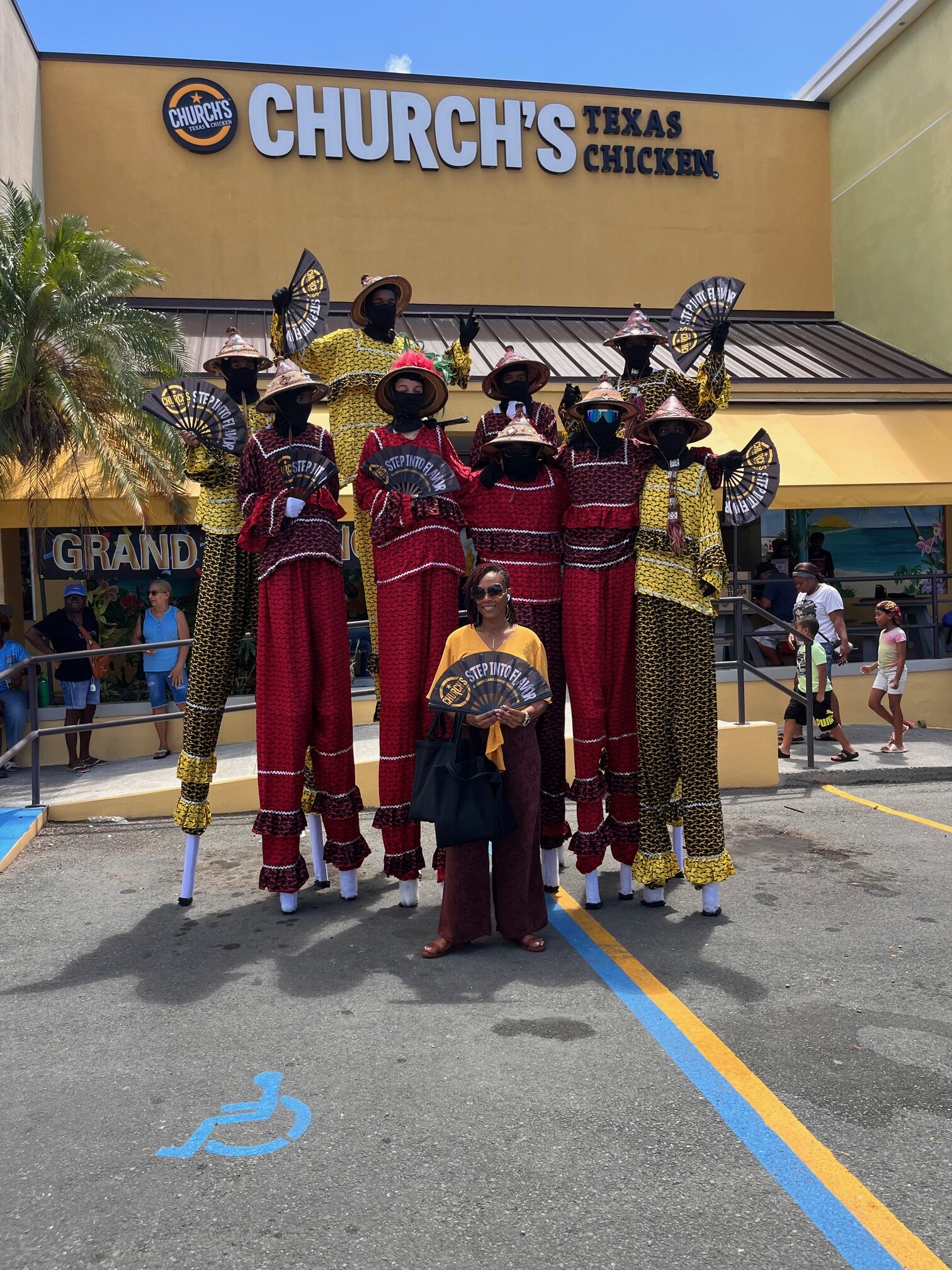
The Guardias of Culture Moko Jumbies at the opening ceremony for Church’s Texas Chicken at its new Sunny Isles location. (Source photo by Diana Dias)

Lockhart added that franchise owner Dr. Peter Kumpitch, a seasoned restaurant entrepreneur who has lived on St. Croix since 1972, believes that anything brought into the community should be of quality. The new location will be operated by Wenvi, Kumpitch’s franchise group.

To promote the opening, the St. Croix location used local influencers to spread the word in the community.

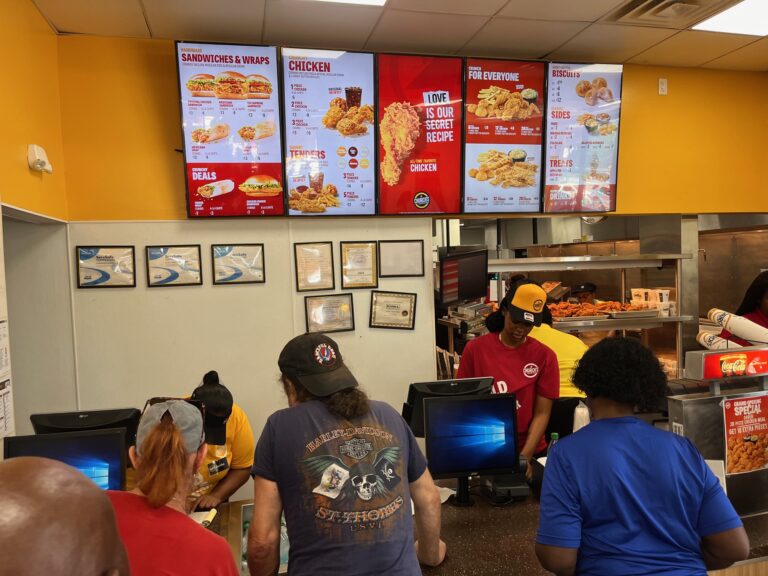
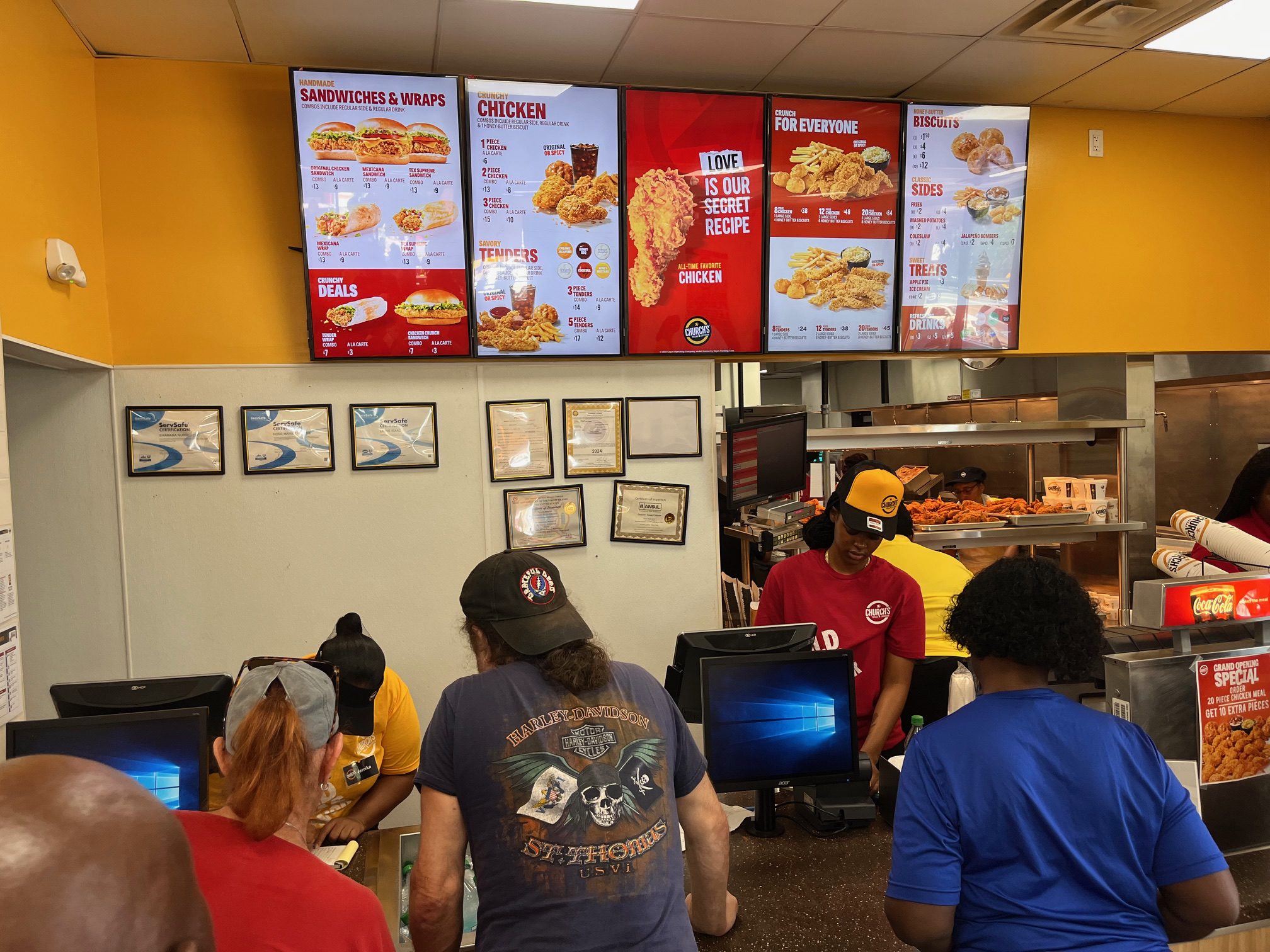
The staff welcome customers to Church’s Texas Chicken in Sunny Isles. (Source photo by Diana Dias)

Jim Finkle, senior director of International New Market Strategy at Church’s Texas Chicken, praised the St. Croix team for its efforts. “It was no small feat to turn this into a Texas Chicken, and congratulations to them.”

Sen. Hubert Frederick was also in attendance to extend his congratulations.

Frederick expressed his excitement about the addition of a new dining option on the island. “I just want to express how happy I am that we finally have another restaurant here on St. Croix. On behalf of Milton Potter, president of the 36th Legislature, I want to welcome each and every one who came out to support this business.”

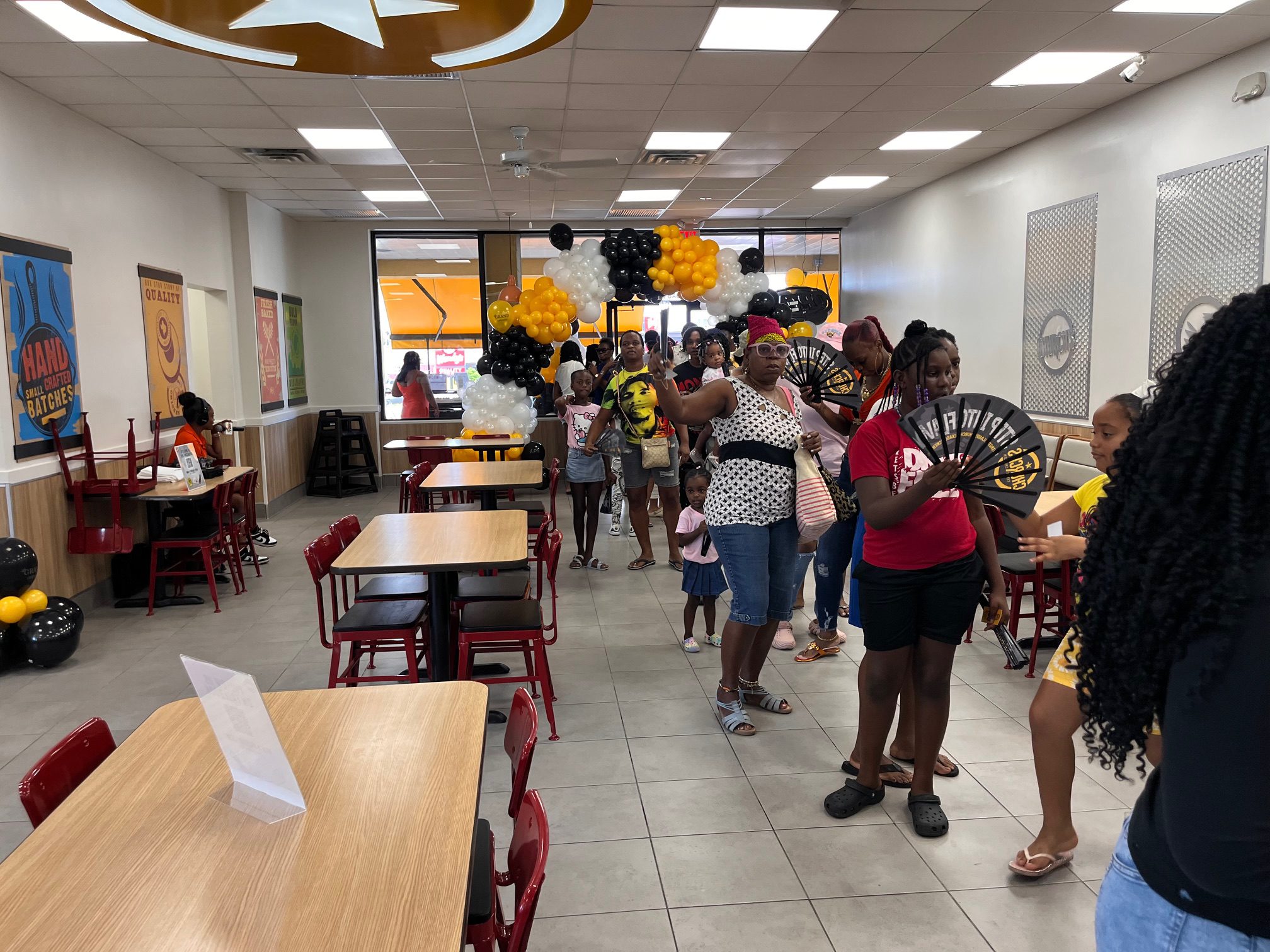
A long line at the grand opening of Church’s Texas Chicken in Sunny Isles. The first 100 people were given a piece of chicken along with a biscuit. (Source photo by Diana Dias)

Frederick, who said he has known Kumpitch since his days at First Bank, noted that Kumpitch has invested in several other businesses on the island. “The same way we praise other businesses, we need to praise our own and support our own.”

As part of the grand opening, the first 100 customers received a promotion of one piece of chicken along with a biscuit.

Consumers can expect the restaurant to open daily from 10 a.m. though hours might change in the future.

Inter Island Culture and Friendship in Emancipation Garden

0
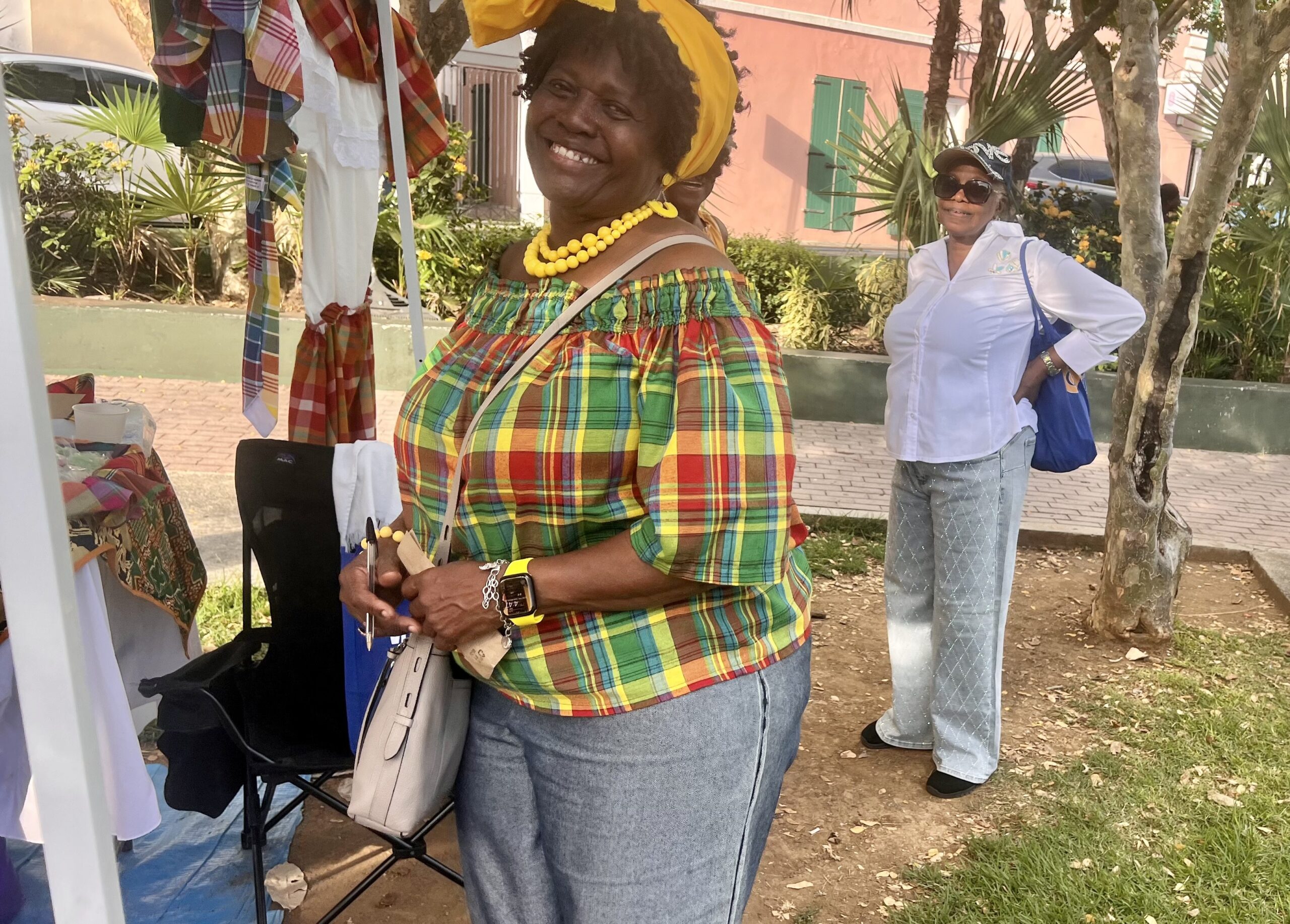
Charlene Adams dressed in Madras, celebrating the day’s festivities. (Source photo by Judi Shimel)

A few weeks ahead of the official USVI-BVI Friendship Day observance, the League of British Virgin Islands and the V.I. Tourism Department put on a weekend celebration of interisland bonds. They were joined by local businesses and representatives from the Office of Delegate to Congress Stacey Plaskett.

One of the chief organizers of Saturday’s fete in Emancipation Garden said the event was originally planned for 2024.

League President Moleto Smith expressed satisfaction with the number of people who attended the celebration and the turnout throughout the day.

“It turned out very wonderfully. It was a packed house, a full program. We had a delegation of 20 people that came down from the Virgin Islands, from the British Virgin Islands, which included the Razor Blade Fungi Band … and 12 members of the BVI Culture Bureau, who did a wonderful job,” Smith said.

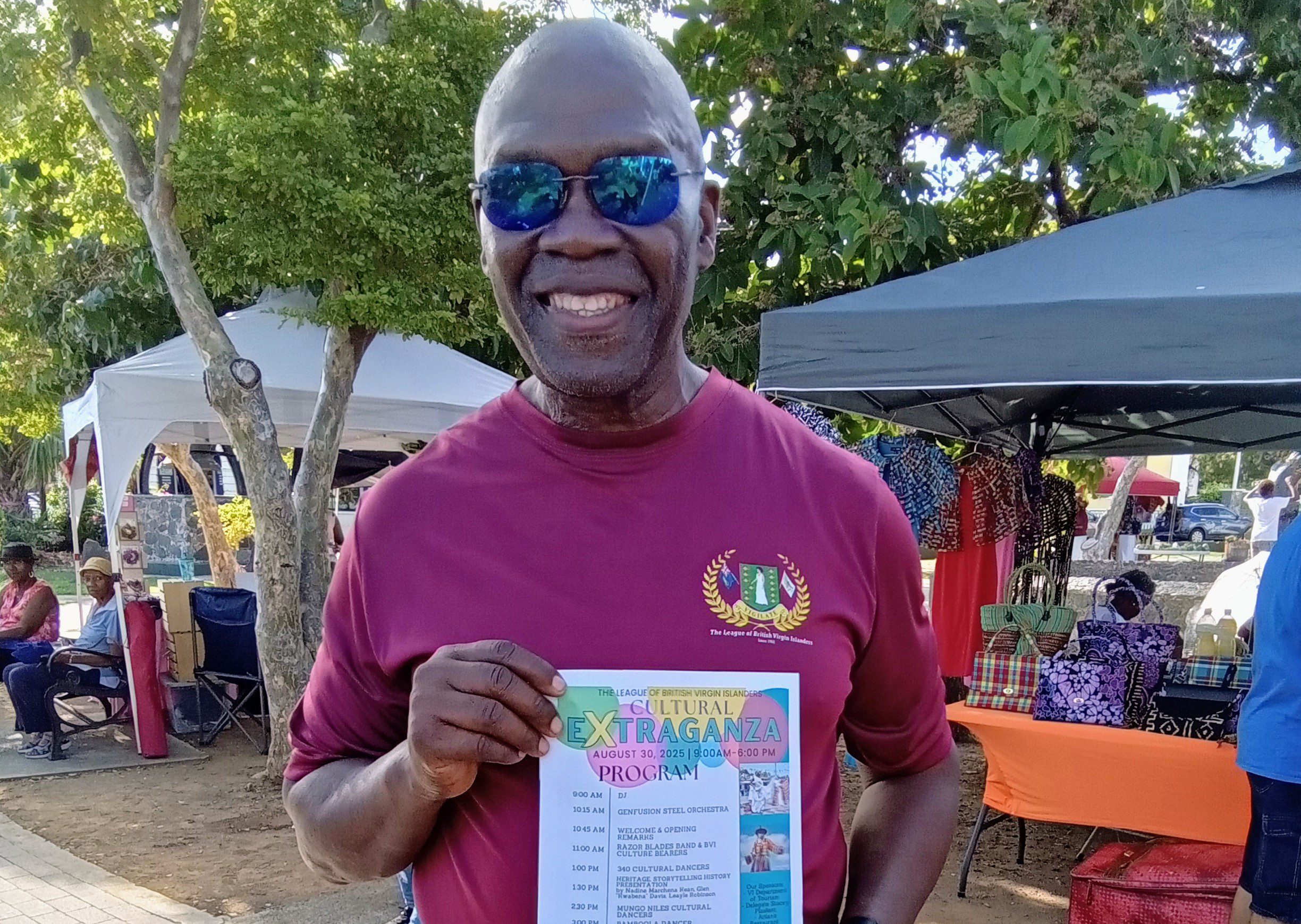
Moleto Smith shows off the event’s program. (Source photo by Judi Shimel)

Mongo Niles Bamboula dancers and Gen Fusion Youth Steel Band added their talents to the entertainment roster.

But perhaps the highlight of the day was an hourlong cultural, historic, and genealogy presentation that we had for an hour with presenters Glenn Kwabena Davis, Nadine Marchena-Kean and Leal Robinson.

“They talked about a number of things around the culture and the history and the genealogy that connects the U.S. Virgin Islands and the BVI and the greater part of the Caribbean,” the league president said.

The roadway bordering the south side of the garden served those in need of refreshment. Food trucks and food stands offered meals, snacks and native drinks. Inside the garden, Debbie Cozier sat next to a table of desserts — black cake, potato pudding, stewed cherries and stewed tamarind.

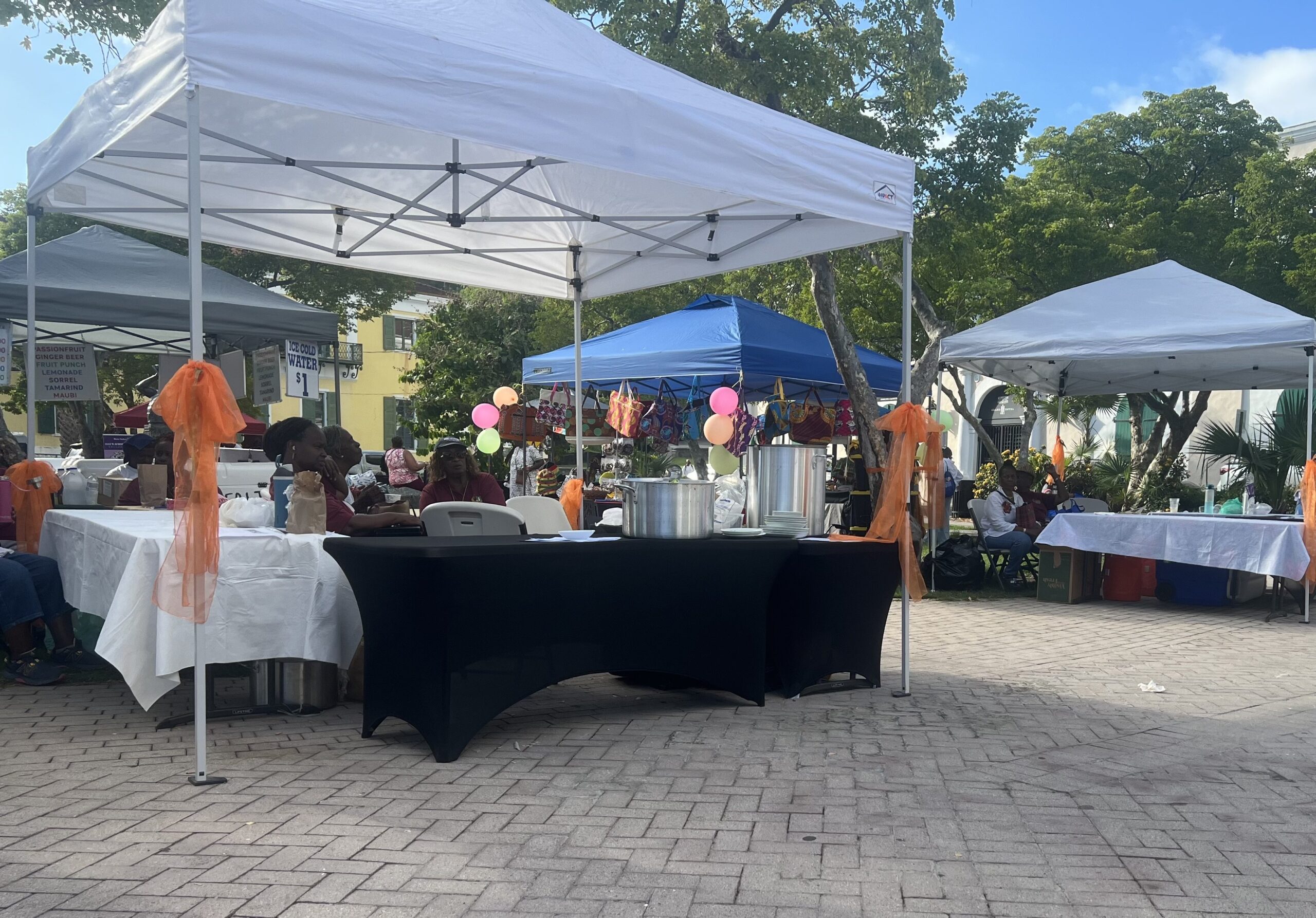
Many vendors turned out for the inter island celebration. (Source photo by Judi Shimel)

Cozier said her offerings are also seen during Carnival season at the annual Food Fair, where the stewed fruits are a popular item.

At another vendor stand, Maria Encarnacion and her three children sold homemade hair ornaments. The mom said she was there to support her 12-year-old daughter’s business venture called Xiomy’s Boutique.

The young entrepreneur beamed across the counter display of decorative hair bows, which she said she sews with help from Mom.

Xiomy’s Boutique sells beautiful bows during the event. (Source photo by Judi Shimel)

Brother Merkael and sister Ellyana sat quietly nearby. On the other side of the garden, near the bandstand, Charlene Adams and some friends bounced to the tunes provided by a deejay.

Her stand, called Something and Anything, displayed madras fabric for sale, along with copies of a book written by Doris Carmona — her sister— titled Lahd, Wha ‘Tis Dis?

Adams said she enjoyed the day’s activities and looked forward to joining future celebrations.

Smith said he already had a list of vendors — including some who couldn’t participate this year — who wanted to be counted in at the next staging of the interisland fete.

And for those who can’t wait for planners to see what’s in store for 2026, the official USVI-BVI Friendship Day is scheduled to take place Oct. 18 and 19.

“I am very happy that a lot of people have come out, have some family-friendly fun, and enjoy the day, Smith said. “We are just so glad that folks came out and they just really, really had a good time.”

Fort Christian Parking Lot Payment Returns Tuesday

The Department of Public Works advises the public that daily payment operations at the Fort Christian Parking Lot will resume on Tuesday, Sept. 2.

The Fort Christian lot (Photo: Mat Probasco)

Cashier services will be available from 8 a.m. to 5 p.m. at the main cashier’s booth until new 24/7 kiosk systems are fully operational. Motorists are reminded that all vehicles must be removed from the lot by Sept. 1, to avoid being charged an additional day’s fee.

“We want to make parking as easy and convenient as possible for everyone,” said Commissioner Derek Gabriel. “I strongly encourage motorists, especially our government employees and those working in downtown, to take advantage of the monthly and yearly parking passes, which are available for purchase at the parking lot’s main office.”

DPW thanks the community for its cooperation as the department continues to improve parking services in downtown Charlotte Amalie.

Stay connected with DPW: follow us on Facebook, Instagram, YouTube, and Twitter, or visit dpw.vi.gov for updates.

FIFA Gives USVI Football Gets A Leg Up

0

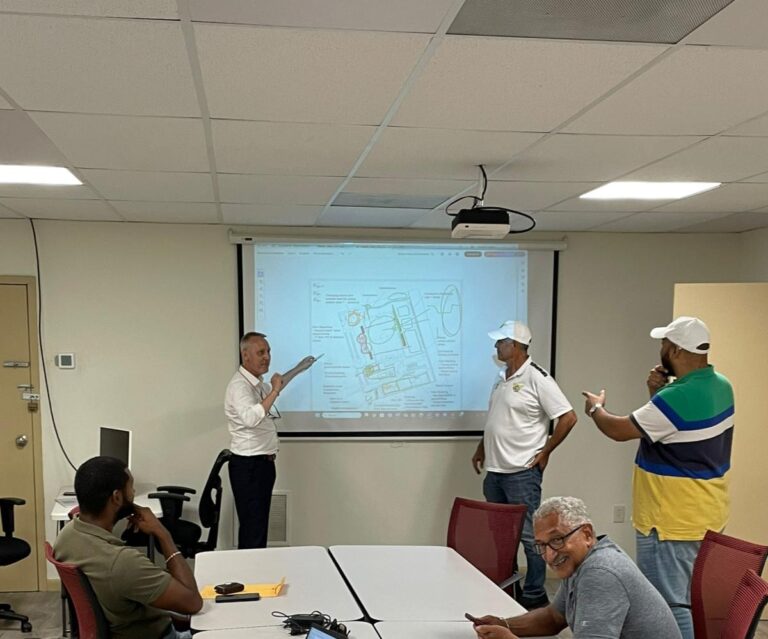
The U.S. Virgin Islands Soccer Federation hosted senior FIFA representatives, Jordan Victoire, Lead Regional Office (Barbados), and David Rosa Manez, FIFA Infrastructure Consultant, during a three-day working visit, Aug. 25–27. Meetings were held with USVISF General Secretary Firas Idheileh, President Yohannes Worede, Vice-President John P. de Jongh, Council Member Michael Bornn, and Local Design Expert Jeffrey Boschulte of Boschulte Engineering.

FIFA and USVI officials discussed infrastructure developments for USVI Soccer.

The visit reinforced FIFA’s commitment to football in the Virgin Islands. Mr. Victoire, with over a decade at FIFA overseeing the FIFA Forward Program across the Caribbean, and Mr. Rosa Manez, a global expert in football infrastructure projects, engaged with USVISF leadership and local experts to shape the next phase of football development.

On St. Croix, discussions focused on the expansion of the St. Croix Technical Center and Headquarters and the future Bethlehem Soccer Stadium Master Plan, largely supported through the Virgin Islands Grant (Act No. 8474, as amended by Act No. 8616).

On St. Thomas, site visits and planning sessions laid the foundation for the St. Thomas Technical Center/Stadium, envisioned as a hub for national team training, domestic competition, and the return of international football to the Virgin Islands. USVISF President Yohannes Worede noted the meetings were “extremely progressive,” highlighting the federation’s commitment to leaving a lasting legacy for players and the wider football community.

Jobs - Click Here