

The other day, I got a call from Dr. Elizabethada A. Wright, a professor of English, Linguistics and Writing Studies at the University of Minnesota. She wanted to interview me on sacred places of the Virgin Islands. The interview took place at my office at UVI, where we discussed sacred places of the Virgin Islands. She was overwhelmed with so much information that I gave her, despite my tight schedule. She and her son took lots of notes as well as rare information about historic documents that I shared with them on the cultural, historical, and archaeological history of these islands.
The interview was very powerful, touching, enlightening, and spiritually moving as I discussed with them sacred places of our islands, and the greatness of our ancestors. Believe me, she was excited, thrilled, and fascinated with the history of the Virgin Islands, especially Maroon Country, the colonial gravesites, and pre-Columbian sites of people that lived on these islands for a millennium or centuries ago. She wrote me back and said, “Hello Dr. Davis, I would like to thank you so much for taking the time on Wednesday to share a tiny bit of your vast knowledge with me. I apologize for not writing to thank you earlier, but I have been traveling around St. Croix following up on so many of the sites that you told me about.”
She further stated in her notice to me, “I did venture a bit into Maroon Ridge, but not as far as I would have liked. The Baobab trees have fascinated me. One narrative I learned after talking with you was that of Queen Mary, after whom the highway is named. Do you know, by any chance, where she is buried on the island? Or if anyone knows? I will be in touch with you again — and I hope to talk with you soon.”
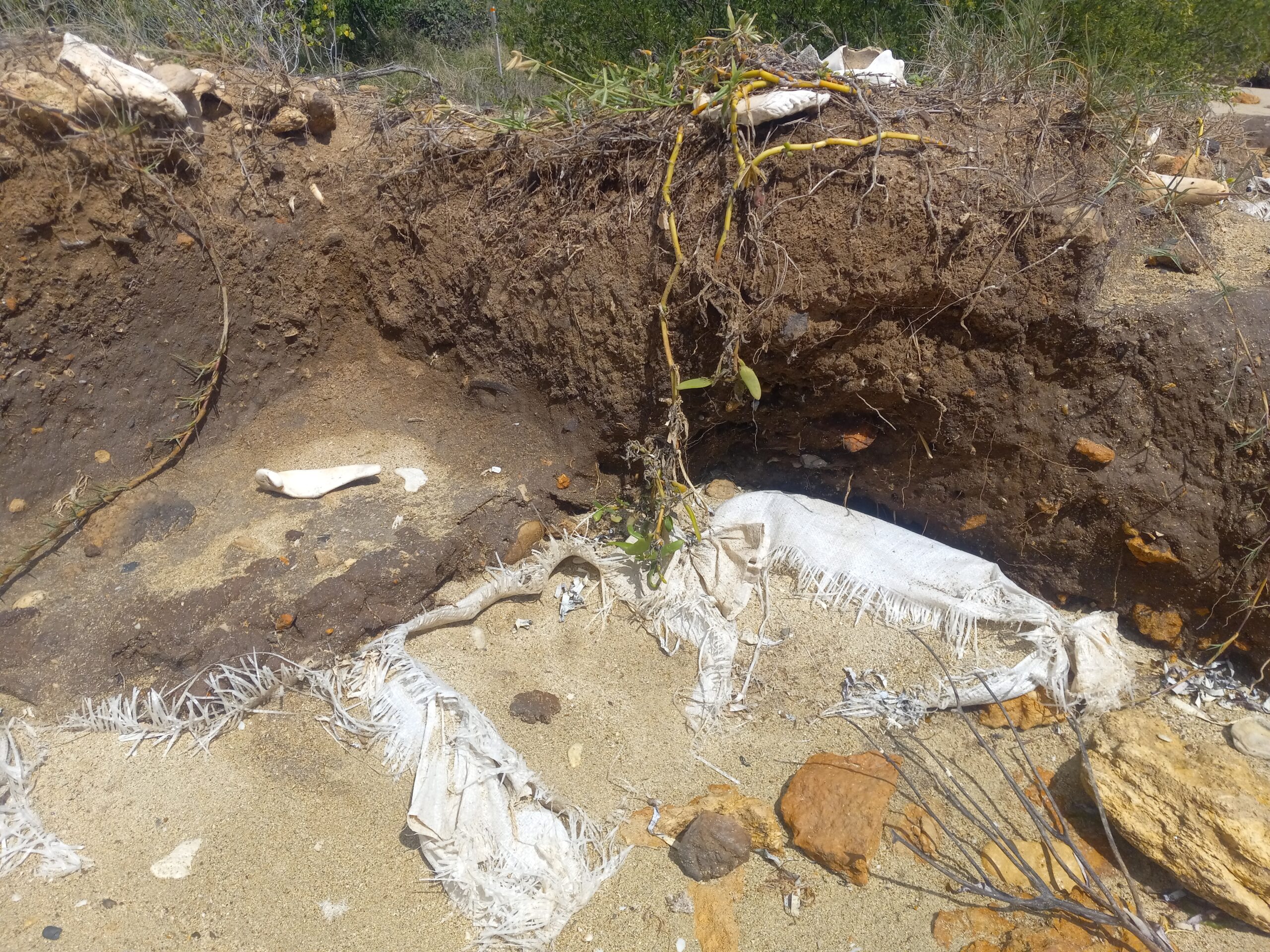
With the discussion I had with Dr. Wright and her son about sacred places in the Virgin Islands, I reflected on a previous article I wrote about not only the scared burial of Queen Mary but also Queen Susannah “Bottom Belly,” Queen Mathilda and George Washington, an enslaved person buried in Maroon Country. I was inspired by her to write a brief history on gravesites and the importance of them to our history. Believe me, one of our most sacred places in Virgin Islands history is our gravesites, particularly slaves, and pre-Columbian sites. Gravesites give us an understanding of our past history, as painful as it might be, and how slaves and indigenous people buried their dead, rituals they had, funeral ceremonies at gravesites, traditional African burial, and so on. Our major historic cemeteries are in the towns of the Virgin Islands.
However, many people don’t realize that plantations or estates in the Virgin Islands have their own burial grounds. Most of these gravesites today are covered with forests, shrubs, or bushes. There are laws that protect historic gravesites in the Virgin Islands. That law is known as the Antiquities and Cultural Properties Act, which protects historic gravesites whether they are on public or private land. The law also includes the protection of pre-Columbian sites. In other words, Native Americans, or indigenous people historic sites. The law also includes Jewish historic gravesites or any graves that are considered historic in the Virgin Islands.
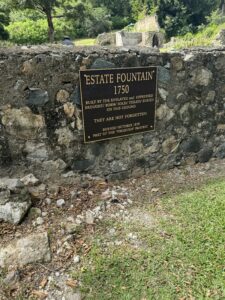
In fact, historic gravesites are considered a National Historic Site of the United States and the Virgin Islands. For example, the St. John’s Episcopal Church in Christiansted graveyard has been on a National Register of Historic Places since 2019. Reimert Haagensen, a Danish planter who lived on St. Croix during the 1740s and 1750s, mentioned in his notes about slaves’ burial. When a slave got very old, Haagensen stated, they were employed by taking care of small matters. When he became useless, according to Haagensen, the slave was provided with food until his death. That same day or evening when the slave died, Haagensen noted, “his body is placed in a hole in the field without a casket, without ceremony or any other observance.”
Haagensen did mention in his notes that there were some slaves, due to their service in the planter house or their knowledge of some trades, who were buried in a board coffin. Slaves would ask their planters for permissions to dance and honor their dead. “When this takes place, they jump around in their crazy ways and sing, in addition to beating their fingers on a skin they have made into a drum; this is their best of a funeral,” noted Haagensen.
C.G.A. Oldendorp, a Moravian missionary who visited the Danish West Indies in 1767 and lived there until 1768, mentioned in detail how slaves buried their dead. However, I wouldn’t be able to describe in detail what he said due to the limits of space in this article. He did mention that there were designated places on the estates for slaves’ burial, some of them not buried far from their houses. He also mentioned that many slaves followed the coffin with singing and dancing, accompanied by the sounds of drums, calabashes, and other handmade instruments.
Lieutenant Brady, who was an officer in the British Navy visited St. Croix in the 1820s, also described what he saw of slaves’ burial. Brady mentioned before the slave was laid to rest in the ground, that in the evening family and friends assembled in the house. “The first watch was passed in praying and singing psalms, under the direction of a helper of the Moravian church, of which the deceased had been a member…” noted Brady. At midnight, Brady said, which is customary time among slaves, “free slave”, etc., the interment service for the funeral took place with praying and singing, which were repeated at the gravesite and in the house after which the supper (dinner) was partaken of. At about two o’ clock in the morning people dispersed to their own homes.
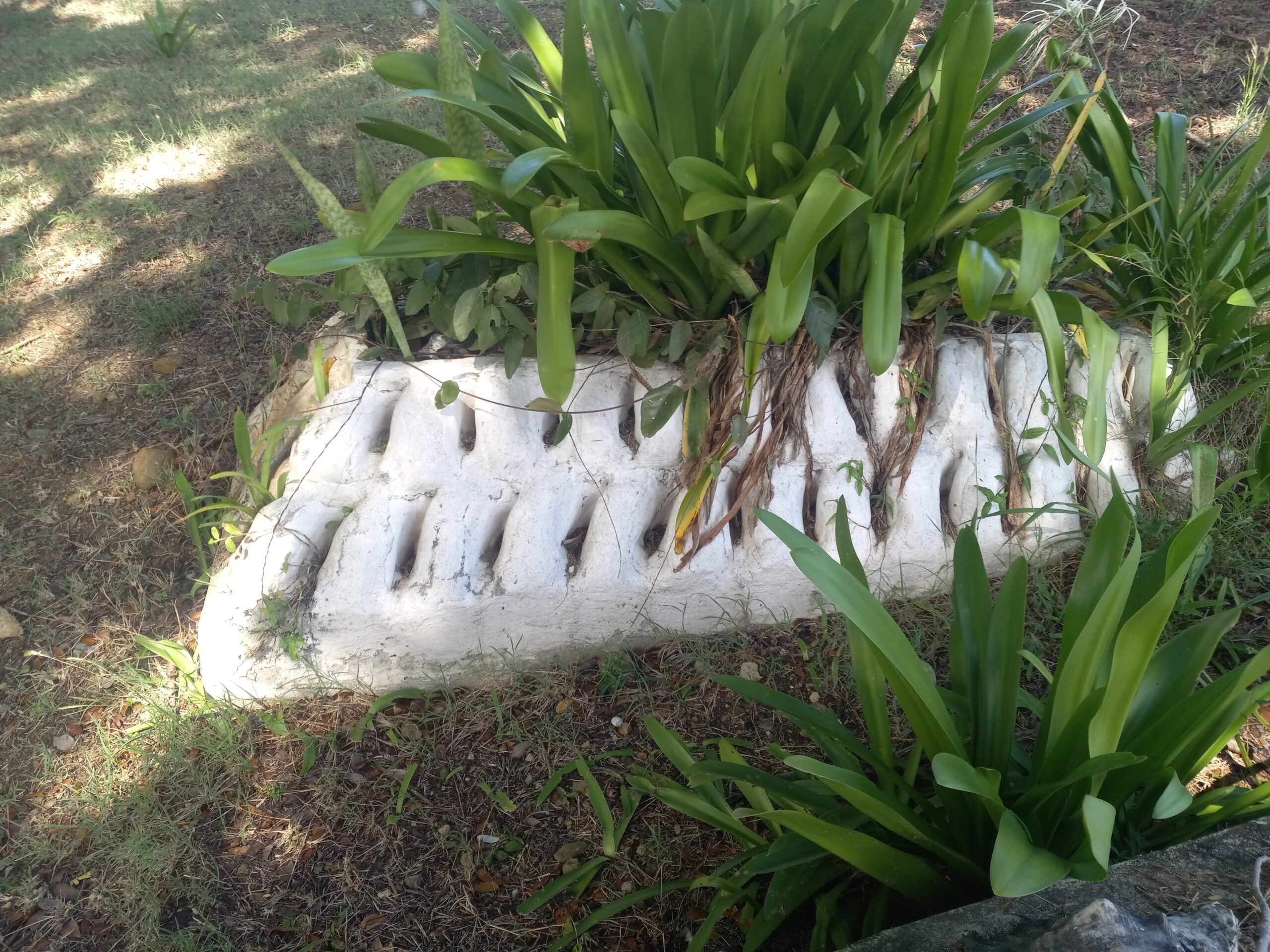
Family and friends of the deceased were expected to contribute to the supper, items such as pork, fowls, and so forth, according to their means. The tombs of Moravian slaves are whitewashed every Easter. Those slaves’ tombs of other religious persuasions were washed sometime during the year. In the Danish West Indies, slaves were allowed to be buried in the church’s yard, and some of their gravesites were decorated with conch shells, Danish bricks, stones, or just put in a hole in the ground.
A few years ago, I assisted Kallista Karastamatis, a graduate student from Texas State University, in her anthropological research project on colonial gravesites on St. Croix. The title of her research paper was “Analyzing Demographic Differences in Danish Colonial Period Burial Practices in Frederiksted Public Cemetery & Annaly Cemetery, St. Croix US Virgin Islands.” Her research shed light on colonial practices of burying the dead when the islands were Danish.
Believe me, talking about slaves’ burial is a deep spiritual history of our ancestors. You can’t help yourself but cry for those who made the ultimate sacrifice for our freedom.
— Olasee Davis is a bush professor who lectures and writes about the culture, history, ecology and environment of the Virgin Islands when he is not leading hiking tours of the wild places and spaces of St. Croix and beyond.
Editor’s Note: Opinion articles do not represent the views of the Virgin Islands Source newsroom and are the sole expressed opinion of the writer. Submissions can be made to visource@gmail.com.