


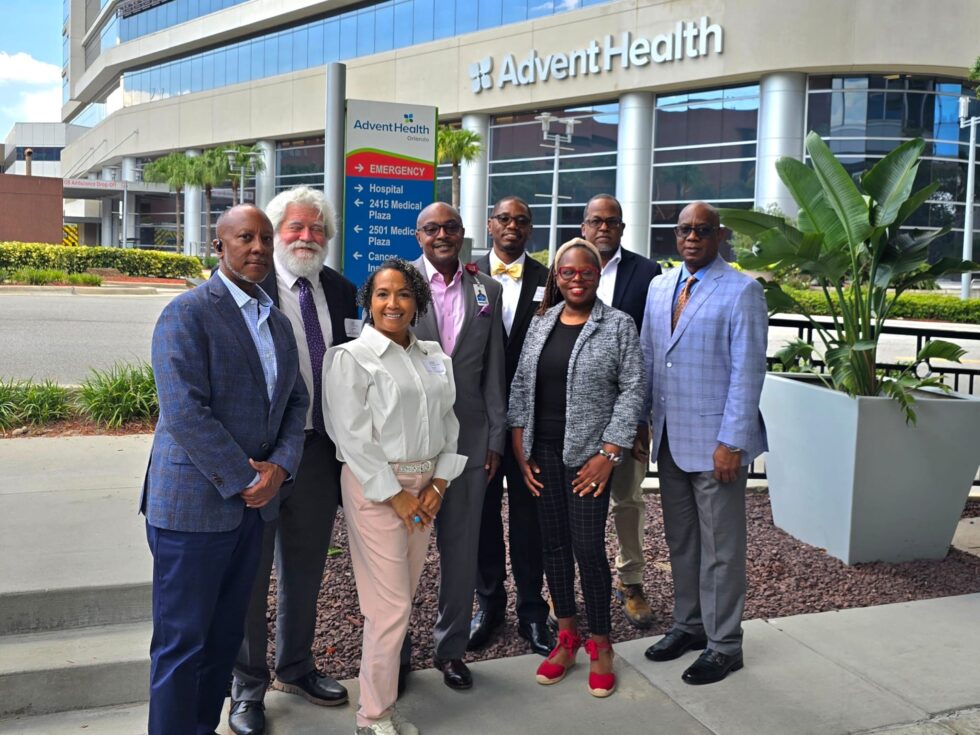
From redesigning hospital workflows to expanding partnerships and ambulatory care access, a recent fact-finding mission to Florida is expected to guide major changes in how health care is delivered across the Virgin Islands.
The weeklong visit, held from July 27 to 31, took members of the V.I. Government Hospital and Health Facilities Corporation to three nationally ranked institutions — Orlando Health, AdventHealth, and Baptist Health South Florida — where they toured facilities, met with leadership and staff, and observed operations in real-time. What they brought back, according to GHHFC Chair Jerry R. Smith, was a clear sense of how coordinated systems, smart use of data, and strong provider relationships can transform care from the inside out.
“We saw systems where patient information flowed across every department, where teams were aligned, and where the focus wasn’t just on treating illness, but on guiding the entire patient journey,” Smith said. “That’s the direction we’re moving toward.”
The delegation — comprised of GHHFC board members and key leaders from the Office of Management and Budget, the Office of Health Information Technology, and the Territorial Hospital Redevelopment Team — is expected to use insights from the visit to inform ongoing efforts to unify hospital services, invest in electronic medical records and data systems, and build a more modern health care infrastructure for the territory.

In an interview with the Source, Smith said the lessons from Florida’s top-performing health systems are especially timely as the GHHFC continues work to develop more integrated care delivery models — both within the hospitals and across the wider health care landscape.
“One of the biggest takeaways was how intentional these systems are about building relationships across facilities and specialties,” Smith said. “Whether that’s between hospitals and outpatient clinics, or through partnerships with community organizations, the goal is always to connect the dots for the patient. That’s something we’re starting to implement here — particularly as we look at expanding our ambulatory care footprint.”
Ambulatory care centers — dedicated facilities for outpatient services and same-day procedures — could be a key part of that strategy. Rather than defaulting to emergency rooms for nonurgent needs, Smith said the territory must give patients more accessible entry points into the health care system. These centers also help decompress hospital operations, lower costs, and support continuity of care by linking patients to preventive services and follow-up.
“What we saw in Florida were systems where ambulatory clinics aren’t just on the periphery — they’re fully integrated into how care is delivered,” he said. “They allow the hospitals to focus on acute care while ensuring patients have consistent support before and after their visit. It’s a smarter, more efficient use of resources.”
Territorial leaders have already begun exploring how to expand and better utilize outpatient facilities across the islands. The long-term vision could include leveraging new and existing partnerships to build out these centers as hubs for specialty care, chronic disease management, and coordinated services like lab work, imaging, and behavioral health – aligned under the same system and standards as the hospitals.
“There’s no question that we need more options for care that don’t require a hospital visit,” Smith said. “These site visits reinforced how critical ambulatory clinics are to creating a system that meets people where they are — before their condition worsens.”
The delegation’s timing coincided with the release of U.S. News & World Report’s 2025–2026 hospital rankings, which highlighted the exceptional performance of each facility visited. AdventHealth Orlando, for example, was named the only Florida hospital to make the national Honor Roll of Best Hospitals and ranked the top in the state and Orlando metro area. Orlando Health and Baptist Health South Florida also earned regional and national distinctions for excellence in multiple adult and pediatric specialties.
Still, Smith said the most impactful insights came not from accolades, but from operations— particularly how these systems align leadership, staffing, data, and infrastructure around a shared mission.
“They have strong physician leadership, integrated workflows, and a culture that supports innovation,” Smith said. “We saw how data is used daily to make decisions, track outcomes, and improve the experience for both patients and staff.”
The delegation identified several recurring best practices across all three systems, including:
-
Integrated, physician-led organizational structures
-
A commitment to real-time data sharing and systemwide EMR use
-
Strong interdisciplinary collaboration between departments and sites
-
Standardization of processes across clinical and administrative teams
-
Formal partnerships with community providers and education institutions
Territorial officials say those models will help guide future decisions around staffing, governance, and investment. The information will also be critical as the Territorial Hospital Redevelopment Team moves forward with plans to rebuild and modernize Juan F. Luis and Schneider Regional Medical Centers, and as agencies work to align services across islands to reduce duplication and improve care continuity.
One of the key takeaways, Smith added, was how deliberately the Florida systems have built partnerships to extend their capacity and improve access to specialized care. During the site visits, the team learned how institutions like AdventHealth and Baptist Health have formed clinical and academic partnerships — including one with Howard University – designed to support workforce development and expand services for historically underserved populations.
“Those partnerships aren’t just for research or reputation — they’re built into the delivery of care,” Smith said. “Seeing how systems collaborate with universities like Howard to train providers and increase access to specialists gives us a model to look at as we think about what’s possible in the Virgin Islands.”
Federal Medicaid policy remains one of the biggest challenges, with capped funding limiting long-term planning and infrastructure investments. But Smith said the Florida visit reinforced that certain gains — especially those involving process and culture — are still within reach.
“This isn’t about replicating billion-dollar systems,” Smith said. “It’s about scaling what works: partnerships, data-driven leadership, access points like ambulatory clinics, and systems that are designed with the patient in mind.”
The GHHFC is expected to finalize its updated strategic plan later this year, with many of the insights from the Florida mission playing a central role. The next step, Smith said, is ensuring that hospital leadership – particularly the CEOs of the territory’s two public hospitals — have the opportunity to engage directly with these systems.
“Getting our CEOs into these environments is essential,” Smith said. “They’re the ones who have to operationalize this vision. Seeing it firsthand will allow them to better identify what can be applied immediately, what needs to be adapted, and how to lead their teams through that process.”
Those follow-up visits, expected in the coming months, will build on the groundwork laid in Florida and help bring the vision of a more connected, patient-centered system closer to reality.