 In her biweekly column, “State of the Territory,” former Sen. Janelle K. Sarauw delves deeper into issues of concern for V.I. residents.
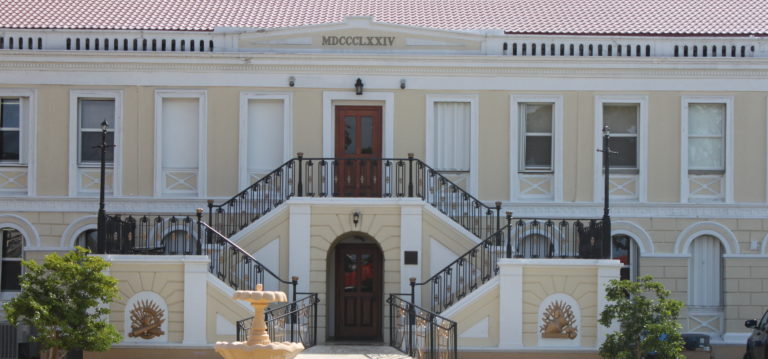
In any democracy, the legislative branch is often described as “the people’s house.” In the Virgin Islands, that role carries a particular weight because our Legislature is not just any lawmaking body. It is unique among the fifty states and territories of the United States, and it is central to our democracy. The authority of the Legislature is rooted in the Revised Organic Act of 1954, particularly Sections 4 through 7, which grant and define the legislative power, and in Title 2 of the Virgin Islands Code, which sets out the structure, duties, and responsibilities of the Legislature. These documents place lawmaking, appropriations, and oversight squarely within the Senate’s charge.
The Virgin Islands Legislature is unicameral, meaning it consists of a single chamber. Only one state in the nation, Nebraska, also has a unicameral legislature. Unlike Congress, with its House and Senate, or most state legislatures with two houses, every debate, vote, and decision in the Virgin Islands happens within this one body. This structure concentrates power but also magnifies responsibility. Every senator must weigh both the role of a representative of the people and the role of a check on the executive branch.
Another defining feature is that our Legislature never sine dies. In most states and in Congress, “sine die” adjournment means the session officially ends, closing the book on all pending work until the next convening. In the Virgin Islands, however, the Legislature remains in continuous session throughout its two-year term. This permanence underscores its role as a full-time body. Senators cannot simply step away and return months later. Their duties extend year round, from reviewing budgets to conducting oversight hearings, responding to crises, and holding the executive accountable.
Because of this, calls to reduce the Legislature or to make it part-time miss the point of its design. A part time Senate would weaken oversight, slow responses in times of emergency, and erode the balance of power between branches. The Virgin Islands Legislature was deliberately structured as a full-time body because the needs of a territory with limited resources, complex federal relationships, and constant challenges demand no less.
Unlike other states where the responsibilities of government are divided among city councils, county commissions, zoning boards, and legislatures, in the Virgin Islands many of those duties are collapsed into the Legislature. Senators are at times the equivalent of council members, sometimes serving in a capacity similar to mayors, and often acting as the territory’s zoning board. They review land use decisions, consider permits, and approve major developments in ways that, in the states, would be managed at the municipal level. The result is a Legislature with a broader and more complex portfolio than its counterparts on the mainland.
Yet the role of senators is often misunderstood. Too often, the public expects senators to function as if they were commissioners, directly fixing roads, paying out benefits, or delivering services. Others assume senators are responsible for bringing large corporations to the territory, negotiating tax incentives, or cutting deals with executives to open businesses here. In reality, senators do none of this. The chief negotiator of the territory is the executive branch. The Legislature’s role is to review, debate, and ratify agreements when they come before the body. This distinction is critical.
The frustration arises partly because senators are more visible and accessible than commissioners or agency heads. Constituents see them at the grocery store, at church, or on the street. Accessibility is a strength of our democracy, but it also means senators are the most convenient targets for grievances that should properly be directed at the executive.
The complexity is compounded by campaigns. In the heat of elections, many candidates run on promises they cannot legally fulfill. It makes for a good slogan, but it sets up false expectations. When elected, senators must reconcile campaign rhetoric with statutory authority, often disappointing the very voters who sent them to office.
Still, despite the misunderstandings and criticisms, the Legislature is indispensable. It is the branch closest to the people, and it is the only one empowered to make laws, control the purse strings, and act as a counterweight to executive power. Its uniqueness, the unicameral design, its continuous session, and its full-time nature, is not a flaw but a reflection of the territory’s needs.
The next time frustrations arise, Virgin Islanders should remember that senators cannot pave a road, hire a teacher, or bring Walmart to the islands. Going to a senator for those things is like going to the dentist because your chest hurts. When there is pain in the body, you find the right doctor to treat it. Government is no different. The executive branch, under Section 11 of the Revised Organic Act, executes and enforces the laws. The legislative branch, under Sections 4 through 7 and Title 2 of the Virgin Islands Code, makes laws, appropriates funds, and provides oversight. The judiciary, under Section 21 of the Revised Organic Act, interprets the laws. Each branch has its specialty, and confusing one for the other only leads to frustration. Senators are only one part of the democratic machine, one gear in the system of three branches needed to keep the wheels of governance turning.
The Legislature is not perfect, no institution is, but it remains the beating heart of self-government in the Virgin Islands. To weaken it is to weaken our democracy.




 In his biweekly column, Langley Shazor speaks to issues important to men within the territory.