


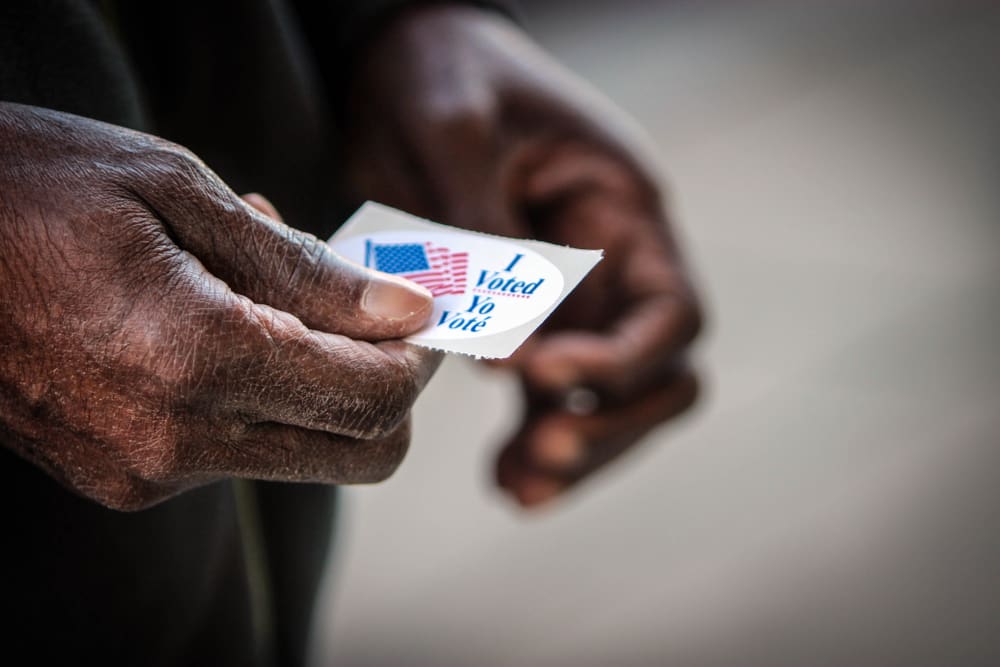
With election season fast approaching in 2026, the League of Women Voters of the Virgin Islands is inviting the public to consider the role of political parties in an election cycle. Organizers of the league’s annual meeting say the topic — “Are Political Parties Still Relevant in the USVI?” — will be examined from several perspectives, all designed to give voters food for thought as they make their way to the polls.
The annual meeting is scheduled to take place Saturday at 1 p.m. at the University of the Virgin Islands 13-D Innovation Center on the Orville E. Kean Campus on St. Thomas. Those who would like to join the discussion but cannot attend in person are encouraged to request a Zoom link at lwvusvi@gmail.com.
League President Gwen-Marie Moolenaar said the public portion of this year’s meeting was inspired by comments heard on a radio show. “The question is: If candidates think that parties aren’t relevant, does the public think so as well, and really what is the relevance of political parties?” Moolenaar said.
The question is posed during a four-year local election cycle where voters will choose a governor/lieutenant governor, delegate to Congress, lawmakers and members of the Boards of Elections and Education. Speakers chosen to help explore the topic include former Elections Supervisor John Abramson, representatives of the Democratic, Republican and Independent Citizens’ Movement parties; UVI Assistant Economics Professor Mark Wenner, and voters.

An unaffiliated candidate who ran and won a public office had been invited as well, the league president said. Their remarks will be followed by a question-and-answer session where meeting participants can weigh in.
“What does that mean for the way politics are run? What does it mean for the Legislature? Are we losing things by not having parties? Are we gaining things by not having parties?” Moolenaar said.
Organizers hope those who speak, listen and consider different views will leave the meeting ready to sort out the candidates and make the best choices.
Saturday’s session online and in person at UVI-St. Thomas comes at a time when the Pew Research Center — a prominent fact-finding group — points to national trends suggesting U.S. voters have split into three roughly equal voting blocks: Democratic, Republican, and Independent (although in the U.S., there is no recognized Independent political party).
The League of Women Voters has about 800 chapters nationwide. It was formed in the 1920s after U.S. women won the right to vote.