


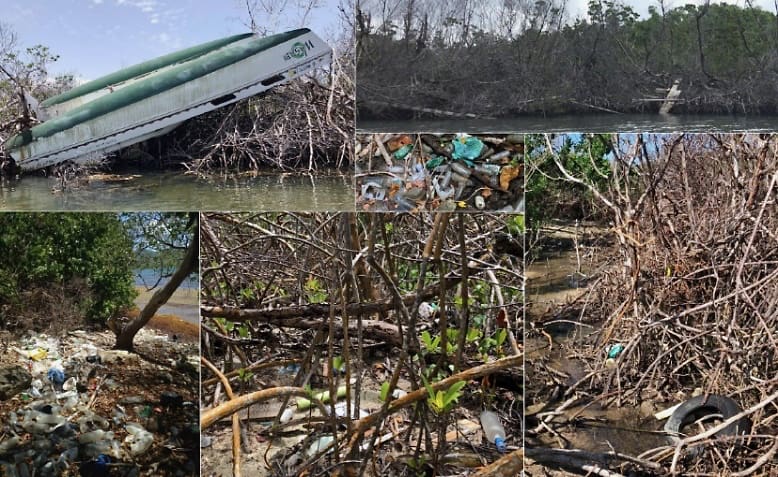
The ninth annual St. Thomas Great Mangrove Cleanup is set for April 18 at Vessup Bay along the National Park Road in Red Hook, where volunteers will gather from 9 a.m. to noon to remove debris from mangrove shorelines.
The event is part of a broader territorial effort led by the University of the Virgin Islands Center for Marine and Environmental Studies.
According to Research Associate Professor Kristin Wilson Grimes, the St. Thomas cleanup follows two earlier events this year on St. Croix and St. John, which drew dozens of volunteers and removed thousands of pounds of debris.
“It’s been really successful,” Grimes said, noting the St. Croix cleanup brought out 62 volunteers who removed 2,834 pounds of marine debris, while 73 participants on St. John removed 4,125 pounds.

The annual cleanups began in 2018 in the wake of the devastating 2017 hurricanes, which left large amounts of debris tangled in mangrove forests across the territory. What started as a targeted response to storm damage has grown into a yearly tradition spanning all three major islands.
Since the program began, volunteers have removed more than 26 tons of marine debris and engaged over 1,200 participants of all ages.
Mangroves, Grimes said, are critical to the Virgin Islands’ coastal environment.
“They protect our shorelines from erosion. They can buffer the impacts of wind and waves when we have storms,” she said. “They can provide shelter for our boats as hurricane holes during those storm events.”
She added that mangroves also play an important ecological role, supporting marine life that local communities depend on.
“Most of our commercially important fish species in the territory spend some time during their lifespan in mangrove environments,” Grimes said.
One of the most consistent challenges the cleanups face is rampant single-use plastic pollution.
“People always ask, what’s the most common thing that we find? And it’s always plastic bottles,” Grimes said, noting that the same materials appear year after year.
Volunteers are encouraged to wear sturdy shoes, long pants, and sun protection, while gloves, data sheets, and other materials are provided on site. Grimes said the cleanups are designed to be accessible, allowing participants to engage at their own comfort level.
“There are all different ways to engage that day, depending on folks’ comfort being in the bush and the mud,” she said. “We engage people of all ages, of all abilities, and of all interests to help protect these environments.”
The cleanup is part of the GRROE mangroves program at the university, which focuses on growing, research, restoration, outreach and education. In addition to cleanup efforts, the program conducts classroom initiatives, community outreach and mangrove monitoring to track forest health.
“This is just one of the activities we use to engage the community and take action,” she said.
Michael Niemeyer, a mangrove research technician with the program, said mangroves are an extremely important coastal ecosystem, both locally and globally.
“They protect shorelines from erosion and storms. They provide habitat for fish and wildlife, including migratory birds, and support local fisheries and biodiversity,” he said.
Niemeyer said marine debris, especially plastics, poses a major threat to these environments.
“They harm wildlife, damage the ecosystem, and breakdown into microplastics, which are very negative for mangroves and the species that depend on them,” he said.
Beyond removing debris, he said, the cleanups play an important role in data collection, helping the community better understand where pollution is coming from and how to address it.
“The purpose of the cleanup is to remove marine debris and hurricane-related waste from the mangrove shoreline, but it’s also to collect data on the types of trash found to better understand pollution sources,” he said.
Niemeyer said the cleanups serve as an educational and hands-on experience for the community.
“This is a hands-on way to make an impact,” he said. “It’s a great way to get involved on a physical level … it’s also an educational tool to help understand where the pollution comes from and how to prevent it from reaching the environment in the first place.”
Grimes said the events continue to bring people together while encouraging environmental stewardship. “It’s a nice way to build those feelings of community and contribute to helping steward our natural resources here in the Virgin Islands,” she said.