


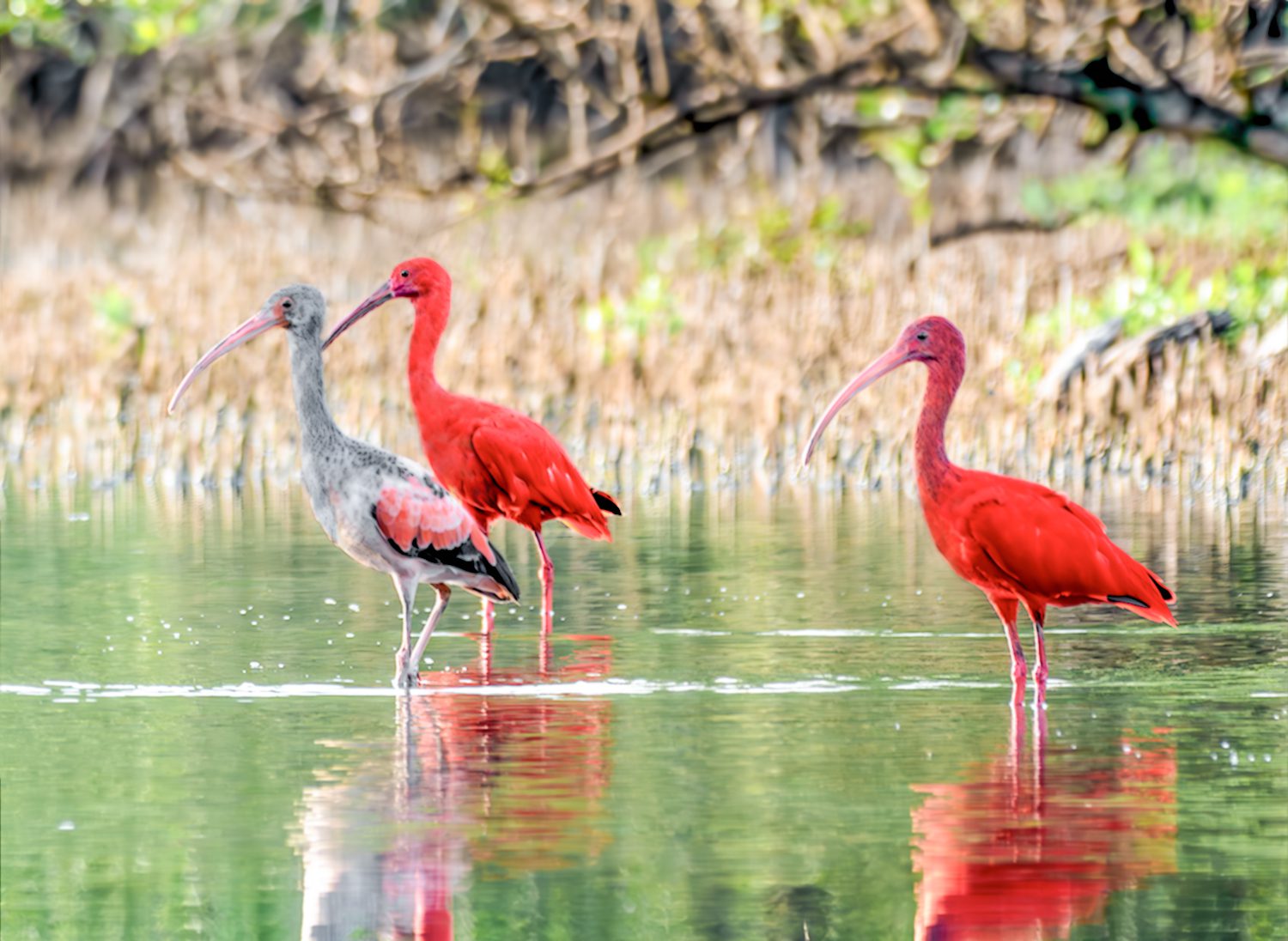
There’s a juvenile scarlet ibis that was born here! Now almost as big as its parents.
And there may be more wandering around. My neighbors recently saw three babies in the pond with the parents. But I have only seen one young one since I returned a few weeks ago. Maybe the others got mature enough to go off exploring on their own.
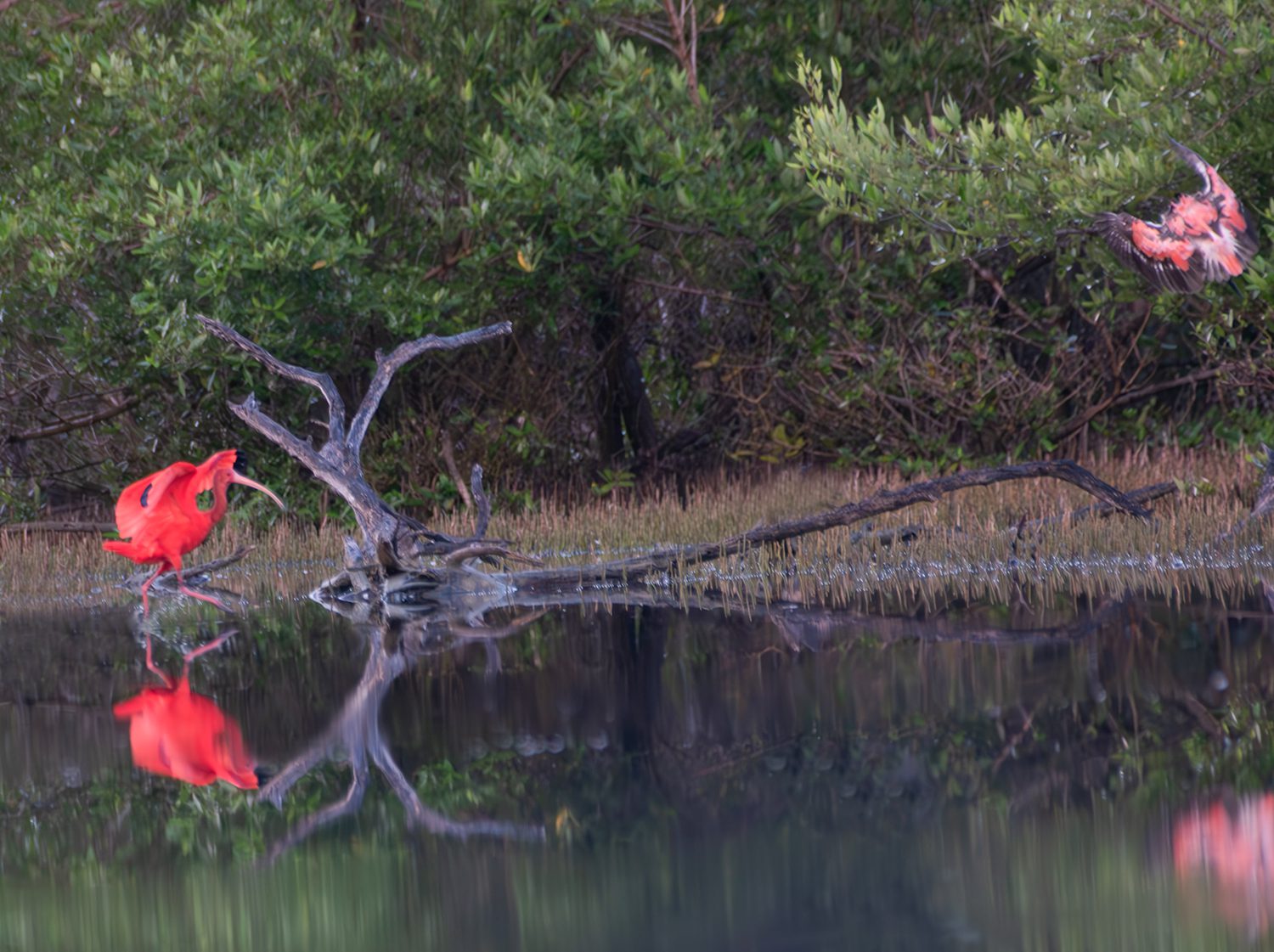
What a thrill to see these birds up close. For six seasons my husband and I watched the one lonely ibis in Fish Bay, hoping that an appropriate mate would come. Based on previous photographs, I think the bird on the left is the resident male. His feathers are now looking a bit uneven in color, but that is probably due to molting, which usually happens after breeding season.
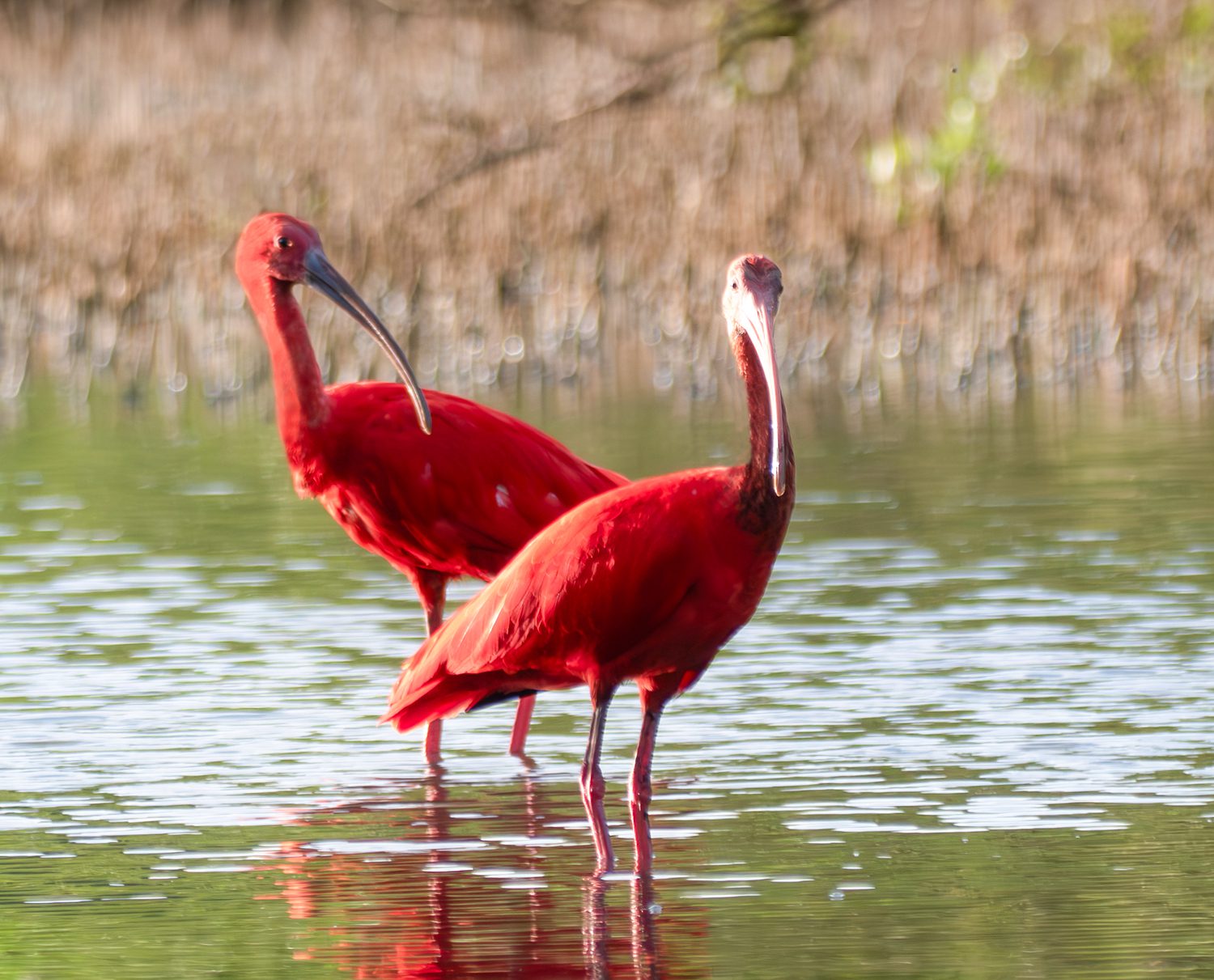
I think the newcomer is the female, and a younger bird because of her not-fully-developed purplish neck feathers. The male and female adults have similarly colored feathers, but they don’t reach their full adult plumage for a few years. Their color comes from carotenoid pigments contained in the food they consume, including small crabs, shrimps and other invertebrates, as well as some types of seeds and insects. They use their long bills, which have sensitive tips, to probe in the mud for food.

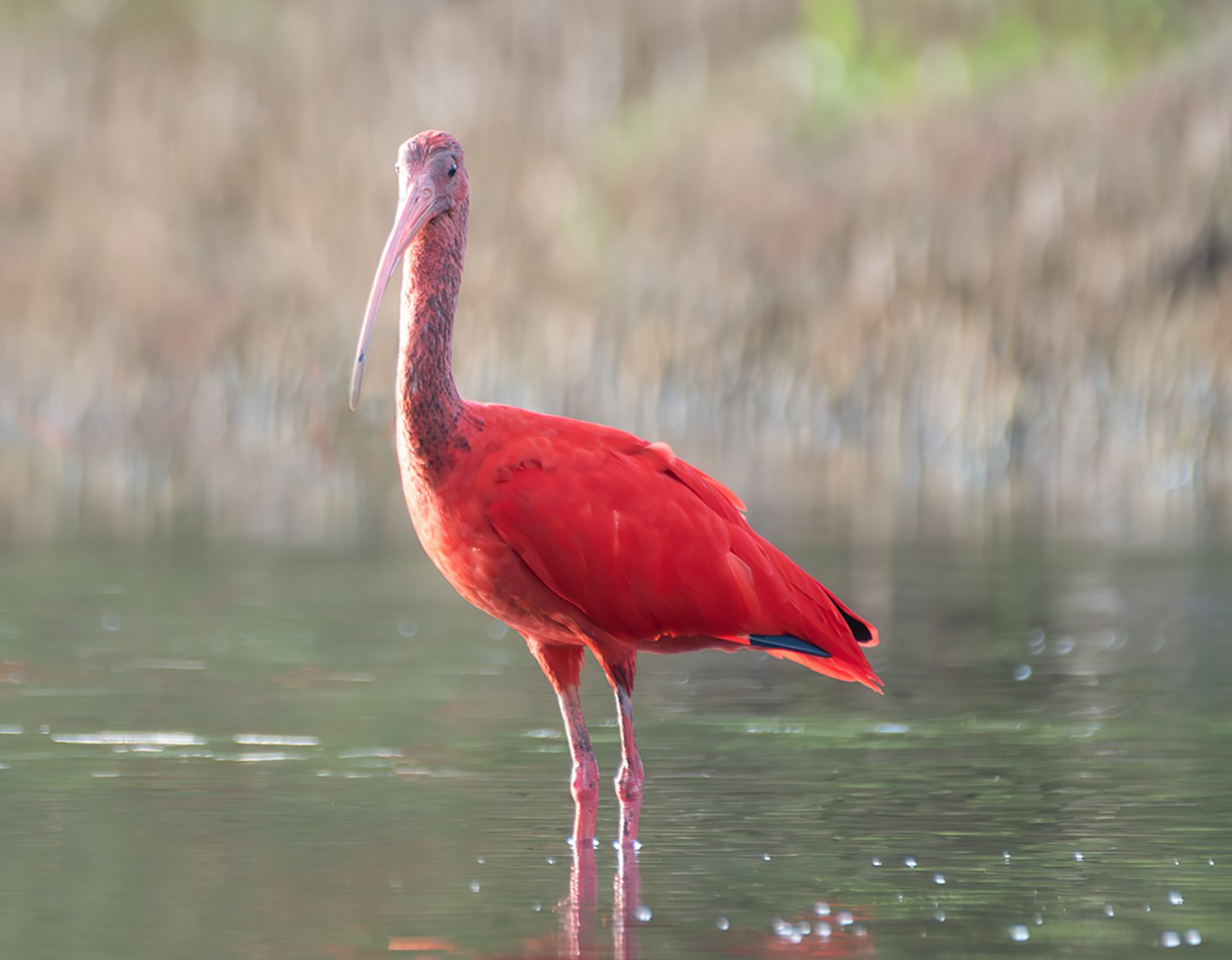
I heard reports of other ibises coming over to Fish Bay the summer before this. (They have all probably come from the flock introduced by Richard Branson on Necker Island in the British Virgin Islands.) However, there was only one ibis in the pond when we returned last fall. And the resident ibis continued to consort with a snowy egret, which had become a faithful companion, year after year.
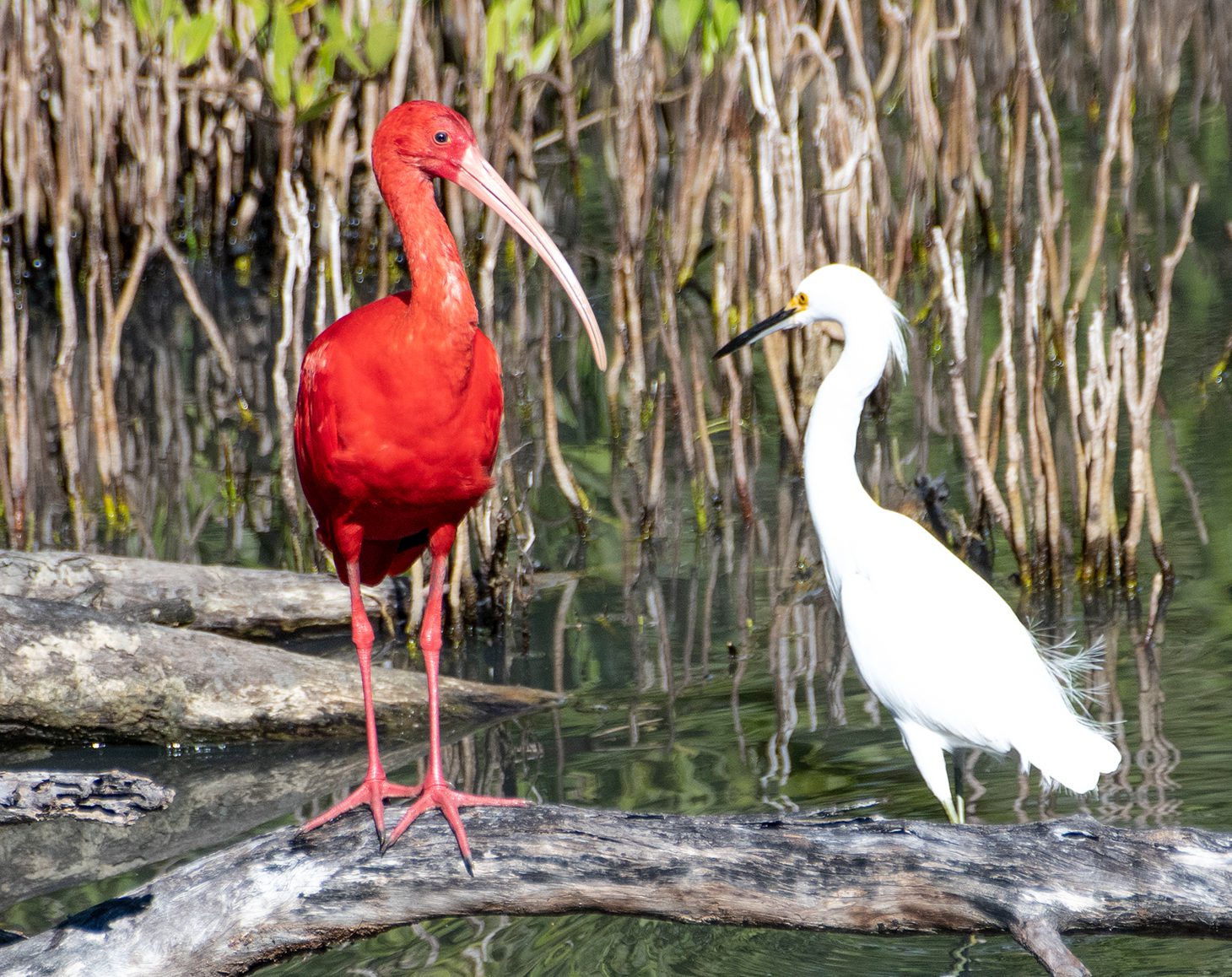
Interestingly, the snowy egret is still there, now apparently as a family friend. And sometimes a very large yellow-crowned night heron also seems to be standing guard.
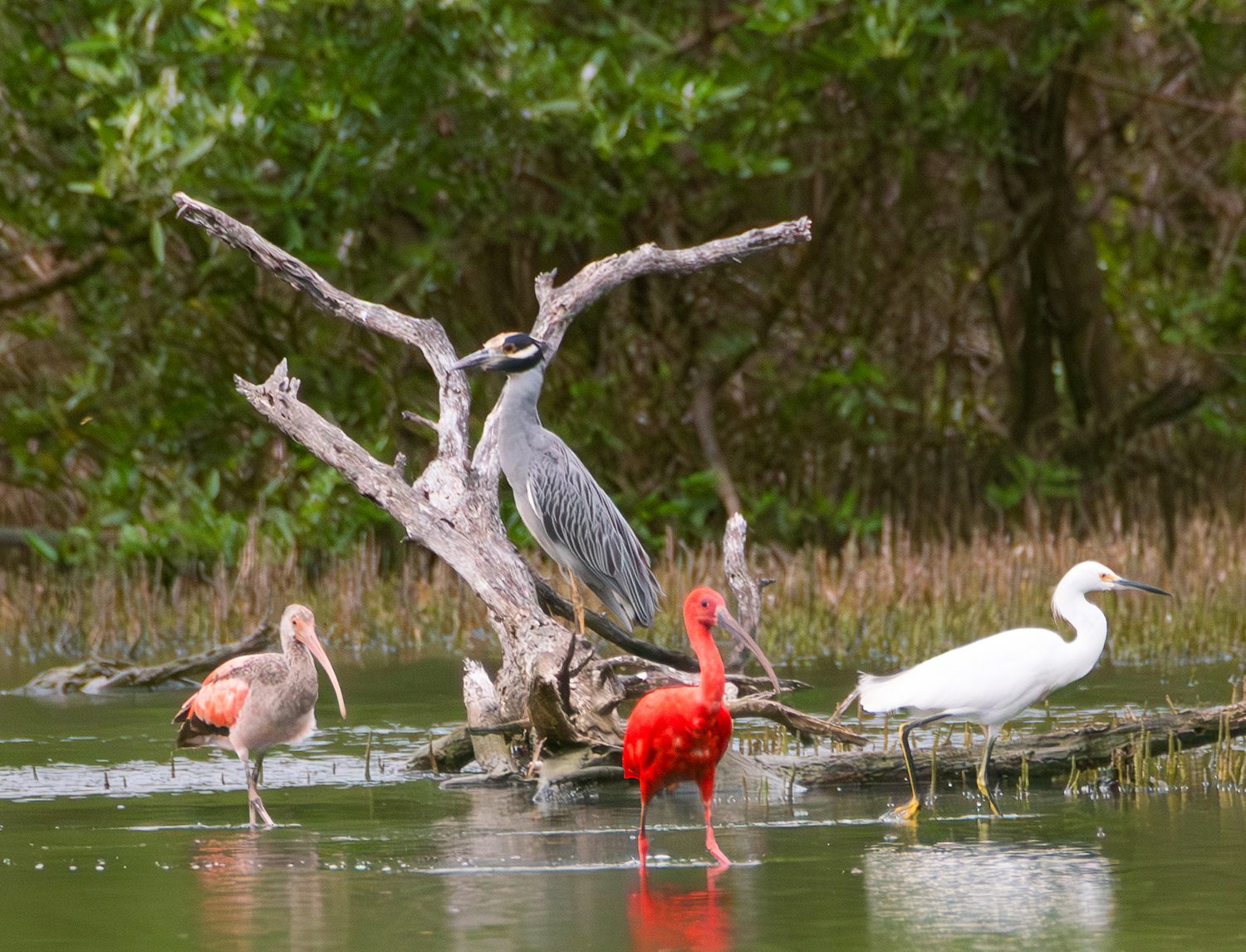
A great egret has also taken an interest in the youngster.
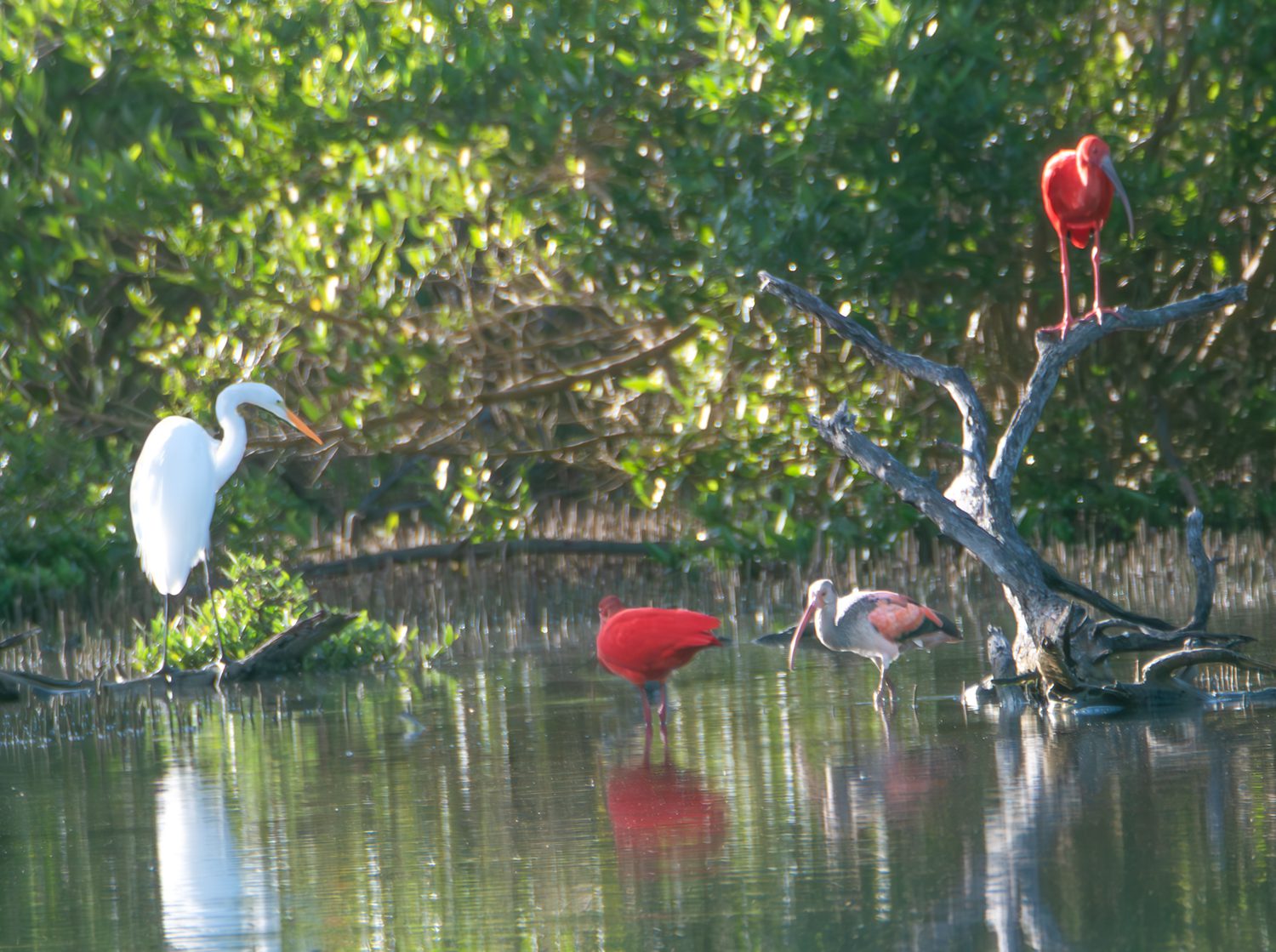
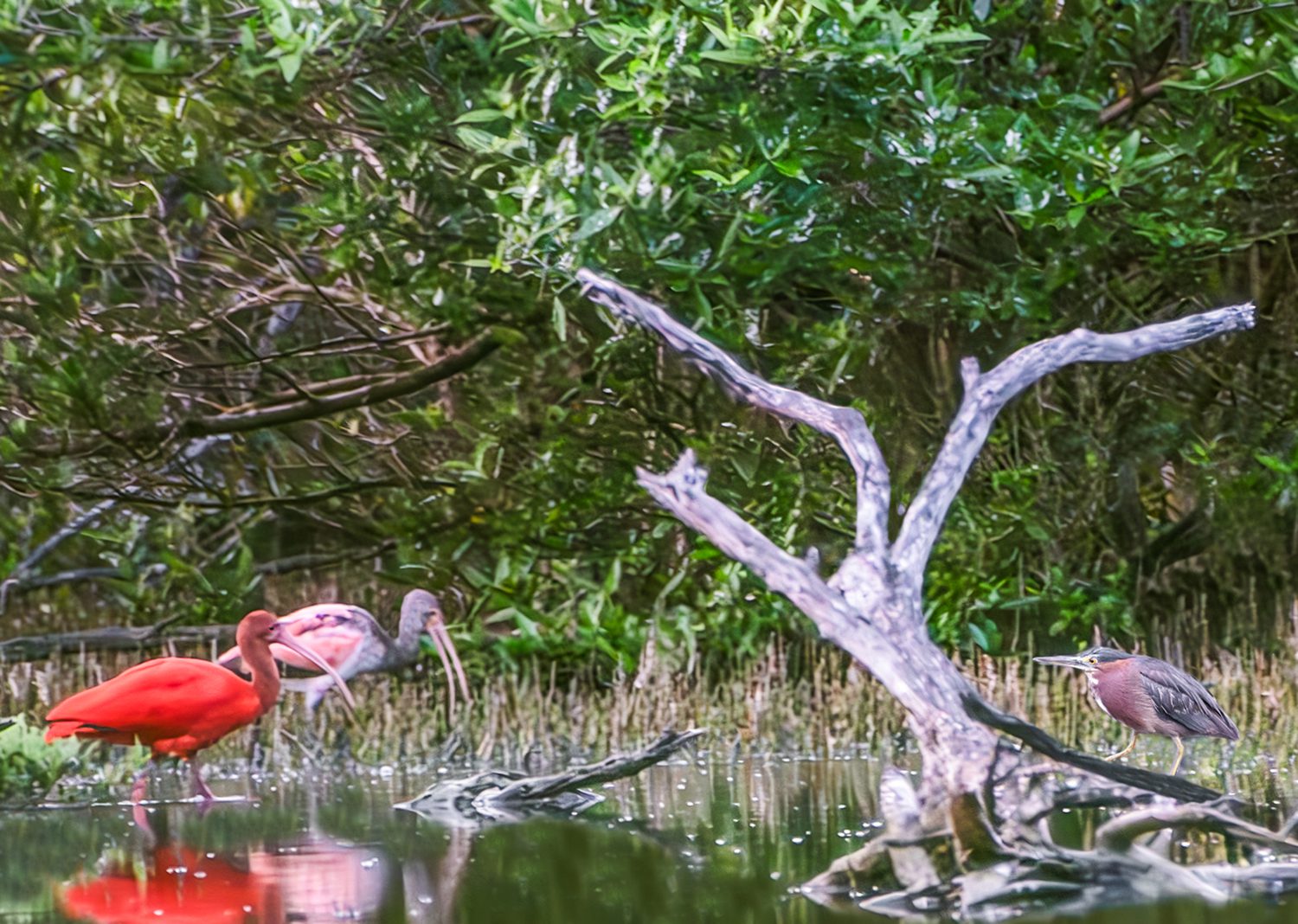
As well as a green heron that monitors all the activity on the pond.
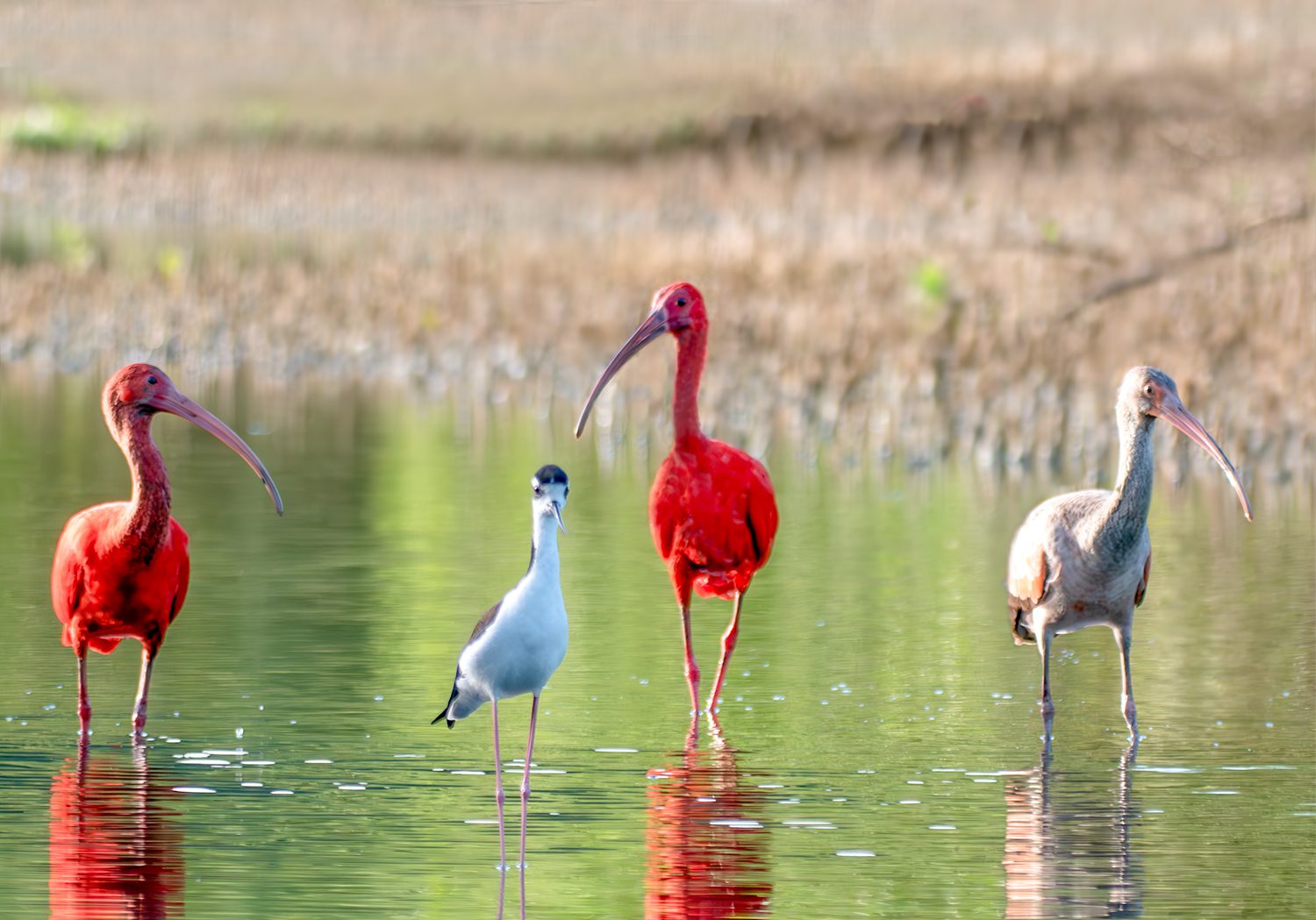
And a black-necked stilt insisted on being included in a family portrait.
The trees along the road have grown up so much it is hard to see into the pond now. The birds tend to stay far back in a corner by the big tree stump. To get a view of them my husband and I had to crawl down off the side of the road and creep along through the bushes into the mangroves along the edge of the pond. Lots of rain has made the ground soft and muddy, and to my dismay, one morning I ended up sliding down into the slimy mud on my butt. Fortunately I was able to keep my telephoto lens safe, and later went back with dry pants.
We have mostly seen the ibises between 6:30 and 8:00 am. After that they usually disappear into the bush or fly off. However, there are many other birds using the pond throughout the day. Besides the ibises, egrets, stilts and green herons, we also saw little blue herons, lesser yellowlegs, spotted sandpipers and clapper rails.
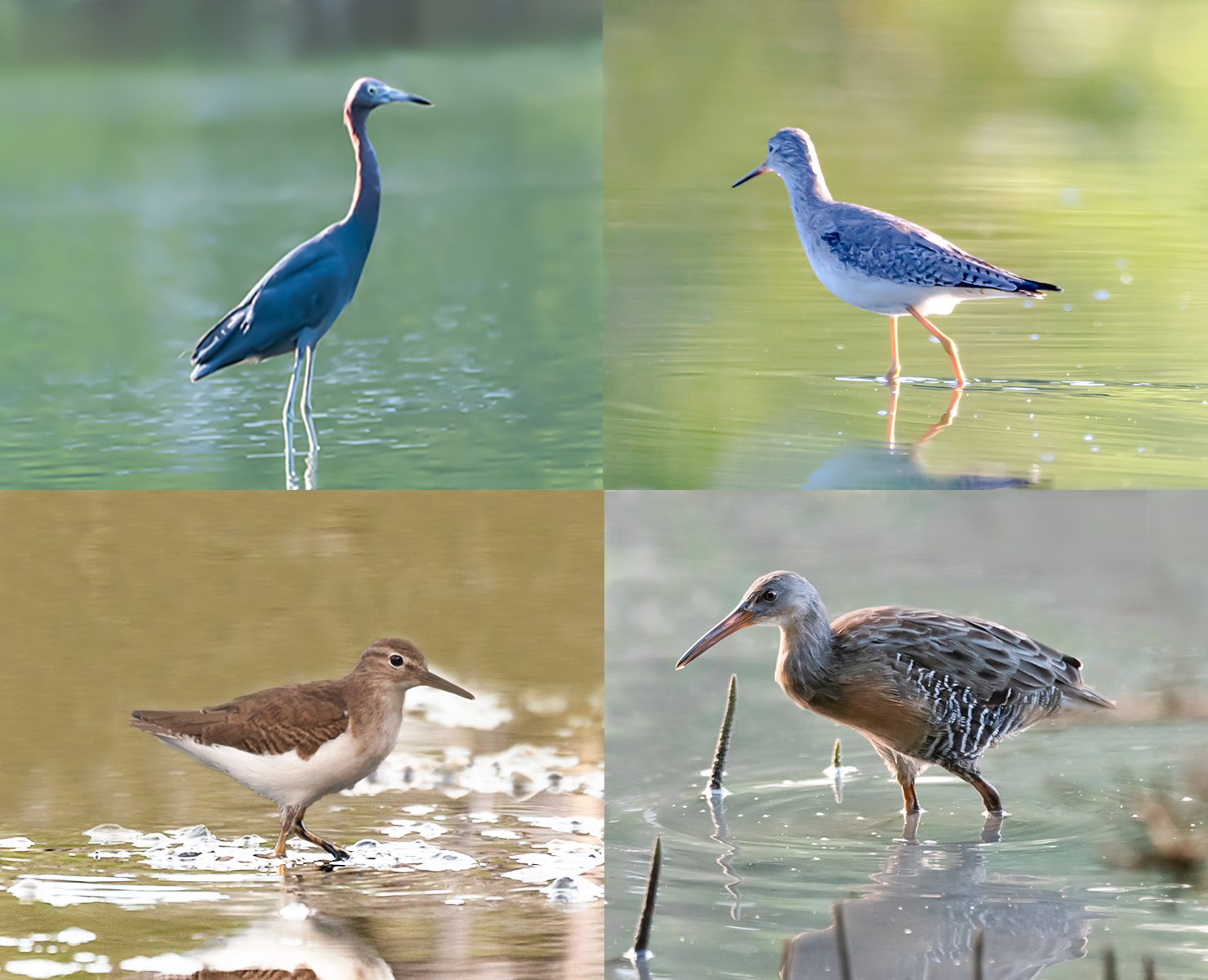
We recently learned that the Fish Bay conservation land, which includes this pond, has been bought by the V.I. government with a grant from the National Oceanic and Atmospheric Administration (NOAA). It is to be held as a nature preserve by the V.I. Department of Planning and Natural Resources in a new Division of Territorial Parks and Protected Areas. The ownership of this area was in limbo for a number of years during which the land has been mostly untouched, except by the hurricanes.
It will be wonderful for this new nature preserve status to ensure long-term protection for all the wild birds and other creatures living in the wetlands here. It would also be good to provide a low impact viewing space that will allow people to observe what’s going on in the pond without disturbing the wildlife. The platform on St. John at Frank Bay built by the V.I. Audubon Society could be a good model.
The wetlands currently offer safe nesting spaces for a variety of birds. I was interested to see that both the scarlet ibis parents seemed to be taking care of the young one. I read that because of their long bills the newborn babies need help holding their heads up to get fed, so the feeding process requires two parents.
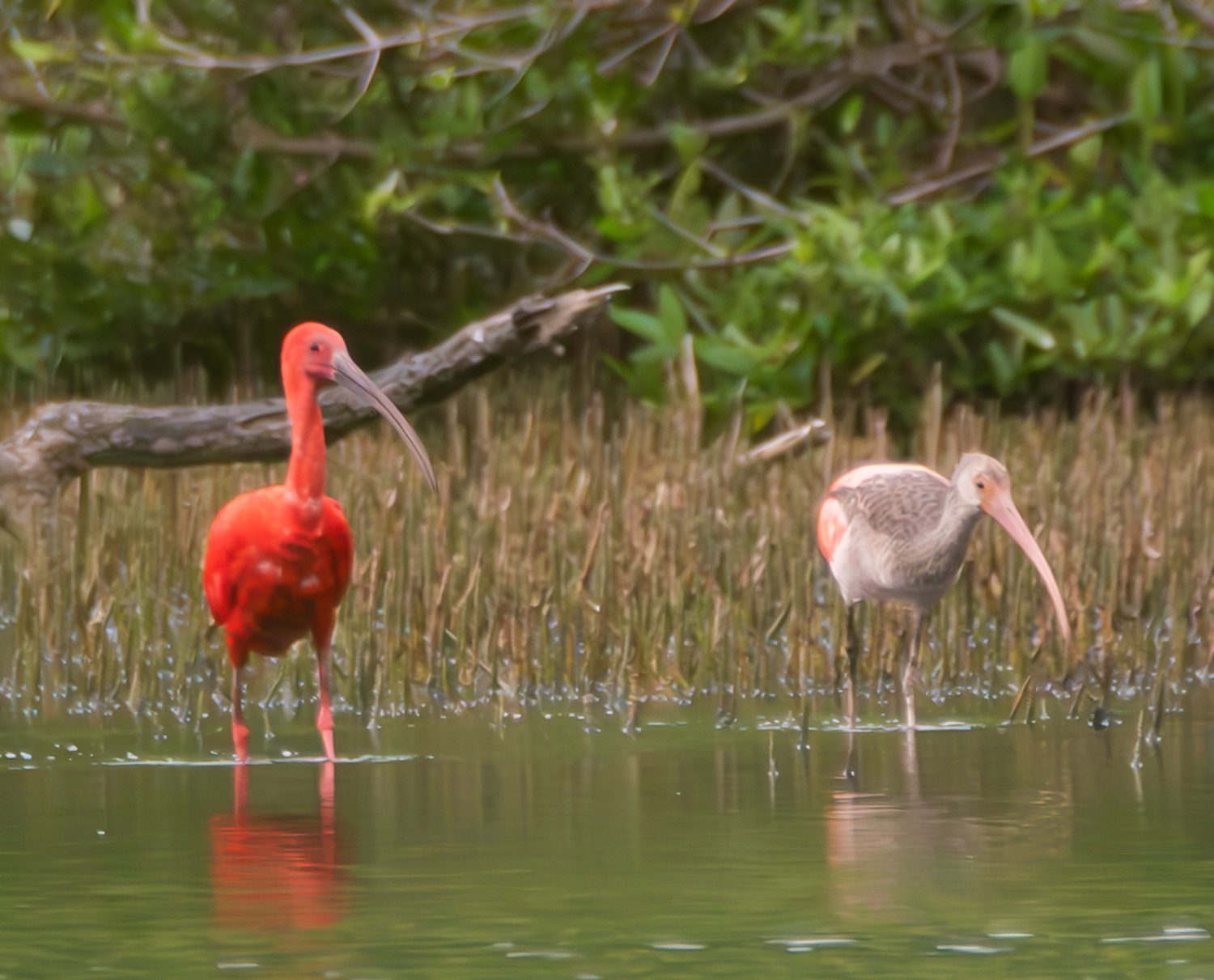
The baby scarlet ibises are grey. Then they soon start growing pink wing feathers, along with black feathers for their wing tips. My husband refers to this one as ‘splotchy’.
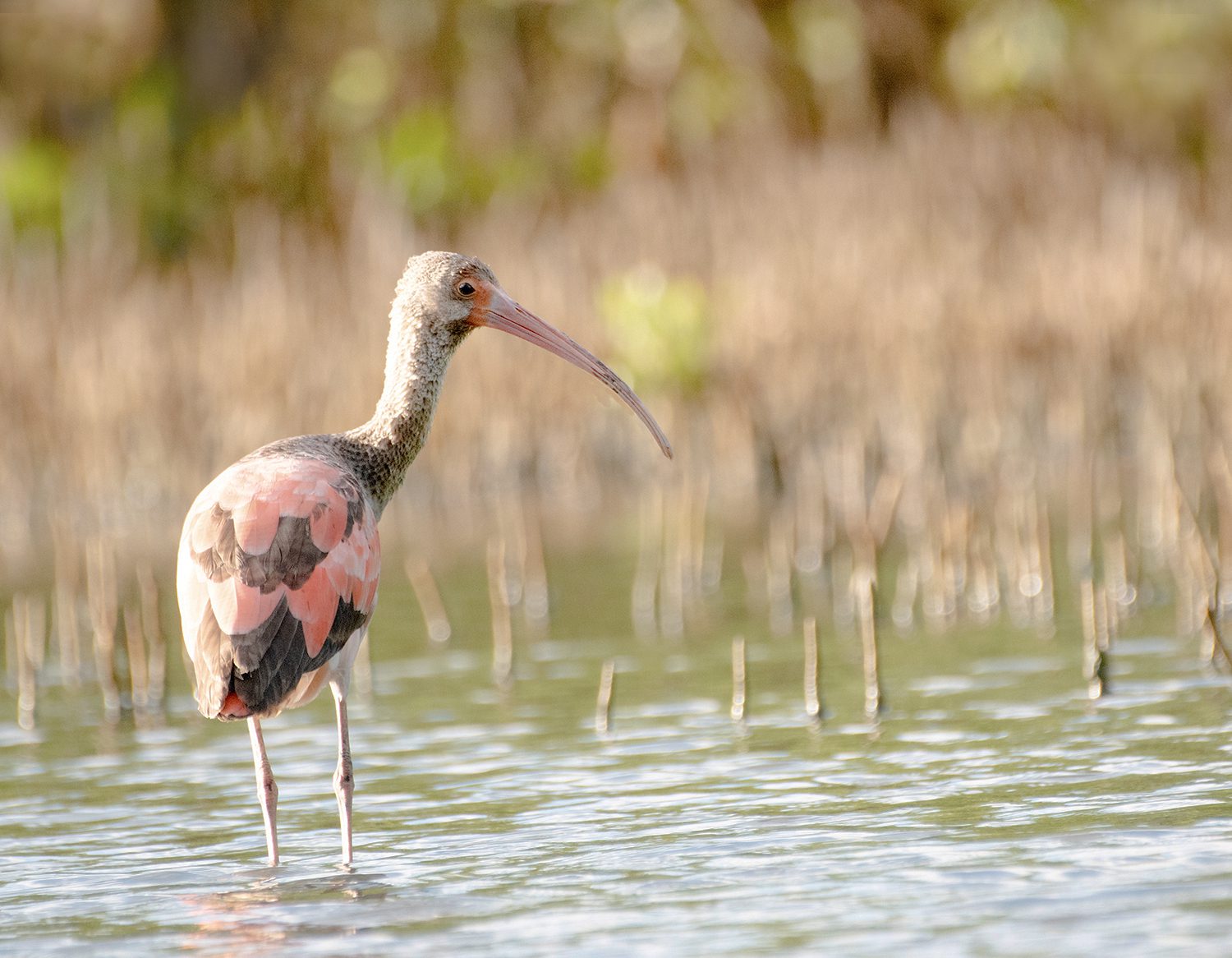
I do wish I knew for sure what happened to the other ibis youngsters. Possibly they wandered off after they got old enough to find their parents becoming overbearing.
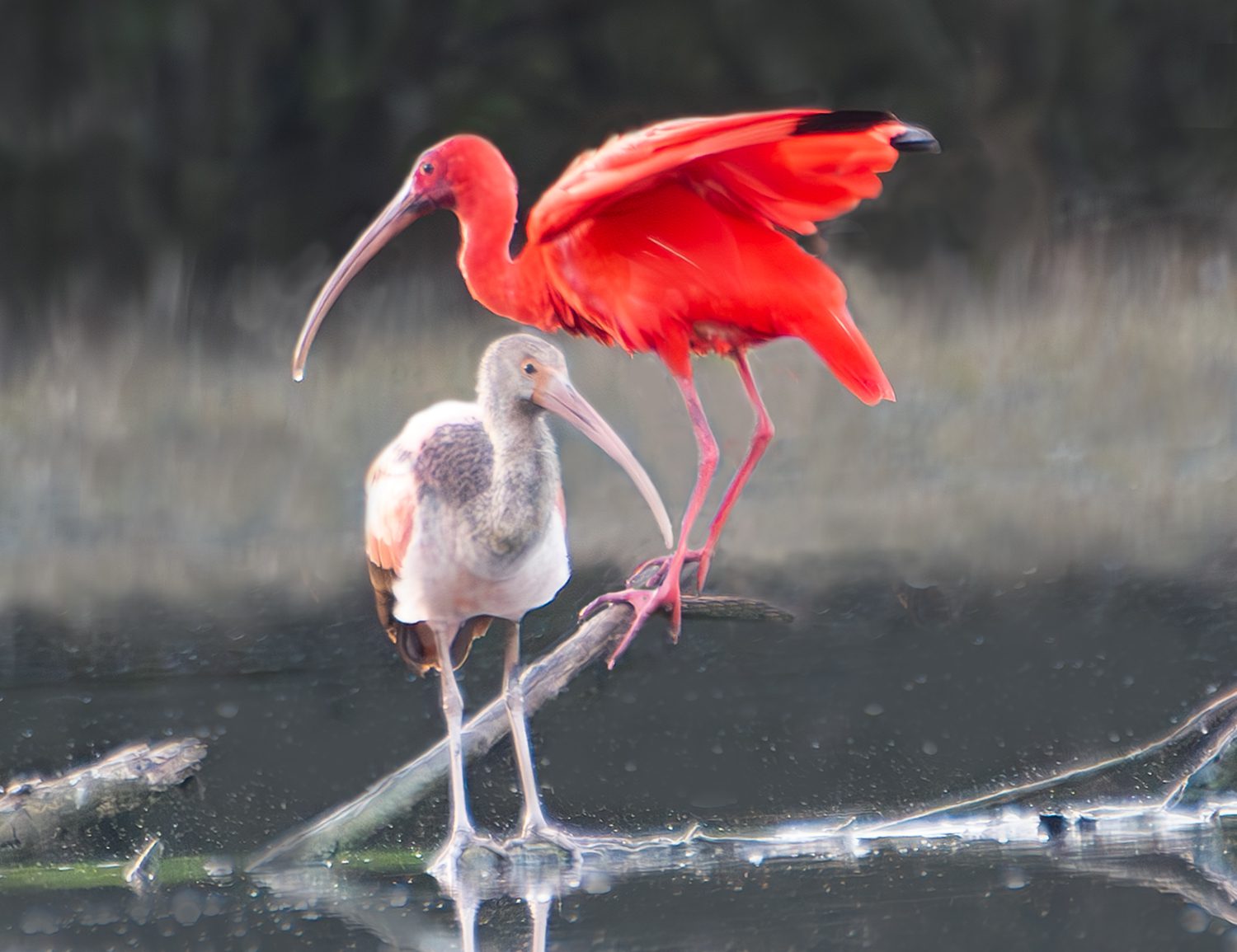
The young ibis occasionally keeps company with a chatty black-necked stilt instead of the parents.
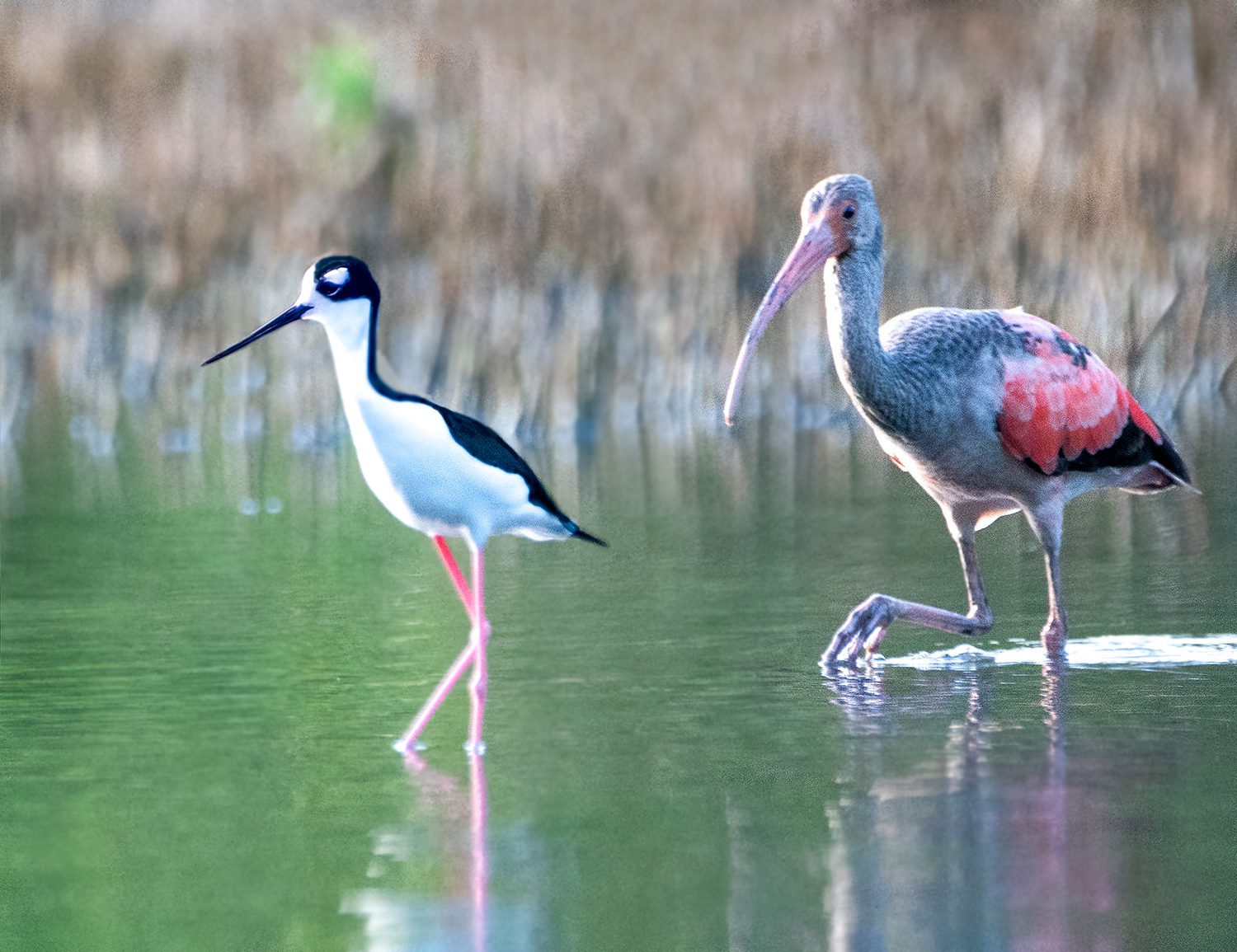
One day the scarlet ibis youngster may fly off to pursue its own adventures. But for now it is a welcome addition to the Fish Bay neighborhood.
________________________________________________________________________
Gail Karlsson is the author of a photo book Looking for Birds on St. John, as well as two other books about nature in the Virgin Islands – The Wild Life in an Island House, and Learning About Trees and Plants – A Project of the Unitarian Universalist Fellowship of St. John. A few years ago she also set up a web page fishbaywetlands.com. Follow her on Instagram @gailkarlsson and gvkarlsson.blogspot.com. More info at gailkarlsson.com.