


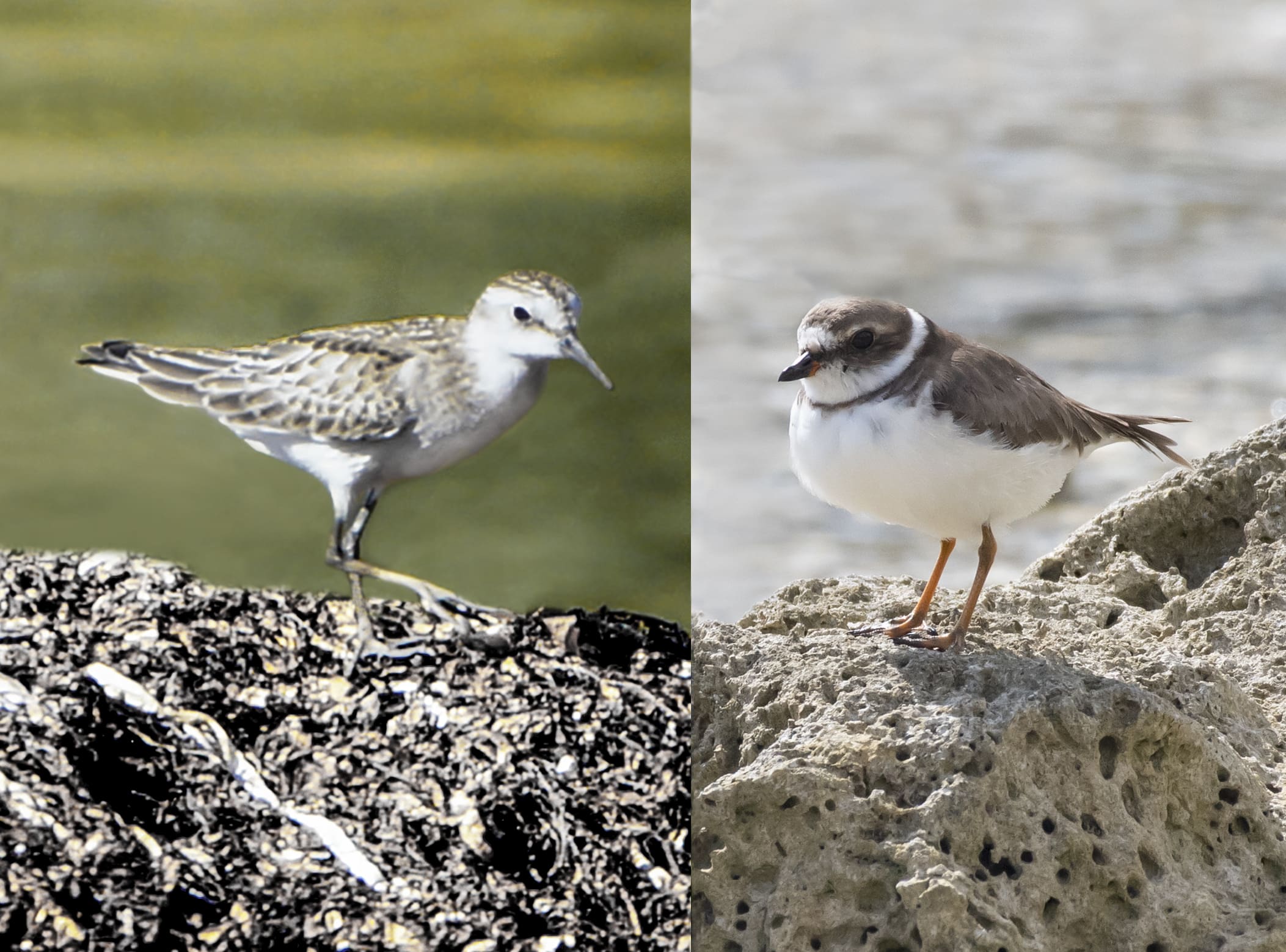
I think of these small birds as the ‘semipalmated sisters.’ Though they are not actually related, they do share a first name, and it’s a mouthful.
In Latin, semipalmated means ‘half like a hand.’ Here it refers to the birds’ feet: two of their three toes are partially webbed together. That seems to be helpful when they run across the wet sand looking for tiny bugs and crustacean snacks. However, you rarely get to see their tiny feet clearly enough to check out the webbing.
The semipalmated plovers are the more dramatic looking ones, especially in the spring when they are in their breeding plumage. They are easily identifiable from a distance by their distinctive necklaces. They also have puffy white breasts and bellies, orange legs, and matching dabs of orange on their black bills.
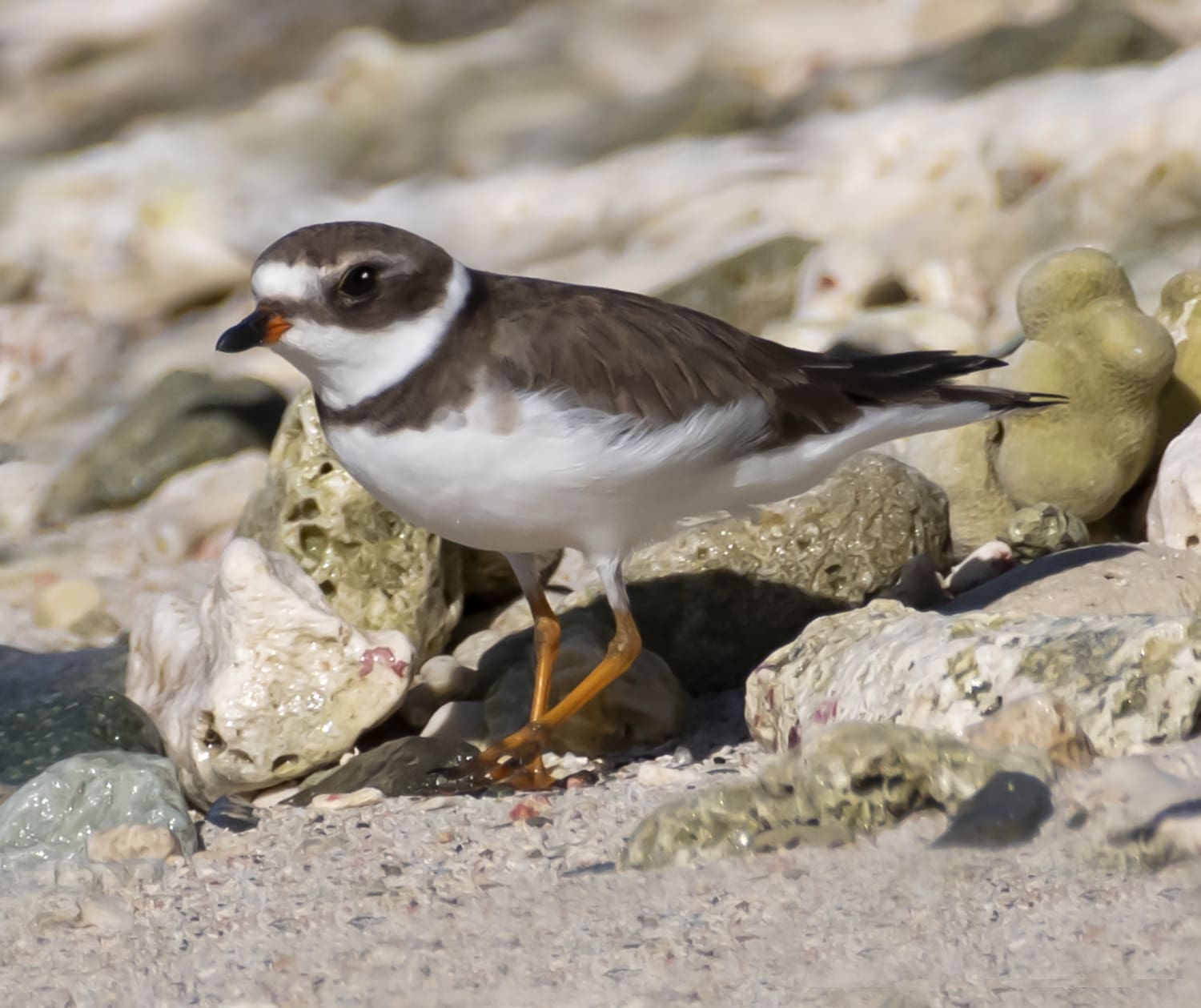
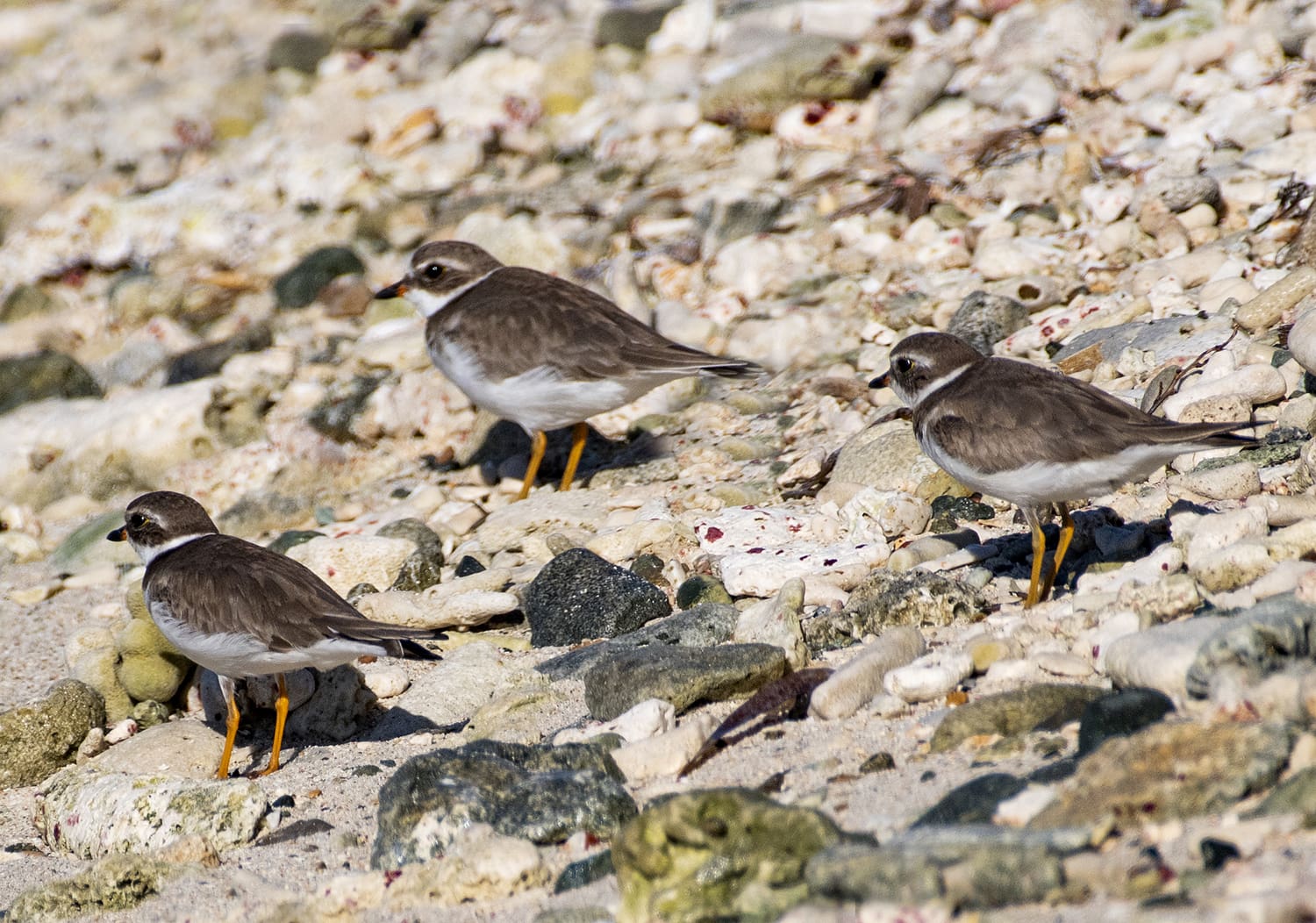
The plovers are quite small, no more than six inches long, and weigh only about an ounce and a half. It’s hard to see them from a distance, especially on a rocky shoreline.
They tend to travel in small groups, foraging along secluded beaches.
The semipalmated sandpipers are close to the same size as the plovers, and share the same beachy habitats. However they are more streamlined, and less colorful.
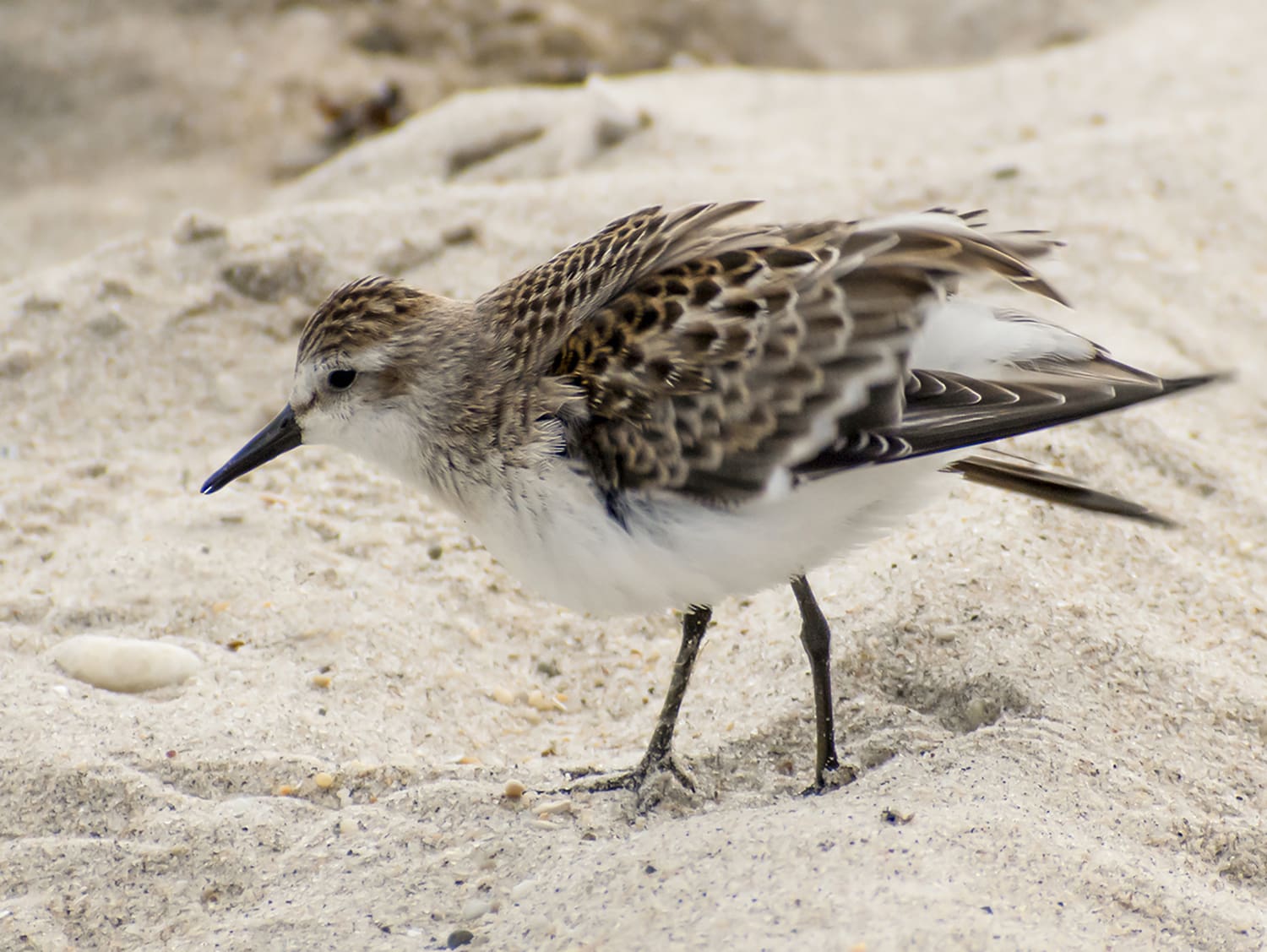
Semipalmated sandpipers have white bellies and gray/brown mottled backs. Their bills are longer and thinner, with no bright spots, and their legs are dark.
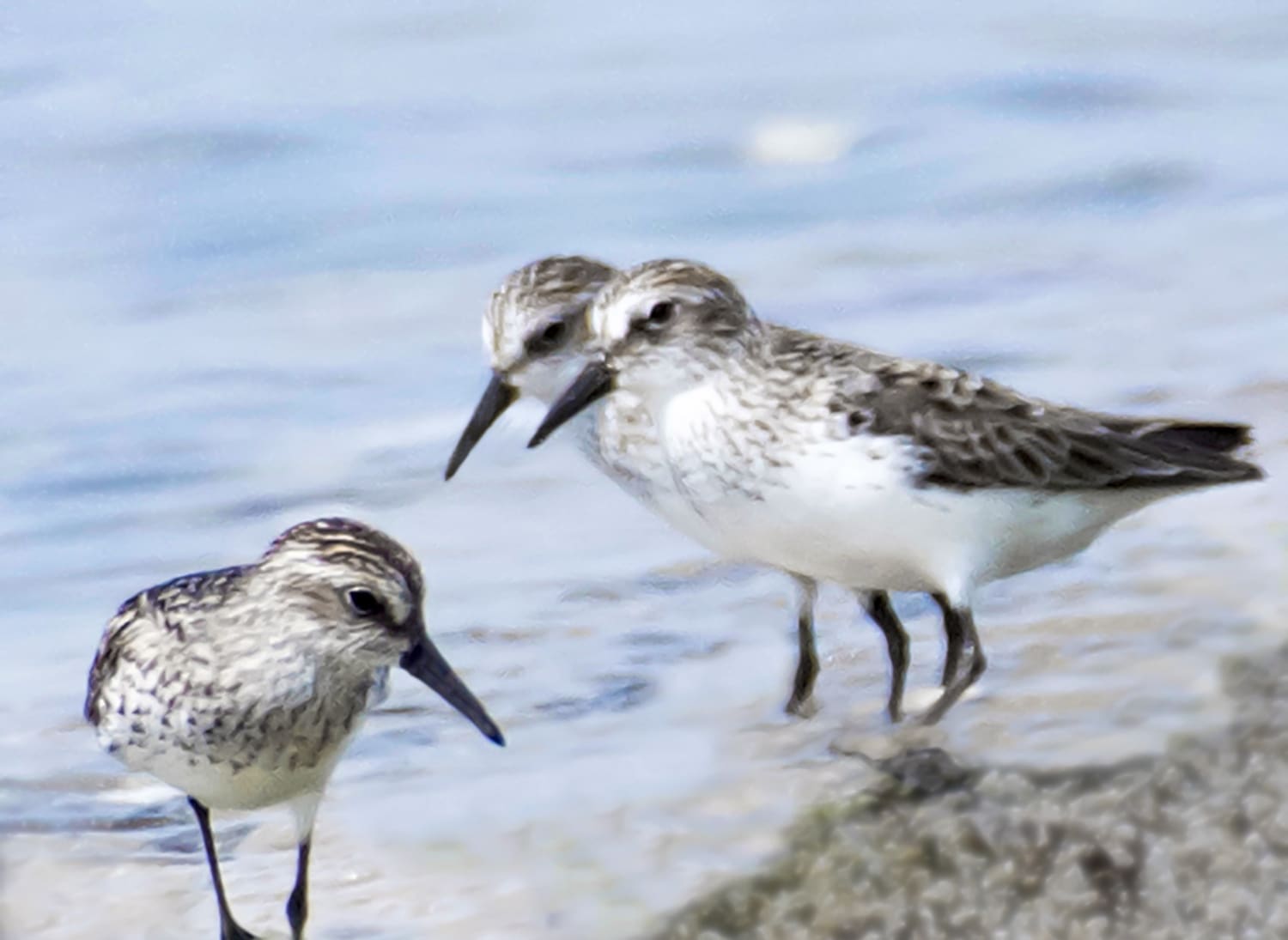
Both types fly north to breed in the Arctic tundra in the spring, when they can find lots of flies and other insects hatching. They need those protein-rich insects to nourish their chicks. Along their way to the breeding grounds, these birds can be seen feeding together along the North American coastlines, building up large fat reserves to give them energy for the next leg of their journey.
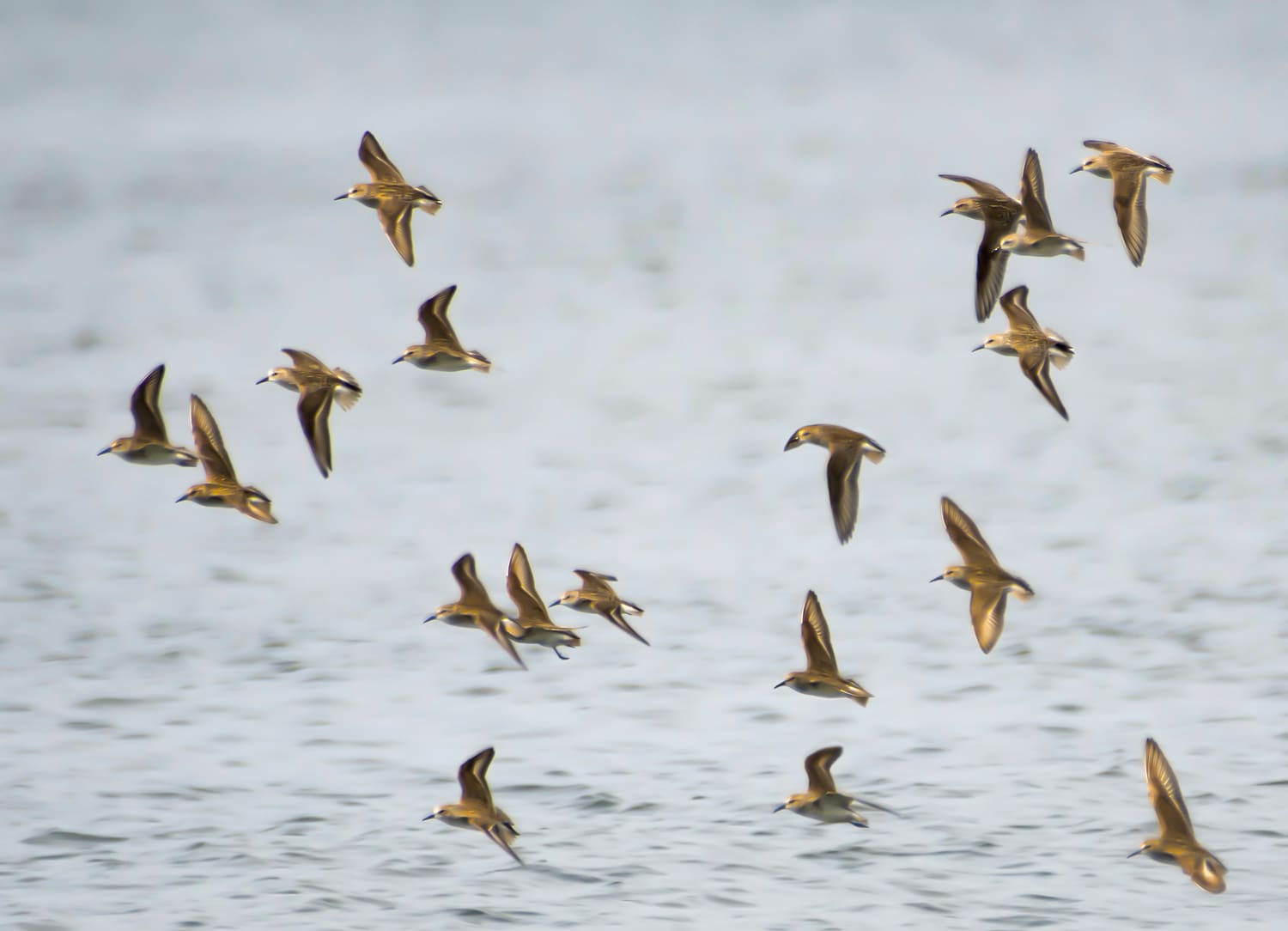
Then in the fall they fly back to more southern shorelines, waiting for the right wind to help propel them. They move at night and in groups, probably for safety from predators.
Since they can’t see much at night, they find their way by using the location of the setting sun and the position of the stars to orient themselves. They can also sense variations in the Earth’s magnetic field.
Although there aren’t large flocks of these semipalmated birds wintering in the Virgin Islands, there are definitely some that come and stay. And we should be grateful for the ones that do come, because they remove some of the bugs on the beaches, including the larvae of the obnoxious biting beach flies.
At the same time, we should be in awe of them for their ability to move confidently through the night, over dark continents and oceans, somehow knowing from maps in their heads how to find the secluded tropical beaches where they hope to wind up.
________________________________________________________________________
Gail Karlsson has published a new photo book Looking for Birds On St. John, U.S. Virgin Islands, which is now available on amazon.com.
She has also written two other books about the Virgin Islands – The Wild Life in an Island House, and the guide book Learning About Trees and Plants – A Project of the Unitarian Universalist Fellowship of St. John. Follow her on Instagram @gailkarlsson and at gvkarlsson.blogspot.com.