

The nonprofit Right to Democracy reacted Tuesday to the U.S. Supreme Court’s majority opinion striking down President Donald Trump’s push to end birthright citizenship, calling it “significant” for people born in U.S. territories.

In a 5-4 decision, the top court found that Trump’s attempt to redefine the long-settled understanding of the Citizenship Clause, with an executive order to exclude children born to parents who are temporary or unauthorized immigrants, violates the Fourteenth Amendment. Justice Brett Kavanaugh dissented but joined the 6-3 majority in finding the order must be struck down as inconsistent with federal statute, Right to Democracy noted in an analysis following the decision.
Writing for the court, Chief Justice John Roberts called citizenship “the right to have rights — to freely participate in our political community. The Framers of the Fourteenth Amendment extended that promise to every free-born person in this land. We keep that promise today.” In reaching this result, Roberts explained that because of the Citizenship Clause of the Fourteenth Amendment, “[a] child born on American soil and subject to American law was made an American citizen.”
The decision has important consequences for people born in U.S. territories, who the federal government continues to argue are not U.S. citizens based on the Fourteenth Amendment, according to Right for Democracy, which works to advance democracy, equity, and self-determination in U.S. territories.

Federal Government Has No Power to Deny Citizenship in U.S. Territories
Earlier this year, Right to Democracy filed an amicus brief on behalf of 21 current and former elected officials and judges from the U.S. Virgin Islands, Puerto Rico, Guam, the Northern Mariana Islands, and American Samoa who urged the court not to repeat the same mistakes it has made in U.S. territories.
“While today’s decision did not directly address the question of birthright citizenship in U.S. territories, the court is clear that anyone born on U.S. soil and subject to U.S. law has a constitutional right to U.S. citizenship.’ The court definitively ruled that the political branches of the federal government have no power to redefine the Citizenship Clause. This is significant for people born in U.S. territories, because the federal government continues to argue — contrary to the text and history of the Citizenship Clause — that it can turn citizenship on and off in U.S. territories,” said Neil Weare, co-director of Right to Democracy, who served as Counsel of Record for the amicus brief.
“It is also noteworthy that Justice Ketanji Brown Jackson, in a concurring opinion joined by Justice Sonia Sotomayor, also called out the Insular Cases as an example of when the Supreme Court has ‘denied Americans’ the ‘promise’ of ‘securing equal citizenship,’” said Weare.
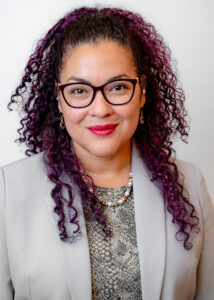
“The court’s broad ruling today is a recognition that, absent very narrow exceptions, the U.S. must recognize fundamental citizenship rights to all of the people who are born under their rule. The language of the court is clear — that neither the president nor Congress has the power to unilaterally deny U.S. citizenship to someone born under the sovereignty and jurisdiction of the United States,” said Dr. Adi Martínez-Román, co-director of Right to Democracy.
“Regardless of one’s views on political status, this re-emphasizes the important constitutional limits placed on federal power when it comes to the fundamental right of citizenship. Understanding what basic rights are recognized to people born under U.S. sovereignty is critical to the conversation of self-determination,” said Martínez-Román.
Several current and former elected officials and judges who joined the brief spoke out on the decision, said Right to Democracy, including:
V.I. Delegate to Congress Stacey Plaskett: “The President and Congress have broad powers. But as the Supreme Court ruled today, absent from those powers is the ability to turn the Constitution’s guarantee of birthright citizenship on and off whenever they like. This is an important ruling for Virgin Islanders, because the federal government continues to claim our citizenship is a legislative privilege rather than a constitutional right. That’s not just contrary to the Constitution, but contrary to the 1917 Treaty of Transfer, which expressly recognized that Virgin Islanders would be recognized as U.S. citizens.”
Mary Camacho Torres, who served in the Guam Legislature from 2015 to 2023: “Today’s decision should serve as a roadmap for recognizing that people born in U.S. territories have a constitutional right to U.S. citizenship that neither Congress nor the president can take away. No elected official or legislative body should have a veto over whether someone born in Guam or anywhere else on U.S. soil is a U.S. citizen. Whatever the people of Guam decide regarding our future political status, so long as we are under the U.S. flag we should be entitled to equal citizenship and equal rights.”
Ana Irma Rivera Lassén, who served in the Senate of Puerto Rico from 2021 to 2025: “Today’s ruling confirms what we argued: the political branches do not have unilateral power to define who is and isn’t a citizen. Just as the court struck down the executive order as unconstitutional, it must eventually recognize that neither Congress nor the president have unilateral control over the question of citizenship in U.S. territories. This is also true of the colonial relationship between the United States and Puerto Rico — which is rooted in the same racist and colonial prejudices as the challenged executive order. It is time to end the federal government’s unilateral power over people in the territories and begin an informed process of self-determination and decolonization.”
Eduardo Bhatia, who served as President of the Senate of Puerto Rico from 2013 to 2017: “I applaud the Supreme Court’s powerful reaffirmation that birthright citizenship is a constitutional guarantee that no president can erase by executive order. The court’s sweeping principle — that a child born on American soil and subject to American law is a citizen — cannot logically be confined to the states. In my reading, that principle equally protects those born in the territories of the United States, including Puerto Rico.”
Zoe Laboy, who served in the Senate of Puerto Rico from 2017 to 2019: “As Puerto Ricans, we recognized firsthand what was at stake when the president sought to exclude the children of immigrants from the protections of citizenship, and the court was right to reject that exclusion today. But it should not stop there: birthright citizenship must also be recognized for those born in U.S. territories, who have historically been denied equal treatment.”
Andra Samoa, who served in American Samoa’s Fono from 2019-2022:” Federal officials cannot just redefine whether or not someone has a right to citizenship — that was the clear message from today’s decision. With so many of our American Samoan brothers and sisters facing criminal prosecution in Alaska because the federal government denies them recognition as U.S. citizens, this Supreme Court ruling is important for our community.”
Former V.I. Superior Court Judge Soraya Diase-Coffelt, who served from 1994-2000: “It is the role of a judge to say what the law is, and that is just what the U.S. Supreme Court did today. The justices were clear that no government official has the power to deny citizenship to anyone granted that right by the U.S. Constitution. This should be true not just for the Trump Executive Order, but for people born in U.S. territories.”
American Samoans in Alaska Face Possible Jail Time
Beyond calling into question whether Congress could unilaterally change the citizenship status of people born in U.S. territories, the federal government’s argument that citizenship is a congressional privilege rather than a constitutional right has led to people born in American Samoa continuing to be denied citizenship at all, Right to Democracy noted.
American Samoans in Alaska are facing up to 5-10 years in jail as a result.
Right to Democracy represents Michael Pese and his wife, Tupe Smith, who — along with several family members — face felony perjury and voter misconduct charges carrying up to 5-10 years in prison, because the federal government denies them recognition as U.S. citizens despite being born on U.S. soil in American Samoa.
Unlike every other U.S. territory, where people are recognized as U.S. citizens at birth, American Samoa is the only U.S. territory whose residents are instead labeled “nationals, but not citizens” of the United States — a distinction that traces back to the same unresolved constitutional questions raised in the amicus brief filed by territorial officials in Trump v. Barbara, the nonprofit said. The day after oral argument in Trump v. Barbara, Pese filed a motion to dismiss his indictment, arguing that the Citizenship Clause already makes him a U.S. citizen.
“While we weren’t surprised the court did not address birthright citizenship in U.S. territories, its continuing failure to resolve this question leaves people born in U.S. territories vulnerable. This is especially true in Alaska, where state prosecutors are criminally targeting American Samoans because the federal government claims they are ‘U.S. nationals’ but not ‘U.S. citizens’ despite being born on U.S. soil,” said Charles Ala’ilima, an American Samoan attorney who serves on the board of Right to Democracy and as co-counsel in Alaska v. Pese and Alaska v. Smith.
“Citizenship establishes to whom the United States government is ultimately responsible. Today’s decision strengthens the argument of our clients, who face up to 5-10 years in jail, that all charges must be dropped because they are in fact U.S. citizens based on the Fourteenth Amendment,” said Ala’ilima.
“The federal government has no power to impose ‘non-citizen’ U.S. national status on people born in American Samoa or any territory, because citizenship is a fundamental individual right conferred at birth,” he said.
Additional Information
The Trump v. Barbara amicus brief is available here, an overview from SCOTUSblog here, and a two-page summary here in English and Spanish. Here is more information on the Alaska prosecution of American Samoans based on their status as “non-citizen” U.S. nationals. Right to Democracy hosted a virtual panel with legal experts discussing birthright citizenship, which is available here (transcript here).