

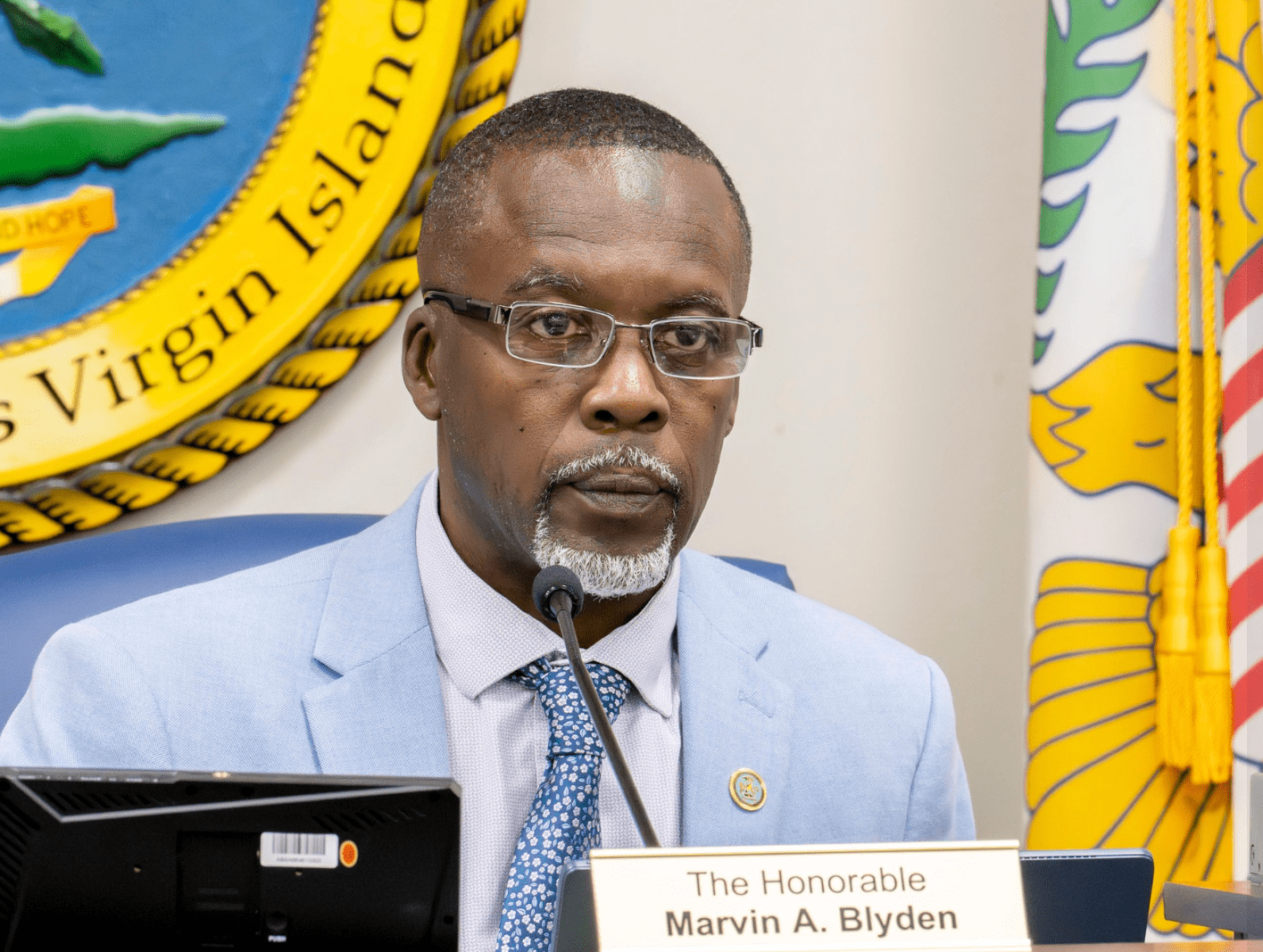
During Wednesday’s Senate Housing, Transportation and Telecommunications Committee hearing, lawmakers considered Bill No. 36-0074, which would require property owners to maintain roadside vegetation and prevent obstructions to public roads and utility lines. The measure drew both support and concern from government agencies and utilities.
The proposal, sponsored by Sens. Kenneth L. Gittens and Avery L. Lewis, would establish the “Virgin Islands Roadside Property Maintenance and Vegetation Act,” creating enforcement mechanisms, penalties and exemptions aimed at improving road safety and infrastructure reliability.
Gittens framed the bill as a response to what he called a “persistent and territorywide issue” of overgrown vegetation blocking sight lines, encroaching on roadways and interfering with utility infrastructure. He said property ownership in the Virgin Islands must come with clear maintenance responsibilities.
The Virgin Islands Public Works Department backed the measure but cautioned that without dedicated staff and funding, it risks becoming “unenforceable,” Commissioner Derek Gabriel said. He urged lawmakers to route unpaid fines through property tax liens and create a special fund to ensure revenue supports vegetation management.
Gabriel noted DPW has already spent about $2.4 million this fiscal year on vegetation management and said shifting some responsibility to property owners would help the department move beyond what he described as a “cat and mouse” struggle with neglected parcels and focus more on major thoroughfares and government properties.
The Virgin Islands Waste Management Authority supported the bill as “timely and necessary” but warned that disposal limitations could create unintended consequences. Executive Director Hannibal “Mike” Ware said the Anguilla landfill cannot currently accept green waste, leaving limited legal disposal options and increasing the risk of illegal dumping.
He cautioned that without a viable way to handle additional green waste, the measure could inadvertently encourage more illegal dumping instead of reducing it.
Environmental concerns were raised by the Department of Planning and Natural Resources, which supported the bill’s public safety goals but warned against overreach. Assistant Commissioner Jozette Walker said unclear language could lead to over-clearing, potentially damaging slopes, drainage systems and coastal waters.
The Virgin Islands Water and Power Authority emphasized safety risks near power lines. Chief Operating Officer Lemuel Lavinier said vegetation contact accounts for about 20% of monthly outages per district and warned that line clearance is specialized, high-risk work that cannot be safely performed by untrained individuals. She urged lawmakers to require coordination with the utility for any work near electrical infrastructure.
Fire and Emergency Medical Services officials backed the measure, calling roadside overgrowth a persistent hazard. Director Antonio Stevens said vegetation interfering with utility lines has contributed to fires and emergency delays, noting that crews have often had to stand by while WAPA addresses sparking or compromised lines.
“For many years, overgrown vegetation along public roadways has posed a significant and ongoing hazard in our territory,” Stevens said. “These situations not only strain our resources, but also place both emergency responders and utility crews at unnecessary risk.”
While agencies broadly agreed that overgrown vegetation threatens public safety and infrastructure, they split over how far the bill should go in shifting responsibility and costs onto property owners.
Telecommunications providers urged caution. Tom Bolt, local counsel for Liberty Mobile USVI, said the bill “improperly shifts responsibility for public infrastructure maintenance from the government of the Virgin Islands to private property owners” and imposes obligations “even where vegetation is located within the public right of way.” He warned it could lead untrained individuals to work near energized lines, creating risks of injury or outages.
Clay Jones of Heritage Tree Company warned about “the difficulty and danger of people attempting to do this work on their own to save money and avoid fines,” saying the potential for serious injury is high.
Sen. Ray Fonseca called the bill “deeply flawed,” warning that a $1,500 lien could lead to tax delinquency and even loss of property. He said the measure “imposes responsibilities on property owners for areas beyond their property boundaries” and relies on vague standards that could invite arbitrary enforcement.
Sen. Dwayne DeGraff said he could not support the bill “in any way, form or fashion,” arguing that the measure would shift a basic government function onto residents who already pay for roadside maintenance through existing taxes and fees.
After the hearing, the bill was held in committee and did not advance. Gittens, one of the sponsors, said he plans to work with agencies and fellow senators on an amended version, saying the issue remains too serious to ignore.
“There’s a lot of work to do, but we need to focus on solutions and know what we need to do differently,” Gittens said.