

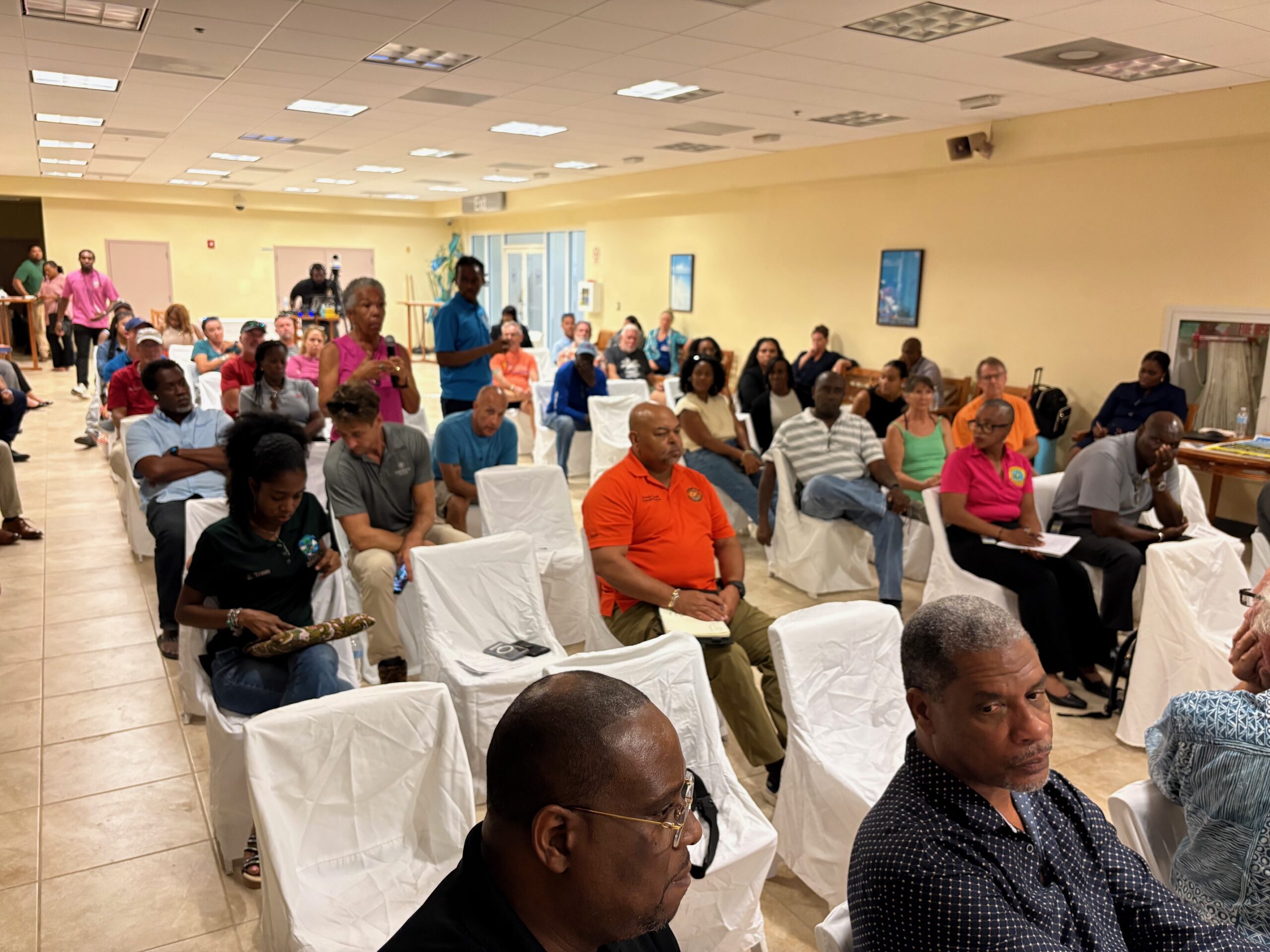
Residents pressed the Virgin Islands Port Authority on pier access, flooding, and broader town concerns during a Frederiksted waterfront master plan meeting Tuesday on St. Croix.
Community members were welcomed to a work session and public open house with members of the Virgin Islands Port Authority at the Henry E. Rohlsen Airport Cruise Lounge. VIPA has begun the public phase of its Frederiksted Waterfront Master Plan, but what was intended as a planning discussion about the waterfront quickly expanded into a broader conversation about the future of Frederiksted itself.
VIPA officials and consultant Scott Lagueux of Moffatt & Nichol met with residents, business owners, and elected officials to gather feedback as the agency develops a comprehensive road map for improvements along the Frederiksted waterfront. Officials stressed that the project is still in its early stages and that no final decisions have been made.
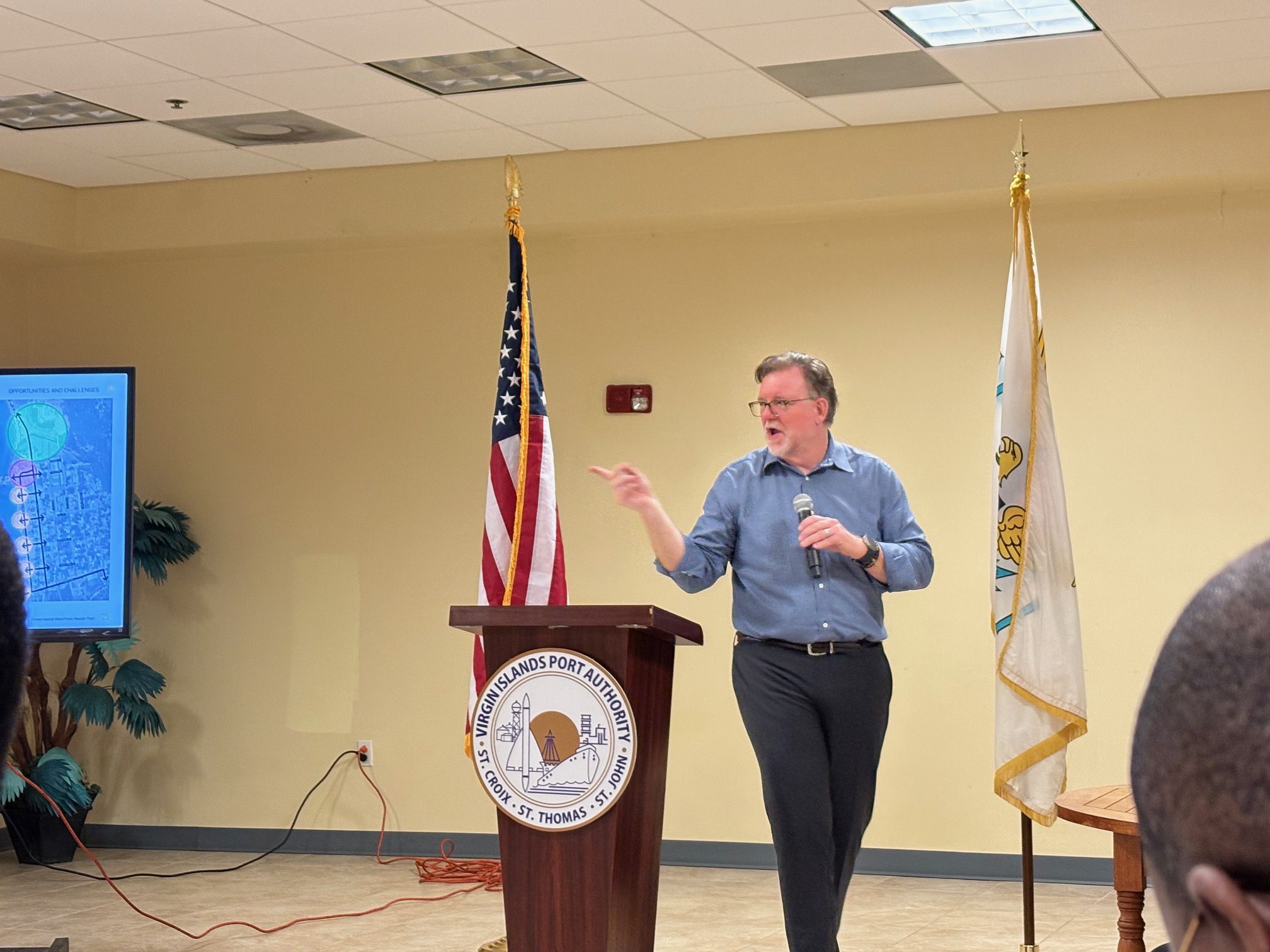
Monifa Bradley, VIPA’s public information officer, welcomed attendees and said the purpose of the meeting was to gather ideas, constructive criticism, and community input to help shape a vision that reflects Frederiksted’s needs and aspirations. Civil engineer Mojania “Moe” Denis, a Frederiksted native and member of the VIPA team, emphasized that the master plan is a framework for future action and not a finished design.
“Nothing is set in stone,” Denis said, noting that economic growth, environmental concerns, and cultural preservation must all be considered.
Board president of Our Town Frederiksted Shomari Moorehead questioned whether focusing on the waterfront alone would truly revitalize Frederiksted. Other residents questioned if improving the pier area without addressing abandoned buildings, deteriorating infrastructure, and flooding within the town would do little to improve daily life for residents. One resident warned that beautifying the waterfront while the rest of town remains neglected would not solve deeper issues. Moorehead questioned whether nonprofit organizations, churches, and community groups had been sufficiently engaged early in the process.
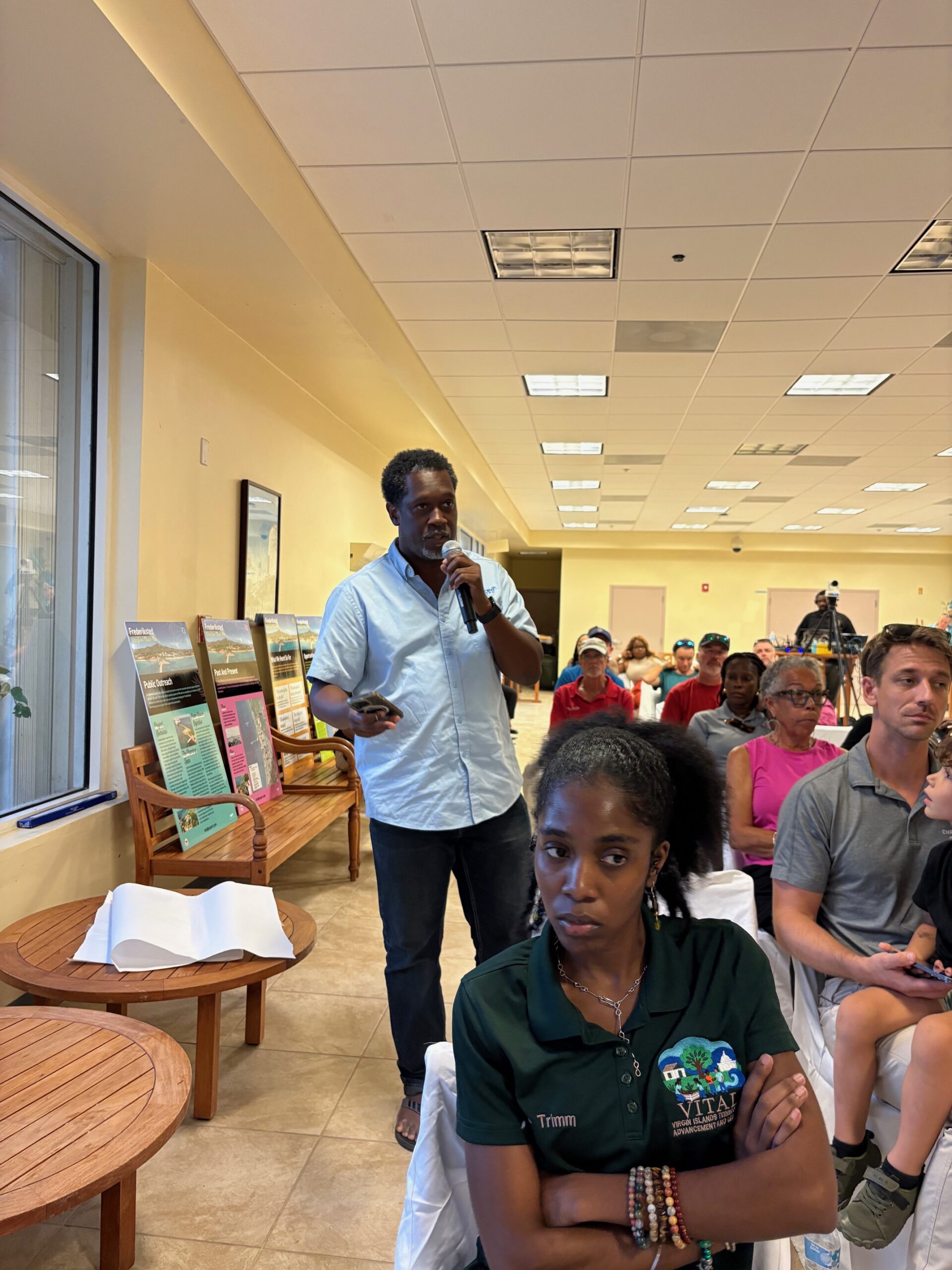
VIPA officials responded that the project’s scope is defined by jurisdiction and funding. The Legislature appropriated $5 million as a starting point focused primarily on the waterfront and adjacent areas near the pier. Officials acknowledged that broader town issues exist but said VIPA must operate within its authority while coordinating with other government agencies where possible. They also committed to holding the next public meeting in Frederiksted after venue challenges required the first session to be held at the cruise ship facility.
The most contentious portion of the evening centered on public access to the pier. Residents described fishing, walking, and swimming off the pier as long-standing traditions and expressed frustration that access is now restricted. Some questioned why the pier remains closed to the general public even when cruise ships are not docked. Business operators also raised concerns that new access requirements, including Transportation Worker Identification Credential requirements in restricted areas, could negatively affect local workers and small tour operations.
Mervin Constantine, VIPA’s St. Croix marine manager and Port Facility security officer, explained that the authority must comply with federal maritime security regulations under 33 CFR Part 105. He said the cruise pier operates under an approved security plan that includes restricted areas and access controls, and that noncompliance can result in significant penalties. Constantine stressed that the restrictions are not arbitrary but mandated by federal law.
Community members pushed back, asking whether federal rules could be modified or applied differently in the Virgin Islands. Some suggested exploring options that would allow public access during periods when ships are not present. Others proposed constructing a separate public pier dedicated to fishing and recreation if full access to the cruise pier cannot be restored.
Lagueux said the team would examine whether any middle ground solutions exist, while cautioning that U.S. federal requirements are typically stringent. He said the master plan would explore possibilities without making promises that cannot be fulfilled.
Beyond pier access, residents raised practical concerns about restroom availability along the waterfront. Several speakers noted that when the dock area and nearby facilities are restricted or closed, vendors, workers, and visitors have limited access to public restrooms. Some suggested redesigning the layout of gates and public access areas so that restroom facilities remain available without requiring restricted access credentials. VIPA representatives indicated a willingness to meet with stakeholders to explore potential design solutions.
Flooding and drainage were also significant concerns. Property owners described recurring flooding along Strand Street and said clogged drains and runoff contribute to the problem. One business owner recounted clearing drains in the early morning hours during heavy rains to prevent water from entering their building. Another resident pointed to Pan Bush Gut and a damaged bridge as both a visual blight and a hazard that could worsen flooding during severe storms. VIPA officials said discussions have been held with the Public Works Department and that federal approvals have been secured to address bridge repairs.
Cultural preservation and historical interpretation were also emphasized. Residents urged planners to tell Frederiksted’s full story, including its role in emancipation, labor struggles, and earlier eras of trade and enslavement. Some called for reenactments, walking tours, and enhanced use of the fort and surrounding areas as cultural anchors. Speakers stressed that development should not erase heritage or prioritize tourism at the expense of community identity.
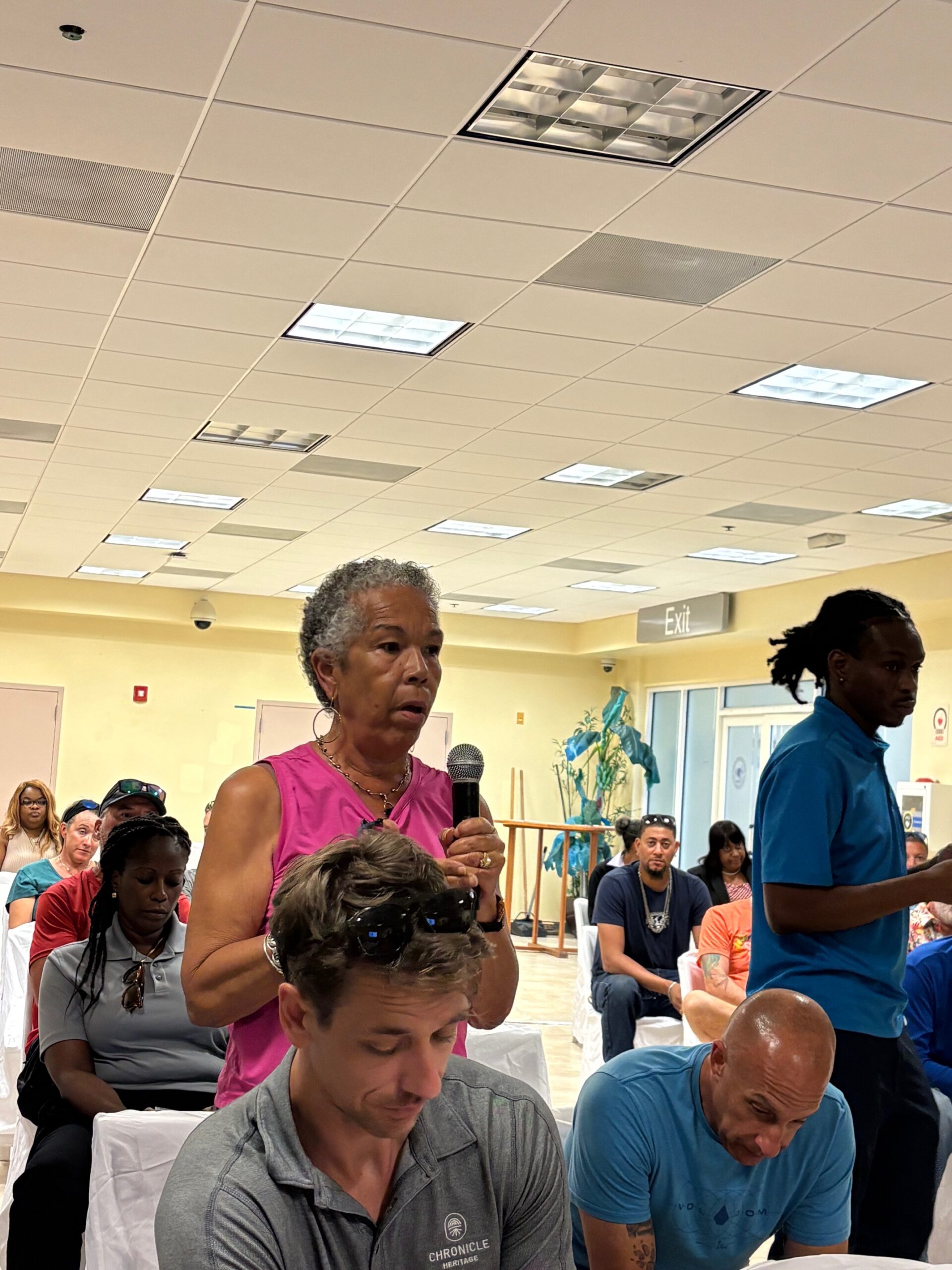
Throughout the meeting, elected officials underscored the importance of cruise tourism to Frederiksted’s economy. Some officials present included Sens. Clifford Joseph, Kenneth Gittens, Kurt Vialet, Hubert Frederick and Novelle Francis Jr. As debates continued, Gittens urged residents to see the waterfront investment as a starting point for broader economic growth. Gittens said the recent increase in cruise ship calls to Frederiksted represents an opportunity to expand local business activity and create jobs.
“We really need to push Frederiksted,” Gittens told the audience. “The more people that come, the more development you’re going to have.” He pointed to tour operators, taxi drivers, vendors, and small businesses that benefit from cruise traffic, arguing that enhancing the waterfront experience strengthens Frederiksted’s competitiveness in the Caribbean market. “This is economic development,” he said. “This is jobs.”
Vialet echoed that sentiment, emphasizing that the funding was intended to jump-start improvements in the areas where cruise passengers arrive and spend time. He noted that Frederiksted’s port has become a growing cruise destination and said maintaining that momentum is essential.
“If we don’t plan this properly, somebody else will plan it for us,” Vialet said, urging collaboration rather than division. He stressed that the investment is meant to improve accessibility, enhance the beach area, and strengthen the visitor experience while keeping the community at the center of the process. “We’re trying to build a product,” he said. “But this product has to work for St. Croix.”
Lagueux explained that the master plan represents roughly five to 10% of a traditional design process and will ultimately include cost estimates, project phasing, potential funding sources, and recommended implementation strategies. He said future meetings will present concept options for community review, and he encouraged residents to complete surveys distributed at the meeting or online.
In closing, Denis urged attendees to use the process to think creatively about solutions rather than focus solely on existing problems.
“We understand there are constraints,” she said, encouraging residents to imagine new possibilities for recreation, vendor space, cultural programming, and waterfront access within regulatory limits.
The next community meeting is expected to be held in Frederiksted, where residents will have another opportunity to review proposals and continue the conversation about how best to balance economic growth, public access, environmental resilience, and the long-term future of the town.