

Congressional Delegate Stacey Plaskett on Friday condemned the U.S. Supreme Court’s ruling Thursday allowing the Trump Administration to deport people from Haiti and Syria legally sheltering in the United States because it was unsafe to return to their country. The ruling could ultimately disrupt the lives of thousands of Virgin Islanders.
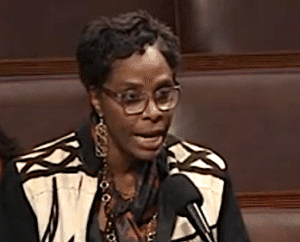
Plaskett, like her predecessor Donna M. Christensen, was a longtime advocate for people fleeing war zones and natural disasters. She said the 6-3 ruling failed to take into account the Trump Administration’s overt racist animus in seeking to strip 350,000 Haitians and roughly 6,000 Syrians of their Temporary Protected Status.
“Congress created TPS over 35 years ago, on a bipartisan basis, because we agreed that we should not send people back to war, disaster, and death — particularly individuals within our own hemisphere who, by working in the United States, create some level of economic support for neighboring countries that, without the support of those TPS holders, may utterly collapse,” Plaskett said in a written statement. “Federal judges found that the administration’s actions were likely motivated by documented hostility toward Black and Haitian immigrants. Justice [Elena] Kagan said plainly in dissent that there is no dispute these individuals will suffer irreparable harm. She is right.”
A 2025 congressional report counted 3,110 people with Temporary Protective Status in the Virgin Islands.

The economic impact of removing those people was not clear.
“Haitian TPS holders contribute nearly $6 billion to the U.S. economy each year and pay $1.56 billion in taxes — funding programs they cannot even access. More than 20 percent work in healthcare, including as nursing assistants and caregivers. Sending them back to a country the State Department warns Americans not to visit due to gang violence, kidnapping, and instability is not policy. It is cruelty and short-sighted,” she said.
In 2025, Plaskett led a congressional letter with 48 colleagues urging the former Department of Homeland Security Secretary Kristi Noem to extend protective status for Haitian nationals. Earlier this year, Plaskett assisted in securing votes for passage of H.R. 1689, legislation to require DHS to restore Haiti’s TPS designation through April 2029. That bill now awaits action in the Senate, she said.
“This decision, while deeply disappointing, is ultimately unsurprising from a court that has repeatedly placed a regressive-activist-conservative agenda above the rule of law. The Supreme Court has handed the Trump Administration unchecked authority to remove legal protections from hundreds of thousands of people who came here lawfully, registered with the government, passed background checks, paid taxes, and built lives in this country,” Plaskett said.
According to the State Department, Haiti was initially designated for Temporary Protected Status in January 2010 when extraordinary conditions in that country prevented Haitians from returning safely. As conditions worsened, the protected status was renewed several times. Syria first received TPS designation in 2012 amid a devastating civil war.
Noem moved to revoke both designations in 2025, contending conditions had improved — a conclusion at odds with the State Department’s own travel warnings, which continue to advise against travel to both countries due to extreme danger.
“The Supreme Court’s ruling means those terminations may now proceed without further judicial review,” Plaskett said.
Countries with temporary protected status in the U.S. also include El Salvador, Ethiopia, Lebanon, Myanmar, Somalia,South Sudan, Sudan, Ukraine, Venezuela, and Yemen. As of March 2025, the U.S. provided TPS protections to about 1,297,635 people.