


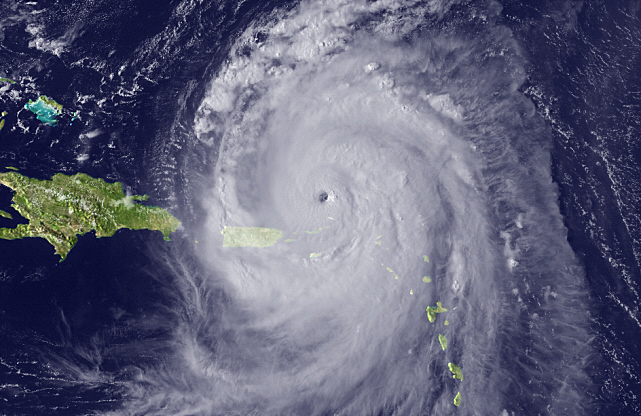
 With the 2013 hurricane season just three days old, the Colorado State University hurricane forecast team is sticking to its prediction of an above-average hurricane season, due primarily to unusually warm water in the tropical Atlantic Ocean and an expected lack of an El Niño event.
“The tropical Atlantic remains anomalously warm, and it appears that the chances of an El Niño event this summer and fall are unlikely,” Phil Klotzbach of the Colorado State Tropical Meteorology Project said in a Monday statement. “Typically, El Niño is associated with stronger vertical shear across the tropical Atlantic, creating conditions less conducive for storm formation.”
The team calls for 18 named storms during the hurricane season that started June 1 and runs through Nov. 30. Nine of those are expected to become hurricanes. The team predicts that four of those will become major hurricanes with sustained winds of 111 mph or greater.
The latest prediction echoes what the team indicated in April.
The long-term average from 1981 through 2010 stands at a dozen named storms, nine hurricanes and four major hurricanes.
As for the local area, Walter Snell, a meteorologist at the National Weather Service office in San Juan, said he would “be willing to put some nice money on” the odds against hurricane activity in the next 30 days.
For the near future, Snell said a weak tropical wave will move through the area Monday night and into Tuesday. It will bring a few scattered thunderstorms.
According to Snell, the territory can expect another wave Sunday and again on June 11 or 12.
The Colorado State team predicts that tropical cyclone activity in 2013 will be about 175 percent of the average season. By comparison, 2012 witnessed tropical cyclone activity that was 131 percent of the average season.
Klotzbach and Gray said in the press release that the Caribbean has a 61 percent chance of having a storm make landfall. The average for the last century is 42 percent.
Storm names for 2013 start with Andrea. Barry, Chantal, Dorian, Erin, Fernand, Gabrielle, Humberto, Ingrid, Jerry, Karen, Lorenzo, Melissa, Nestor, Olga, Pablo, Rebekah, Sebastien, Tanya, Van, and Wendy follow.
As V.I. residents know all too well, it only takes one to create a problem.
“All vulnerable coastal residents should make the same hurricane preparations every year, regardless of how active or inactive the seasonal forecast is,” said William Gray, founder of the Tropical Meteorology Project and co-author of the forecast.
The Atlantic basin has been in an active hurricane period since 1995, due to a change in large-scale atmospheric and oceanic conditions, the press release indicated. These active periods typically last about 25 to 35 years, based upon historical records since the mid-19th century.
Colorado State is in its 30th year of issuing Atlantic basin seasonal hurricane forecasts. The team’s annual predictions are intended to provide a best estimate of hurricane activity during the upcoming season, not an exact measure.
The forecasts are based on the premise that global oceanic and atmospheric conditions, such as El Niño, Atlantic basin sea-surface temperatures and sea- level pressures that preceded past active or inactive hurricane seasons, provide meaningful information about similar conditions that will likely occur in the current year.