Sapodilla (Manilkara zapota) is also known as mespel locally. In his botanical history report of St. Croix in the 1890s, Charles F. Millspaugh mentioned that several varieties and sizes of mespel were grown wild on the island with oval, or egg-shaped, fruit about the size of an American apple. (Photo by Olasee Davis)
It is that time of the year for the Virgin Islands Agriculture & Food Fair festival. The theme for this year’s 2025 Agrifest is “From Soil to Soul, Nurturing Virgin Islands Agriculture.” I have written two articles to be published in the Agriculture & Food Fair book. They are “The History and Potential of Tropical Fruits as an Industry in the U.S. Virgin Islands” and “The Protection of Soil and Prime Agricultural land in the U.S. Virgin Islands.”
Olasee Davis (Submitted photo)
The articles are too long to be published in the newspaper with citations, etc. But both articles are critically important to educate the public about food security in the Virgin Islands. I will write a narrative of the history of fruits and the potential fruits have as a major industry in Virgin Islands agriculture. When the Amerindians migrated to the Virgin Islands from South America, between the second and third millennia, wild fruits were part of the landscape of these islands.
These fruits were gathered by the indigenous people of the islands, who used them for food, ritual, and capturing wild animals by using fruits as bait. By the time Christopher Columbus encountered the islands and claimed St. Croix for Spain during his second voyage to the so-called New World on Nov. 14, 1493, the island was “Well cultivated and well populated,” as reported by one of the crew that landed at Salt River Bay west bank.
Some of the wild native fruits that were once in abundance to the first inhabitants of these islands were West-Indian locust (Hymenaea courbaril), wild guava (Eugenia pseudopsidium), cocoplum (Chrysobalanus icaco), swamp apple or pond apple (Annona glabra), and sweetpea or pomshock, or Spanish oak as known by Crucians (Inga laurina). These fruits are now rare in the Virgin islands, particularly on the island of St. Croix.
During the early colonial history of St. Croix, there was a large variety of tropical fruit trees growing wild, especially on the northwestern, west, and central valleys in streambed banks across the island. Many of these fruit trees were planted by enslaved Africans and the movement of wildlife such as bats, birds, and deer. C.G.A. OLdendorp was a Moravian missionary who visited the Danish West Indies from 1767 to 1768. He was an inspector for the Moravian churches who gathered information and interviewed both free and enslaved people for the purpose of compiling a report on the progress of evangelizing the enslaved in the Danish West Indies.
In his report, he mentioned, “the wild bush provides him with a quantity of fruit, which costshim nothing more than the time that he spends to gather.” According to the late George A. Seaman, it was common practice for the planting of fruit trees to occur along “guts” and streams for conservation purposes and cultural uses. Today, you can still find some large fruit trees, particularly mangoes, growing along stream banks.
The carambola (Averrhoa carambola) fruit tree grows very well in most Virgin Islands soils. The fruits have a wide range of uses, from juice to medicinal applications. (Photo by Olasee Davis)
From 1854 to 1923, an American botanist named Charles F. Millspaugh, who wrote Flora of theIsland of St. Croix, mentioned estates on the north side of St. Croix with extensive fruit plantations. In 1895, Estate Little La Grange had an extensive banana field, and over 10,000 pineapples were grown. Estate Spring Gardens in the northwestern mountainous region of St. Croix was also a large plantation planted with coffee, cocoa, mango, orange, lemons, bananas, coconut, and vanilla, etc.
In 1892, the government of the Danish West Indies established an agricultural experiment station on Estate Grange for the purpose of advising planters on sugar growing, but also to carry out experiments on other crops such as fruit trees. In 1910, another agricultural experiment station was established at Estate Anna’s Hope, not too far from Grange Estate. It conducted research on a variety of crops including fruit trees.
When Charles Millspaugh visited St. Croix in the 1890s, he said, “There is no doubt that thefuture prosperity of the island depends largely on the growing of fruit.” In his report he mentioned a host of fruit trees growing wild on St. Croix. He described the shape, color, taste, size, and the potential these fruits would have in the agricultural industry of the Virgin Islands.
In 1949, a study was conducted on the economic development of the Virgin Islands, titled The Virgin Islands of the United States: An Opportunity and a Challenge, by Axel H. Oxholm. The study brought out the potential of using fruit as an industry in the Virgin Islands. Oral history is also an important factor whereby older people talked about their grandparents and great-grandparents who planted fruits along “gut” roadsides, and plantation settings.
According to former Assistant Commissioner of Agriculture, Horatio A. Millin, somewhere between 1962 to 1963 a shipment of new varieties of mangoes were brought into the Virgin Islands from Trinidad, St. Kitts, Montserrat, Dominican Republic, Haiti, Mexico, and several other tropical countries. Over the years, new varieties of mangoes have been developed. There are approximately 70 to 100 varieties of mangoes in the Virgin Islands, particularly on St. Croix.
St. Croix was not called for nothing at one time in its history the “Garden Spot of the Antilles.” It was a garden of fruits and other agricultural crops, which made the island the fourth largest sugar-producing island in the world for its size during 1760 to 1814 when sugar was king. In the 1990s, the late Clinton George and other of my colleagues from the School of Agriculture of the University of the Virgin Islands created or established the mango festival known as “Mango Melee & Tropical Fruits.” Today, thousands upon thousands of people attend the mango festival.
The initial idea behind the mango and tropical fruit festival was to get farmers and home growers to establish fruit orchards, particularly mango, as a business. Historical records made it clear that these islands have the potential for a fruit industry. Modern technology, drying, processing, and other means of adding value to local fruits will enhance the agricultural industry in the Virgin Islands.
— Olasee Davis is a bush professor who lectures and writes about the culture, history, ecology and environment of the Virgin Islands when he is not leading hiking tours of the wild places and spaces of St. Croix and beyond.
Mary Sankitts Gonzalez transitioned into eternal life on Jan. 25. She was 81 years old.
Mary Sankitts Gonzalez
She was preceded in death by her spouse, Jorge Gonzalez; mother, Annicasia Sankitts; father, Antonio Sankitts; sisters, Ana S. Parilla, Josefina Delgado, Susana Sankitts; brothers, Antonio Sankitts, Trubusio Sankitts, Fautino Sankitts, Luka Sankitts; niece, Evelyn Sankitts; nephews, Manrique Sankitts, David Sankitts.
She is survived by her daughters, Yvette M. Diaz, Gina G. Johnson; sons, Jorge Gonzalez Jr., Gibeon A. Gonzalez; grandchildren, Richard Diaz Jr., Jemia L. Johnson, Leia M. Johnson, Rodel E. Johnson Jr.; brother John Sankitts Sr.; nieces, Sonia Delgado, Leticia Andujar, Edna Vega, Peggy Delgado Levinson, Naomi Sankitts Bingham, Gail Sankitts Savidis, nephews, Jose Delgado, Jorge Delgado, Ricardo Ruiz, David Delgado, John Sankitts Jr., Ulysses Sankitts, Edwin Sankitts, Ernesto Sankitts, Ezekiel Sankitts; son-in-law, Richard Diaz, Rodel E. Johnson; special friends, Ada Ruiz, Laverne Hodge; other precious close friends and family too numerous to mention.
Funeral service will be held on Feb. 13 at St. Ann’s Catholic Church (Barren Spot). Viewing and tributes starts 9/9:45am and service at 10am. Interment to be held at Kingshill Cemetery.
Professional services entrusted to James Memorial Funeral Home, Inc.
You could always find him there in the evening time, sitting on his stool, his back against the soursop tree, as if he gained strength from it. It was good to see him there, something certain: he seemed like our man of always and forever. Yes, it was always good to see Papa Boula. Boula was short for bamboula, because since he was a child — now approaching his eighth decade — he’d been known as a great drummer, a sentinel of heritage. As well as mastering ka and conga, life had touched him with wisdom.
Demonstrating the deep respect he generated amongst us, only those of his generation called him Boula; for the rest of us, it was Papa Boula, Papa B or Papa.
People would gather around him, sitting or laying on the grass or mats. And there was always a cup of soursop for everyone; he never seemed to run out of it. Of course, others would make contributions, bringing lime, cinnamon, honey, sugar or milk: or ice.
One time, while sitting here on St. Thomas, around the Soursop Shrine, he took us to Burkina Faso. Some had not heard of it, so he explained that it was the country directly north of Ghana; that the biggest film festival in Africa takes place in that country, every two years, in the capital called Ouagadougou. He told us of the Golden Stallion, as every Hollywood director, wants to win the Oscar. He took us to Burkina Faso, because of the calabash, known here as squash. You see, we’d been talking about an upcoming concert in Charlotte Amalie, featuring Stanley and the Ten Sleepless Knights. Anyway, amongst the Mossi — some say Moose — there is a sacred drum called Bendre; the player of the drum, lauded by his fellow musicians, carries that name also. They take a large calabash, cut the top off, covering it with goatskin. Traditionally, it was only played on special occasions, when the chief had given permission. Like the jali of the Mandinka, or others who come under the generic title of griot, the bendre is genealogist and historian, as well as storyteller.
And as we have learnt and laughed with Anansi, so the Mossi have done the same with Mba Soambe, the hare: another alumni of the trickster academy. That evening became known as the Calabash Workshop; all from talking about the squash of quelbe
Sometimes, no one would want to leave the presence of Papa Boula. There was always knowledge to be shared, digested with the soursop juice; and there was always gentleness there also.
— Due to the dearth of provision in Oxford, England, in 2009, Natty Mark Samuels set up African School, offering African Studies to the general public. Teaching has taken place in a wide range of settings; schools, community projects, museums, colleges, youth clubs, universities, libraries, carnivals and botanical gardens. It has a specialism in African and Caribbean folklore. He is the founder of Rootical Folklore and Birago Day: African and Caribbean Folklore Day. He wrote the Encyclopedia of Rootical Folklore and The Birago Diop Trilogy.
Lloyd Elridge Isaac died Jan. 10 at the age of 70.
Lloyd Elridge Isaac
Viewing will be Friday, Feb. 7 at Turnbull Funeral Home from 4 p.m. to 6 p.m. A service at Faith Westleyan Church will be held Saturday, Feb. 8 from 9 a.m. to 10 a.m. with interment Western Cemetery #2 to follow.
He was preceded in death by his mother and father, Winifred Isaac and Charles Twells.
He is survived by his sons, Dwight Isaac and Dwayne Isaac; his grandchildren, Iori Isaac, Kya Isaac, Cherrice Richardson, and Tyrese Richardson; his sisters, Vancellyn Isaac, Darlene Thomas, and Vanetta Parquite; his brothersVernon Aubrey Isaac, Aurthurlyn Isaac, Vernon Twells, Errol Edmeade, Lawerence Twells, Dennis Twells, Trevor Twells, and Charles Twells Jr.; his daughter and son in law, Anita Isaac and Tyler Isaac; his nephews, Venon Isaac Jr, Vance Isaac; his nieces, Alison Isaac and Vanessa Isaac; his cousins, Dora Isaac, Sylvie Isaac, Orville Isaac and many others. Special friends include Patricia Maynard, Georgiana and Philmore Woodley, Donna Kline, Karen Kline, Cheryl Kline, Winston Gardner, Arnold Rouse many others.
Funeral arrangement by Turnbull’s Funeral Home and Crematory Services
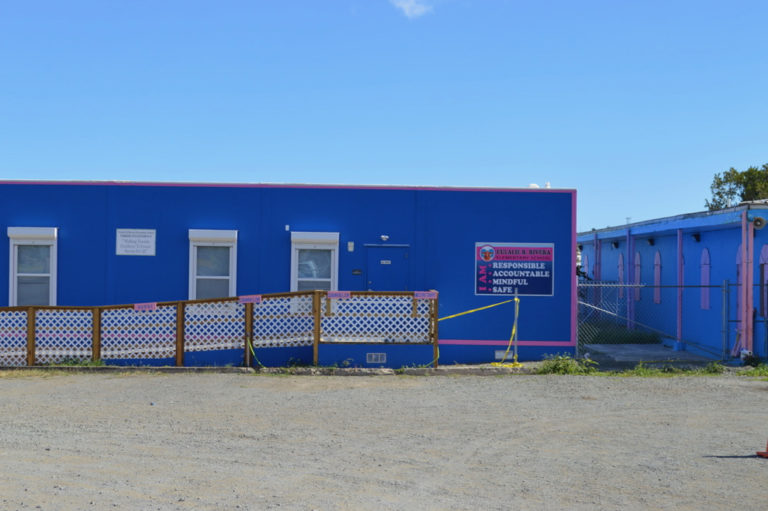
Virgin Islands Police Department officers responded Monday to a burglary at Eulalie Rivera K-8 School on St. Croix, where kitchen appliances were stolen from the cafeteria, which is undergoing renovations.
The theft is believed to have occurred between 8:30 p.m. on Sunday and 4:50 p.m. on Monday. Stolen items include a stainless steel ice machine, a Ridge brand tile cutter, two commercial-grade six-burner ovens, an orange and silver electric drill, and a commercial hood with double ventilation, according to the police report.
“This is another setback for the school, which has been without a cafeteria since Hurricane Maria,” said Principal Loretta Moorhead. “Many students and parents rely on the breakfast and lunch provided here.”
The Virgin Islands Police Department urges anyone with information to contact 911, call 340-778-2211, or contact Crime Stoppers VI at 800-222-8477 (TIPS).
Anyone with information may also call the Education Department’s Compliance Line. The anonymous helpline operates through an outside company that is staffed by trained professionals for students, employees, or anyone to report any wrongdoing or concerns to include: theft, child abuse, bullying, campus threats, fraud etc. The line is available 24 hours a day, seven days a week, safely, and is confidential. Call or text the word report to 1-800-403-2461 or visit videcomplianceline.com.
“You can remain anonymous. If you know something, say something,” the department said in a release announcing the hotline contact information.
Friends of Virgin Islands National Park has opened registration for the 22nd Joe Kessler’s Beach To Beach Power Swim which takes place on Sunday, May 25. One of the most beautiful swims in the world, the Power Swim is on the list of theWorld’s Top 100 Open Water Swimsand theWorld’s Top 100 Island Swims.
Every Memorial Day weekend, hundreds of swimmers take to the azure waters of Virgin Islands National Park on St. John to raise funds for kids’ swim programs, marine conservation, education outreach and more! Last year the 365 registered swimmers aged 6 to 81 years old came from near and far.
Participants choose their distance starting at Maho Bay beach and swimming to Cinnamon Bay, Trunk Bay, or, the full 3.5 miles, to Hawksnest Bay. In 2024, St. Croix’s Kaeden Gleason set a new record finishing the unassisted long course from Maho to Hawksnest in 1 hour, 9 minutes and 26 seconds. The top female finisher for the third straight year, was Lindsay Barr from St. Thomas who finished in 1:23:04 and was third overall.
As much a community event as a swimming race, the event was renamed Joe Kessler’s Beach To Beach Power Swim last year in recognition of its founder, Joe Kessler. A former Director of Friends of Virgin Islands National Park, Joe passed away alongside his wife, Cristina in an accident shortly before the 2024 race.
Every year, a creative member of our community designs the event logo. The 2025 event logo was designed by avid swimmer and Friends’ supporter, Kate Nesbitt. A synchronized swimming Olympian, Kate swims alongside her young daughters. In addition, the family businesses of Salty Daze Charters and Dazey Drive In are sponsors.
Registration for the 2025 event can be found on the Friends of Virgin Islands National Park’s website at www.friendsvinp.org.Space is limited and registration will close on Wednesday, May 21 or when capacity has been reached. Registration for this popular event often closes in April.
This event is made possible thanks to the local business community and sponsors. Anyone interested in sponsoring the 2025 race should contact Jennifer Stone at jstone@friendsvinp.org or (340) 779-4940.
The passing this week of Ira Mills marks the loss of a sharp mind, a steady hand, and a man who believed in getting things right. His most recent role as V.I. Tax Assessor was just one part of a long and distinguished career, but for those of us who had the privilege of working with him, he will be remembered for much more than his title.
I knew Mr. Mills as a kid growing up – but I truly got to know him as a young reporter, less than a month out of college with a writing degree, when he was director of the Office of Management and Budget. In a profession where clarity is often in short supply, he stood out. There was no spin, no obfuscation – just a deep respect for facts and a willingness to ensure the media had them straight.
It might seem strange to say in today’s world, but Ira Mills came from an era when information mattered. He understood that accuracy was not just a courtesy but a necessity, especially when dealing with the numbers that shaped the territory’s future.
In 2005, I was handed my first big budget book – it was blue, over 500 pages – and I sat in a Public Finance Authority meeting chaired by the late Gov. Charles Turnbull. The board was debating an appropriation but didn’t have a copy of the budget on hand. Without hesitation, Mr. Mills turned to the room and said, “Pancham has one.” The day before, he had taken the time to walk me through exactly how the budget was laid out, ensuring I understood its structure before it was debated. I handed my copy to the governor, and Mr. Mills chuckled, saying, “This is why it always pays to work with the media.”
It was a small moment, but it spoke volumes about the kind of professional he was – accessible, patient, and committed. In an age now where public trust in journalism is constantly undermined, his respect for the role of the press stands out even more.
His candor was especially evident during budget season at the Senate. In 2006, while some officials danced around the numbers, Mr. Mills was clear: if the money wasn’t there, it shouldn’t be appropriated. He explained – sometimes to exasperated lawmakers – that agencies often failed to request funds after being notified they were available, and he encouraged senators to ensure their appropriations were actually utilized. His straightforwardness reminded me of Karen Andrews, the former chief negotiator, who famously refused to sit at the bargaining table without the funds to back an agreement. Like her, Mr. Mills understood that financial reality couldn’t be negotiated away.
For all the budget debates and finance meetings, what I will remember most about Mr. Mills is his willingness to teach. I am grateful for his patience, his integrity, and the example he set in public service.
The Source offers its deepest condolences to his family and all those who knew and respected him. The Virgin Islands has lost a steady voice of reason – one that, in these times, feels even more irreplaceable.
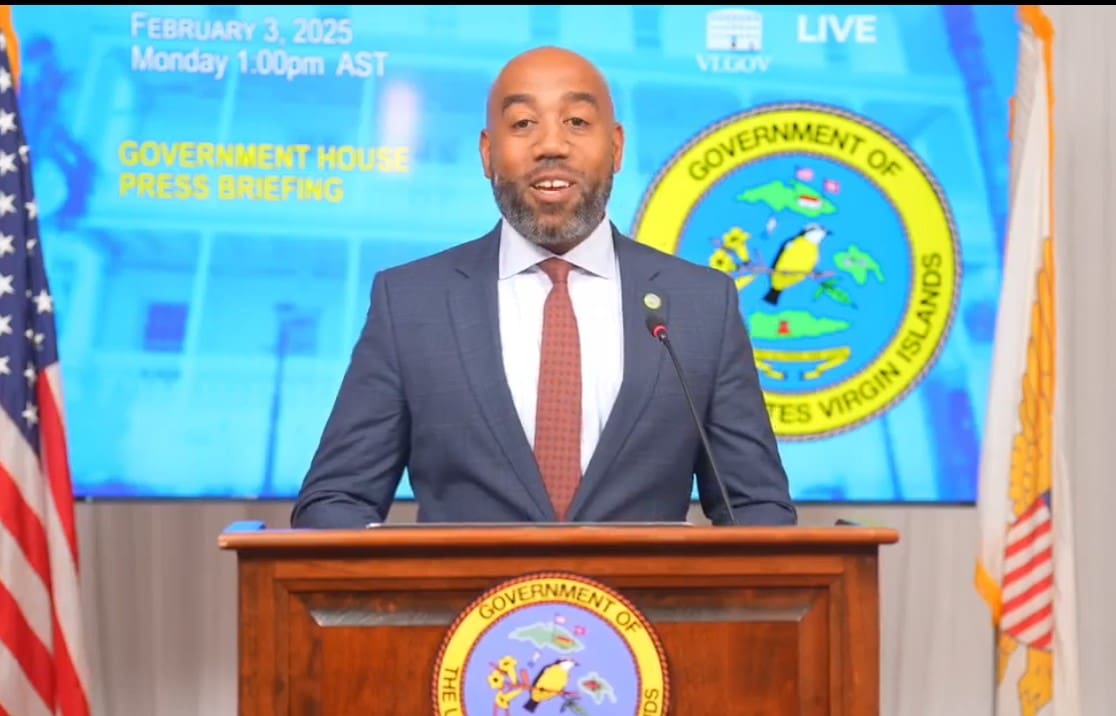
A screenshot depicts Government House Communications Director Richard Motta Jr. during the first press briefing of the year Monday at Government House. (Screenshot from V.I. Government House Facebook livestream)
Government House briefings returned Monday after a monthlong hiatus.
After acknowledging the start of U.S. Black History Month — and its particular significance to the history of the Virgin Islands — Government House Communications Director Richard Motta Jr. said Gov. Albert Bryan Jr. and Public Works Department officials celebrated the reopening of the “new and improved” East Airport Road Bridge Monday morning on St. Croix.
Motta noted that the bridge was one of several ongoing efforts to repair St. Croix roads. Other projects include enhancements to the East and West Airport roads leading to Rohlsen Airport, the Route 669 bridge near the Agricultural Fairgrounds and the rehabilitation of Ethel McIntosh Memorial Drive, also known as Mahogany Road.
The Mahogany Road contract was awarded to Marco St. Croix, Motta said and will entail resurfacing, drainage enhancements, and structural reinforcements. The project is funded through $17.75 million in GARVEE bonds.
“And I am pleased to note today that the notice to proceed has been met, and so the contractor can officially begin on that project,” Motta said.
The territory has also signed a letter of intent with TJ Ocean Auto and Metro Motors to expand Virgin Islanders’ access to electric vehicles, or EVs, and develop local service facilities.
Bryan said during his seventh State of Territory Address last week that the territory has installed eight free charging stations and has plans to install 26 more by this summer, adding that his administration and the V.I. Energy Office have secured $150 million in grants that will be used to “subsidize battery and solar systems, erect power charging stations for cars and replace old and inefficient appliances.”
A new system that will allow Virgin Islanders to electronically file their 2024 individual income tax returns was also announced.
Motta said the V.I. Internal Revenue Bureau launched an online tax filing portal called VI Quick File, “designed to make tax filing easier, faster and more convenient.”
“This latest effort follows other successful digitalization initiatives — most notably at the Bureau of Motor Vehicles, where Virgin Islanders can now register their vehicles online as well as access other services,” Motta said.
Taxpayers will also be able to use the online system to submit their Form 4868 to request automatic extensions to their tax filing. To register for VI Quick File, residents can request a PIN number by emailing oit_register@irb.gov.vi and complete their registration by visiting https://income-tax.bir.vi.gov.
Monday’s briefing was sparsely attended, and the Source did not receive notice of it in advance. Though weekly briefings typically take place each Monday at 1 p.m., Government House customarily sends out notices to confirm the time and location, giving members of the media an opportunity to attend in person.
The sole reporter in attendance asked Motta questions about reported raids by Immigration and Customs Enforcement, local ramifications of an attempted federal funding freeze by the Trump administration and the U.S. Virgin Islands’ lobbying efforts in Washington D.C. Bryan addressed those subjects during a sit-down interview with the Source last week.
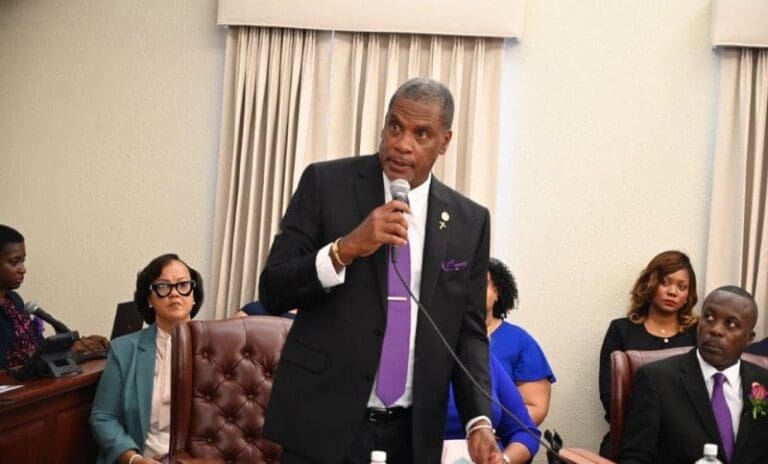
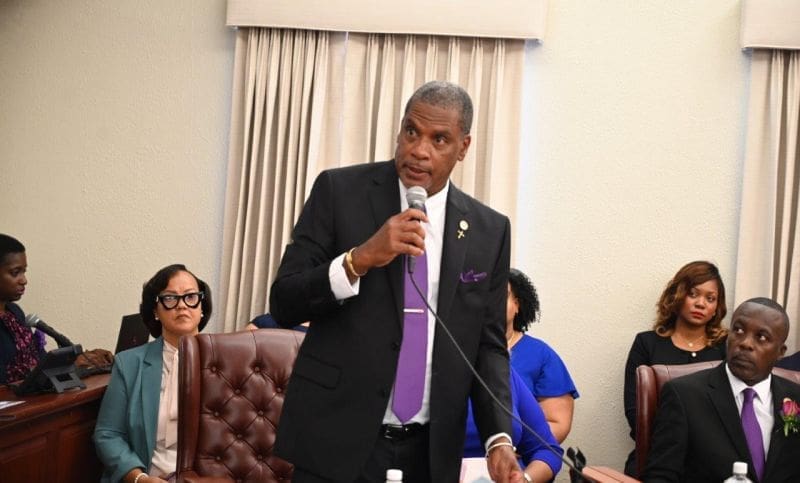
Sen. Kurt Vialet and Majority senators have released a targeted February agenda of committee hearings. (Photo courtesy V.I. Legislature)
The 36th Legislature’s Majority Caucus is taking an aggressive stance on oversight and accountability this February, launching a series of targeted committee hearings designed to push government agencies toward greater transparency and fiscal responsibility. Senate Majority Leader Kurt Vialet says the Legislature is responding to public demand for stronger oversight, ensuring commissioners and agency heads are held to clear expectations.
“We know that oversight is what the community has been asking for,” Vialet said in an interview Monday. “It’s critical that we hold individuals’ feet to the fire so they understand that accountability is nonnegotiable. These hearings will provide much-needed updates and force agencies to be transparent with the public.”
At the heart of this agenda is a fact-finding approach, with lawmakers focusing on some of the government’s most pressing concerns, including: the redevelopment and demolition of Gov. Juan F. Luis Hospital and the state of health care services; the territory’s financial outlook; and contractual obligations at the Water and Power Authority and Property and Procurement.
Vialet stressed that the hearings are designed to drive productivity and problem-solving within government agencies. When asked how senators plan to keep discussions constructive and curtail animosity, he emphasized that committee heads have been asked to maintain professionalism and keep the focus on accountability rather than personal attacks.
“We’re not here to waste time or bring people in just for the sake of it,” he said. “Each hearing must have a clear, defined purpose. We’re setting expectations for agency heads, ensuring they understand their role in structural reform, financial responsibility, and service delivery.”
A More Unified Legislature
This round of committee meetings follows Vialet’s call for a unified legislative agenda, a move he first mentioned after Gov. Albert Bryan Jr.’s State of the Territory Address. Since then, the Senate Majority has met to finalize key priorities and will build on collaboration with the Minority Caucus and frequent engagement with Delegate to Congress Stacey Plaskett.
“We’ve already had a meeting with the delegate to discuss potential cuts to federal grants and their impact on the Virgin Islands,” Vialet said, adding that both Majority and Minority came together for what were involved in what he described as a Caucus of the Whole.
“This isn’t about party politics – this is about securing the territory’s financial future. We’ve met as a Committee We asked the delegate if she could present to the caucus every two to three months to keep us updated on national issues, tax provisions, and the rum cover-over program,” Vialet said.
Beyond legislative oversight, Vialet said the government’s General Fund remains precarious, citing declining tax collections and the need to reevaluate revenue strategies rather than relying on an uncertain upswing. Among other things, he said the Legislature can reassess government building leases, exploring whether owning and renovating facilities would be a more sustainable long-term strategy than continuing to rent, as a possible austerity measure.
“We cannot go through the year with an unbalanced budget,” Vialet stressed. “We need to be realistic about our revenue streams, especially when it comes to tax collection. The Bureau of Internal Revenue has to do its part, and we will be pushing them to ensure they are aggressively collecting taxes on a regular basis.”
The following committee hearings are scheduled for February, focusing on key areas of government operations:
Wednesday, Feb. 5 – Committee on Education & Workforce Development
Chairperson: Sen. Kurt Vialet | 9 a.m., St. Croix
Testimony from Education Commissioner Dionne Wells-Hedrington and Craig Benjamin, Executive Director of School Construction & Maintenance.
Wednesday, Feb. 12 – Committee on Housing, Transportation & Telecommunications
Chairperson: Sen. Marvin A. Blyden | 9 a.m., St. Thomas
Testimony from Public Works Commissioner Derek Gabriel and VI Waste Management Authority Interim Executive Director Darryl Griffith.
Thursday, Feb. 13 – Committee on Health, Hospitals & Human Services
Chairperson: Sen. Ray Fonseca | 10 a.m., St. Croix
Testimony from Human Services Commissioner Averil E. George, Schneider Regional CEO Tina Commissiong, and leadership from Gov. Juan F. Luis Hospital and the VI Government Health & Hospital Corporation.
Tuesday, Feb. 18 – Committee on Budget, Appropriations & Finance
Chairperson: Sen. Novelle E. Francis Jr. | 10 a.m., St. Croix
Testimony from Finance Commissioner Kevin McCurdy, OMB Director Julio Rhymer, BIR Director Joel Lee, and other key financial officials.
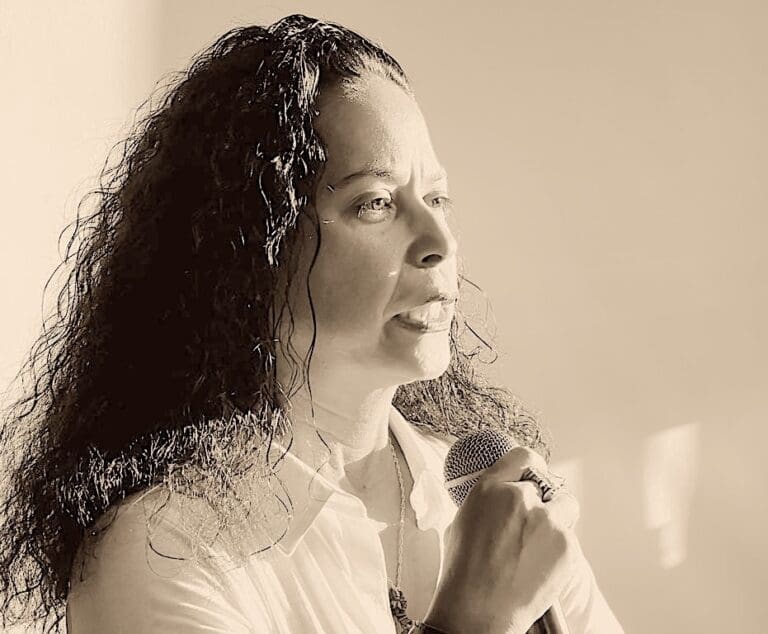
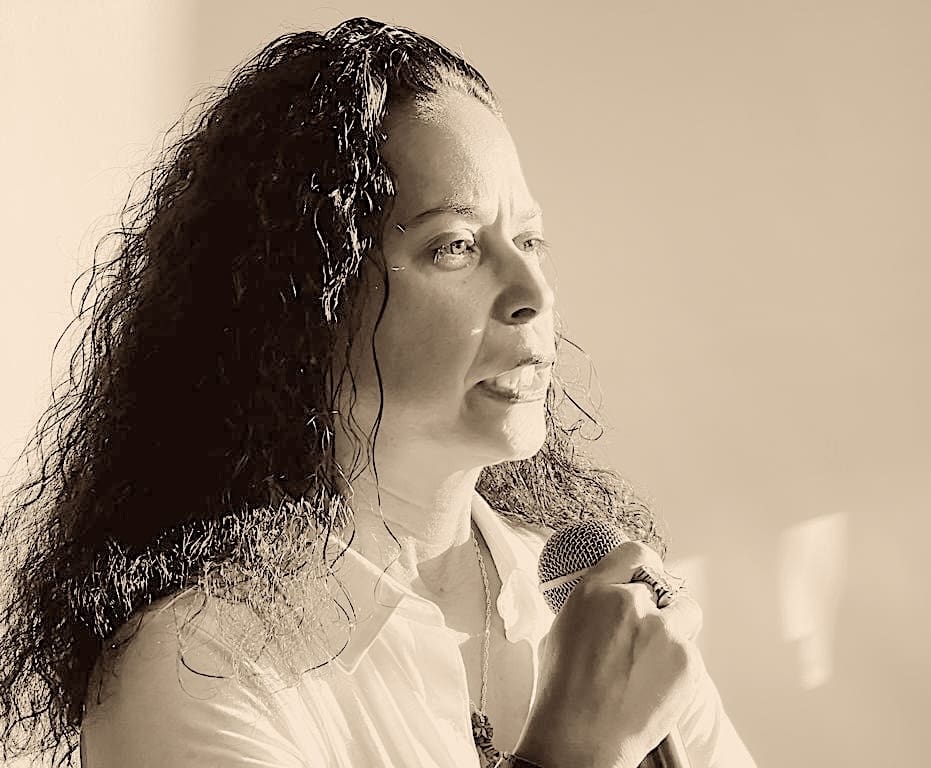
Johanna Bermudez-Ruiz (Photo courtesy of Suki Medencevic, ASC)
Internationally Award-Winning filmmaker and Native Virgin Islander Johnna Bermudez-Ruiz and Cane Bay Films will screen her documentary, “Sugar Pathways,” Sunday, Feb. 16, from 5:30 p.m. to 8:30 p.m. Bermudez-Ruiz and her sister, chef Wanda Bermudez-Belardo, will offer a three-course meal, paired with libations. The venue is the courtyard of the J&W Latin Bodega, 102 Richmond, Northside Road, Christiansted, next to Olympic Car Rental.
“This is the first time – ever – for me to plan my screening this way … to combine it with my sister’s culinary gifts … from two women entrepreneurs … for the community and for visitors alike,” Bermudez-Ruiz said.
This prestigious documentary film is narrated by actress Luna Lauren Velez of the Emmy award-winning TV show, “Dexter,” and “Across the Spider-Verse.”
The Red Carpet Gala event was originally screened at Government House on St. Croix several years ago. It tells the story of the will of the Puerto Rican families of Vieques and Culebra who survive, integrate and contribute to the economy, politics and community of the U.S. Virgin Islands.
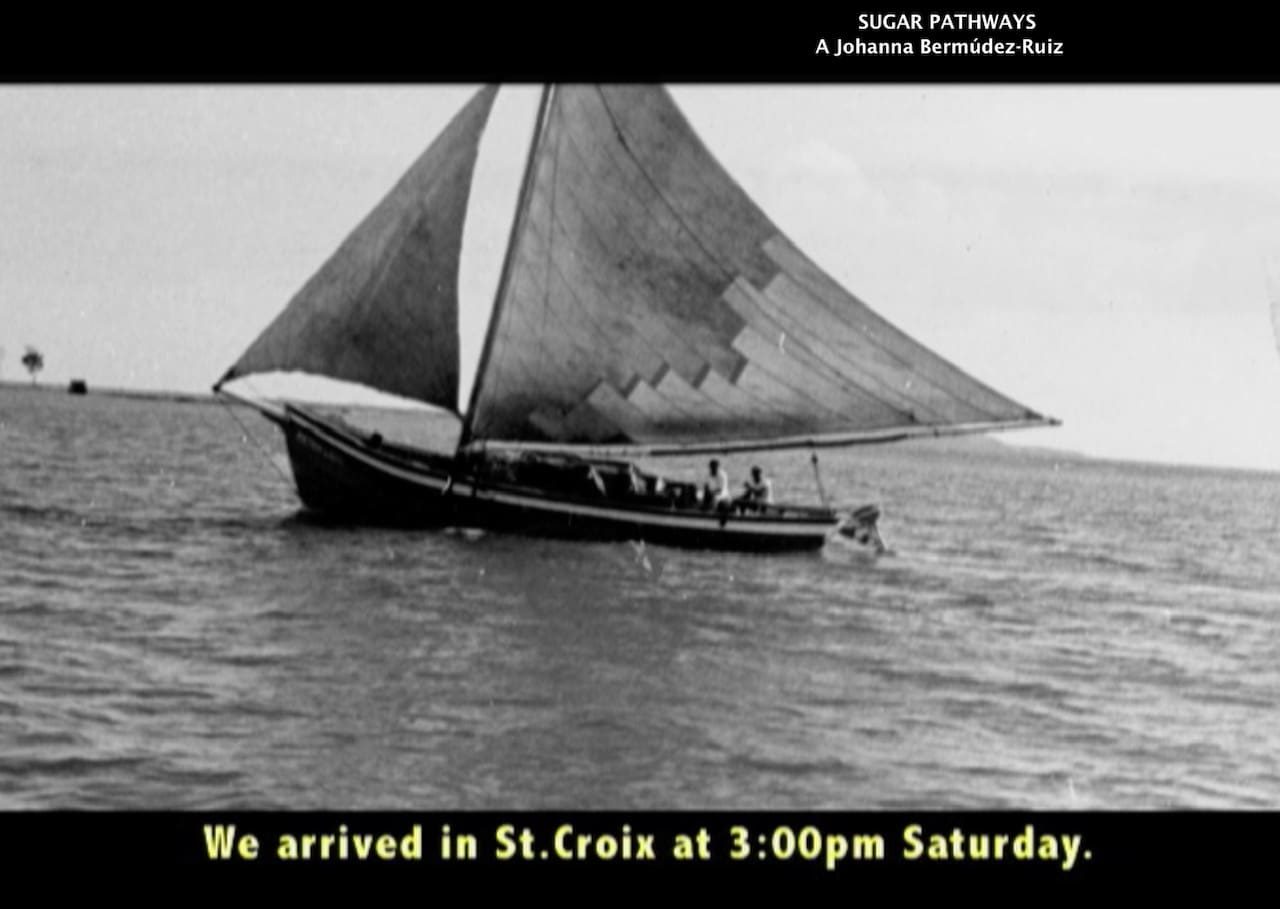
Still image of “Sugar Pathways” featuring migratory sailboat. (Photo courtesy Cane Bay Films)
Film Director/CEO/Lecturer Bermudez-Ruiz’s film legacy includes “Vieques: An Island Forging Futures,” “Solene,” and “Forgotten in Paradise.” Her current work is a groundbreaking feature film, “Silent Drift.”
Her academic film lectures span the colleges and universities in New York, New Jersey, Connecticut, California and the U.S. Virgin Islands. Her work boasts its presence in national and international theaters and museums and she has received countless awards, nominations, grants and sponsorships.
Bermudez-Ruiz’s work experience as an educator and adjunct professor has been recognized nationally and internationally. She was honored by NYS Assemblyman Adam Clayton Powell IV with a Proclamation for preserving the culture and history of Vieques, PR, through her film, “Vieques: An Island Forging Futures.”
According to Bermudez-Ruiz, “We have a lot of community members and visitors who are not aware of our culture – the combination of solidarity, unity and the love of our islands – particularly, the Puerto Rican migration to the U.S. Virgin Islands, which has influenced the fabric of our everyday living.”
Still image of “Sugar Pathways” featuring coal workers. (Photo courtesy Cane Bay Films)
Bermudez-Ruiz pointed out that the migration began hundreds of years ago with her indigenous ancestors. She thought that this event would be a great way to bring people together to have some beautiful and exquisite food prepared by her sister, Crucian-Rican Chef Wanda Bermudez-Belardo, and her team. “Folks would see ‘Sugar Pathways’ and talk about our legacy, our community and enjoy the Sunday together,” she said.
Bermudez-Belardo will prepare a menu inspired by the documentary film’s featured cultural food, history and family. Guests will experience a three-course dinner of hors d’oeuvres, a main course, side dishes and desserts for the seafood lovers, meat eaters, and vegans paired with selective wines of red, white and bubbly for each course. Check out the chef’s famous roast pork!
The event is during the same weekend as the Agricultural Food Fair, noted Bermudez-Ruiz. “After being out at the Fair, I’m always looking for something else to do. I’m energized by seeing the vegetation, the offerings in the booths and the outreach from the nonprofit organizations. I’m thinking about where to go – to sit down – relax – and have something to eat. The screening is a welcoming opportunity for us to come together, watch a great cultural movie and have an engaging conversation.”
“This is a coming-together at a time when many of us are having anxieties around the issues of immigration. This documentary talks about migration and how communities come together,” Bermudez-Ruiz explained.
She shared, with the Source, some of the history she researched for her documentary and why the film is so relevant today:
The economy of Puerto Rico, Vieques, and Culebra was devastated by the American democratic system. With the American rule of Puerto Rico in the early days, there were many challenges, and the Great Depression in 1929 increased the difficulties for Puerto Ricans. There was a lot of poverty. During this time, many people from Puerto Rico, Vieques, and Culebra migrated to the U.S. Virgin Islands – mostly to St. Croix – looking for work.
The island of St. Croix became home for hundreds of people from Puerto Rico, Vieques, and Culebra during this time of immigration.
The film delves into the 1930s and 1940s and how the migration of these people overcame the issues and how they made great contributions to the V.I. economy as entrepreneurs, farmers, teachers, fishermen, senators, governors and judges. This was with love, solidarity, and commitment shared among the combined communities.
Still image of “Sugar Pathways” featuring (right center) Senator Candido Guadalupe/Bermudez-Ruiz great-uncle, (above left) Paquita Marrero-Figueroa/Bermudez-Ruiz grandmother with family at their restaurant’s storage area. (Photo courtesy Cane Bay Films)
Bermudez-Ruiz invites those who have already seen “Sugar Pathways” to revisit it. “It is an excellent way to acknowledge our present concern for our Caribbean neighbors, our Latin American neighbors and our families here in the USVI. It is a good way to reflect on the positivity of coming together as our great-great grandparents did hundreds of years ago. There Is something to learn from the film about the survival tools and the mechanisms our ancestors used in some similar policies and issues that we have begun to experience in 2025.”
“Our ancestors came from nothing and worked hard, rolling up their sleeves in a time period when people did not have – that’s real. And they continued to find ways to pull each other up, hand-in-hand, with a series of policymaking, non-betrayals – more of a deep mission of making everyone’s life better.”
The tone of Bermudez-Ruiz’s voice was filled with emotion as she spoke, and the feelings of her heart were audible – as were the sounds of her tears of remembrance, the respect, the joy, the hope and the love for the ancestors as she said, “I think this is where the conversations will be leading to on February 16 … in memory of our ancestors.”
Attire: Island Chic (outdoor event) Seating is limited Tickets on sale: $160 No refunds after Feb. 3
Thank you to sponsors: Bread & Butter Wines, Fiji Water, CC1, The Virgin Islands Casino Control Commission, Virgin Islands Lottery, Cane Bay Films, WJKC Radio: Isle 95.










Op-Ed: Virgin Islands a Fertile Landscape for an Abundance of Fruits
It is that time of the year for the Virgin Islands Agriculture & Food Fair festival. The theme for this year’s 2025 Agrifest is “From Soil to Soul, Nurturing Virgin Islands Agriculture.” I have written two articles to be published in the Agriculture & Food Fair book. They are “The History and Potential of Tropical Fruits as an Industry in the U.S. Virgin Islands” and “The Protection of Soil and Prime Agricultural land in the U.S. Virgin Islands.”
The articles are too long to be published in the newspaper with citations, etc. But both articles are critically important to educate the public about food security in the Virgin Islands. I will write a narrative of the history of fruits and the potential fruits have as a major industry in Virgin Islands agriculture. When the Amerindians migrated to the Virgin Islands from South America, between the second and third millennia, wild fruits were part of the landscape of these islands.
These fruits were gathered by the indigenous people of the islands, who used them for food, ritual, and capturing wild animals by using fruits as bait. By the time Christopher Columbus encountered the islands and claimed St. Croix for Spain during his second voyage to the so-called New World on Nov. 14, 1493, the island was “Well cultivated and well populated,” as reported by one of the crew that landed at Salt River Bay west bank.
Some of the wild native fruits that were once in abundance to the first inhabitants of these islands were West-Indian locust (Hymenaea courbaril), wild guava (Eugenia pseudopsidium), cocoplum (Chrysobalanus icaco), swamp apple or pond apple (Annona glabra), and sweetpea or pomshock, or Spanish oak as known by Crucians (Inga laurina). These fruits are now rare in the Virgin islands, particularly on the island of St. Croix.
During the early colonial history of St. Croix, there was a large variety of tropical fruit trees growing wild, especially on the northwestern, west, and central valleys in streambed banks across the island. Many of these fruit trees were planted by enslaved Africans and the movement of wildlife such as bats, birds, and deer. C.G.A. OLdendorp was a Moravian missionary who visited the Danish West Indies from 1767 to 1768. He was an inspector for the Moravian churches who gathered information and interviewed both free and enslaved people for the purpose of compiling a report on the progress of evangelizing the enslaved in the Danish West Indies.
In his report, he mentioned, “the wild bush provides him with a quantity of fruit, which costs him nothing more than the time that he spends to gather.” According to the late George A. Seaman, it was common practice for the planting of fruit trees to occur along “guts” and streams for conservation purposes and cultural uses. Today, you can still find some large fruit trees, particularly mangoes, growing along stream banks.
From 1854 to 1923, an American botanist named Charles F. Millspaugh, who wrote Flora of the Island of St. Croix, mentioned estates on the north side of St. Croix with extensive fruit plantations. In 1895, Estate Little La Grange had an extensive banana field, and over 10,000 pineapples were grown. Estate Spring Gardens in the northwestern mountainous region of St. Croix was also a large plantation planted with coffee, cocoa, mango, orange, lemons, bananas, coconut, and vanilla, etc.
In 1892, the government of the Danish West Indies established an agricultural experiment station on Estate Grange for the purpose of advising planters on sugar growing, but also to carry out experiments on other crops such as fruit trees. In 1910, another agricultural experiment station was established at Estate Anna’s Hope, not too far from Grange Estate. It conducted research on a variety of crops including fruit trees.
When Charles Millspaugh visited St. Croix in the 1890s, he said, “There is no doubt that the future prosperity of the island depends largely on the growing of fruit.” In his report he mentioned a host of fruit trees growing wild on St. Croix. He described the shape, color, taste, size, and the potential these fruits would have in the agricultural industry of the Virgin Islands.
In 1949, a study was conducted on the economic development of the Virgin Islands, titled The Virgin Islands of the United States: An Opportunity and a Challenge, by Axel H. Oxholm. The study brought out the potential of using fruit as an industry in the Virgin Islands. Oral history is also an important factor whereby older people talked about their grandparents and great-grandparents who planted fruits along “gut” roadsides, and plantation settings.
According to former Assistant Commissioner of Agriculture, Horatio A. Millin, somewhere between 1962 to 1963 a shipment of new varieties of mangoes were brought into the Virgin Islands from Trinidad, St. Kitts, Montserrat, Dominican Republic, Haiti, Mexico, and several other tropical countries. Over the years, new varieties of mangoes have been developed. There are approximately 70 to 100 varieties of mangoes in the Virgin Islands, particularly on St. Croix.
St. Croix was not called for nothing at one time in its history the “Garden Spot of the Antilles.” It was a garden of fruits and other agricultural crops, which made the island the fourth largest sugar-producing island in the world for its size during 1760 to 1814 when sugar was king. In the 1990s, the late Clinton George and other of my colleagues from the School of Agriculture of the University of the Virgin Islands created or established the mango festival known as “Mango Melee & Tropical Fruits.” Today, thousands upon thousands of people attend the mango festival.
The initial idea behind the mango and tropical fruit festival was to get farmers and home growers to establish fruit orchards, particularly mango, as a business. Historical records made it clear that these islands have the potential for a fruit industry. Modern technology, drying, processing, and other means of adding value to local fruits will enhance the agricultural industry in the Virgin Islands.
— Olasee Davis is a bush professor who lectures and writes about the culture, history, ecology and environment of the Virgin Islands when he is not leading hiking tours of the wild places and spaces of St. Croix and beyond.