


Homelessness in the U.S. Virgin Islands has reached what officials called an urgent level, with most unhoused residents sleeping outdoors, shelters at or near capacity and key housing funds still struggling to translate into beds and services.
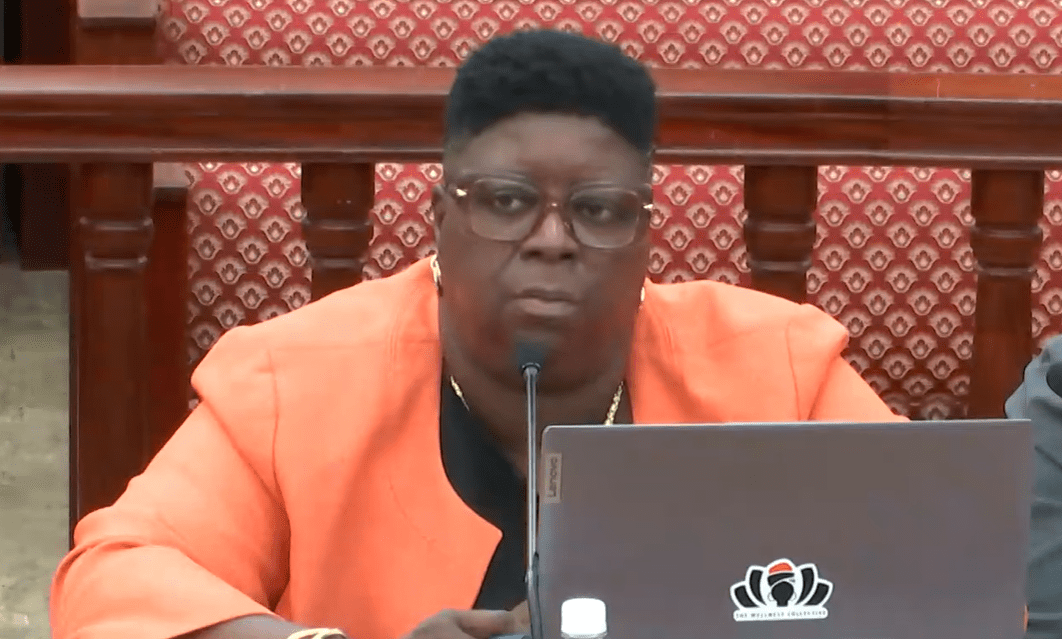
Human Services Commissioner Averil George told the Senate Housing, Transportation and Telecommunications Committee on Wednesday that the latest point-in-time count identified about 306 people experiencing homelessness across the territory, up from 252 counted in 2023. Roughly 241 were unsheltered, while only about 65 were in emergency or transitional shelters.
Officials and service providers said those figures likely undercount “hidden” homelessness, including people sleeping in cars, doubling up with relatives, or cycling between jail, hospitals and temporary living situations.
“Homelessness is not a choice,” George said, citing “the severe shortage of affordable housing, rising living costs, limited wages … untreated mental illness, substance use disorders and long‑standing system gaps.” She noted that her department does not run shelters or housing, but instead handles intake, emergency aid and public benefits such as Medicaid and SNAP, and coordinates referrals to housing agencies and nonprofit providers.

Most emergency and transitional shelters are operated by nonprofit and faith‑based groups, including Catholic Charities, Bethlehem House and Lutheran Social Services. Sandra Thomas Mason of Catholic Charities said facilities are consistently full and increasingly serve as de facto long‑term placement for older residents.
“They end up in our facility for a very, very, very long time,” Mason said, adding that some seniors “couch surf” with relatives or friends and never appear in official counts. She said demand is growing even as nonprofits struggle with delayed government funding and rising costs.
Representatives of the Continuum of Care and the territory’s Interagency Council on Homelessness said emergency beds, transitional housing slots and permanent supportive housing units are almost always full, and that limited affordable stock and landlord reluctance to accept very low‑income tenants have blunted the impact of federal vouchers.
They described the Interagency Council as the intended hub for long‑term planning and system coordination but said it needs stable funding and staffing to move beyond crisis‑driven responses. Dan Derima, Continuum of Care chair and vice chair of the council, urged lawmakers to formalize and fund the body so it can coordinate planning, manage data and better position the territory for additional U.S. Housing and Urban Development Department grants.
Justice and public safety officials described homelessness as deeply intertwined with incarceration and public safety. Wynnie Testamark, director of the Virgin Islands Bureau of Corrections, said some people arrive at jail without housing and leave the same way, increasing the risk of recidivism.
“Every release is a public safety decision,” Testamark said. “When individuals leave our custody without housing, without treatment, without employment pathways and without coordinated support, the risks do not remain within correctional walls. They shift to our neighborhoods, our health care systems, our law enforcement officers, and ultimately to the taxpayers of this territory.”
Testamark linked homelessness to recidivism and strain on public systems. “Repeated incarceration is often driven not solely by criminal behavior, but by unmet housing and behavioral needs,” she said.
She asked lawmakers to create and fund a formal reentry services unit, expand transitional and supportive housing dedicated to people leaving custody, authorize pre‑release enrollment in Medicaid and SNAP, and formalize data‑sharing agreements among corrections, health, human services, labor and housing agencies.
St. Thomas-St. John Police Chief Deborah Hodge said officers regularly respond to welfare checks, disturbances and mental‑health calls involving unhoused residents. “Many calls are not criminal in nature, but instead are rooted in unmet social and health needs,” Hodge said. She said officers receive crisis‑intervention and trauma‑informed policing training and are instructed to de-escalate and connect people to Human Services and nonprofit providers wherever possible.
Committee Chair Sen. Marvin Blyden said nonprofits “fill the gap” in places where government agencies cannot reach and warned that late disbursement of funds to those organizations undermines the territory’s overall response. He and other senators pressed agencies to share data and move more quickly from plans and grant awards to actual units, beds and services.
“Data drives policies, and we are missing data,” Blyden said. “I will implore all agencies and not-for-profit organizations, please … Because if we had the data, [there would be] many questions we would not be asking. We would have already put the policies together, and we would have already moved forward in terms of coming up with solutions.”
Across testimony, officials agreed that the current system is strained: need is rising, shelters have little room, landlord participation in voucher programs remains limited and several housing‑related funding streams have been slow to become bricks‑and‑mortar solutions.
Officials said that long-term fixes will require more affordable and supportive housing, stronger interagency planning, timely funding for nonprofits, and expanded behavioral‑health and reentry services to move the territory beyond crisis‑driven responses.