


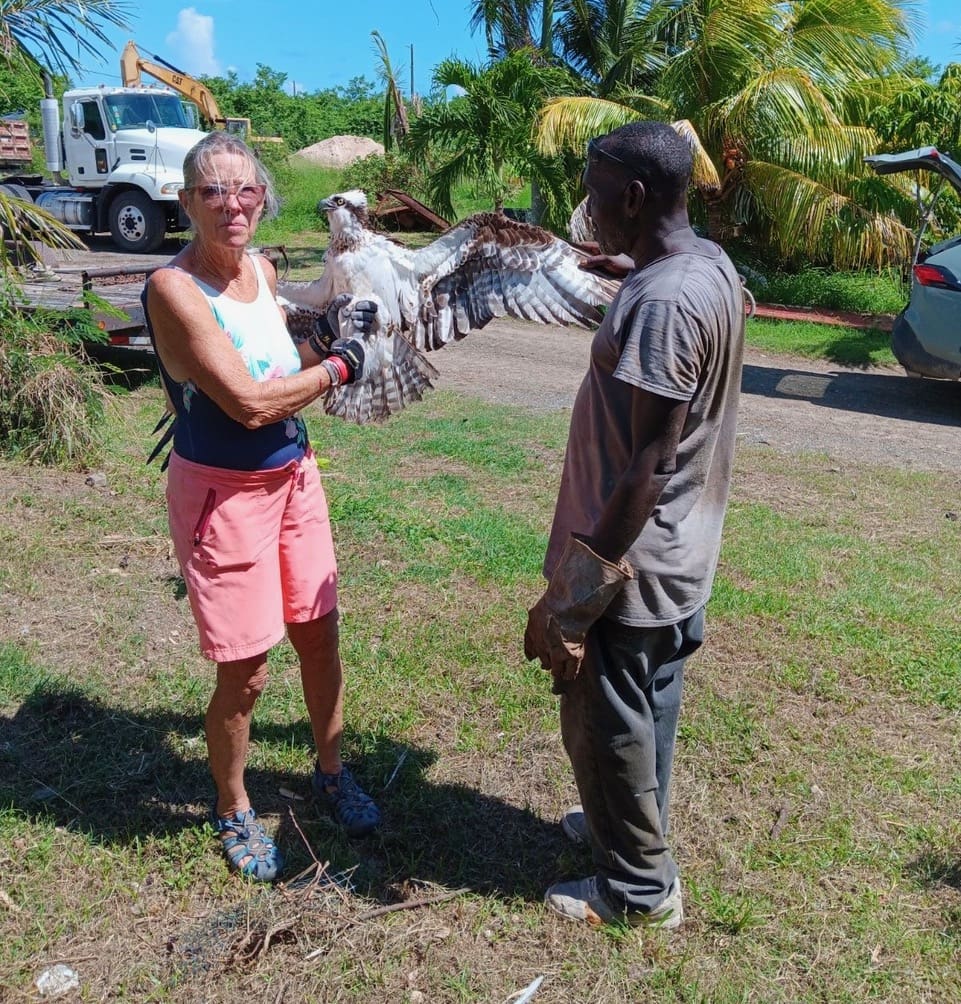
An osprey in dilapidated condition was found on St. Croix on Tuesday, Sept. 4. Gregory Emmanuel, a local man, found what he believed was a big chicken hawk in his yard close to Carlton, about a mile from the beach.
Emmanuel kept the bird overnight. He contacted the St. Croix Animal Welfare Center, which referred him to Toni Lance. He sent Lance a picture, which she recognized as an osprey, a bigger bird than a chicken hawk, which eats fish. He was concerned that the osprey might die.
“The bird had just thrown up possibly some fish parts, so the bird was obviously sick and looked weak to him. He was able to go over and put a pillowcase over it, pick it up and put it in his empty chicken coop.”
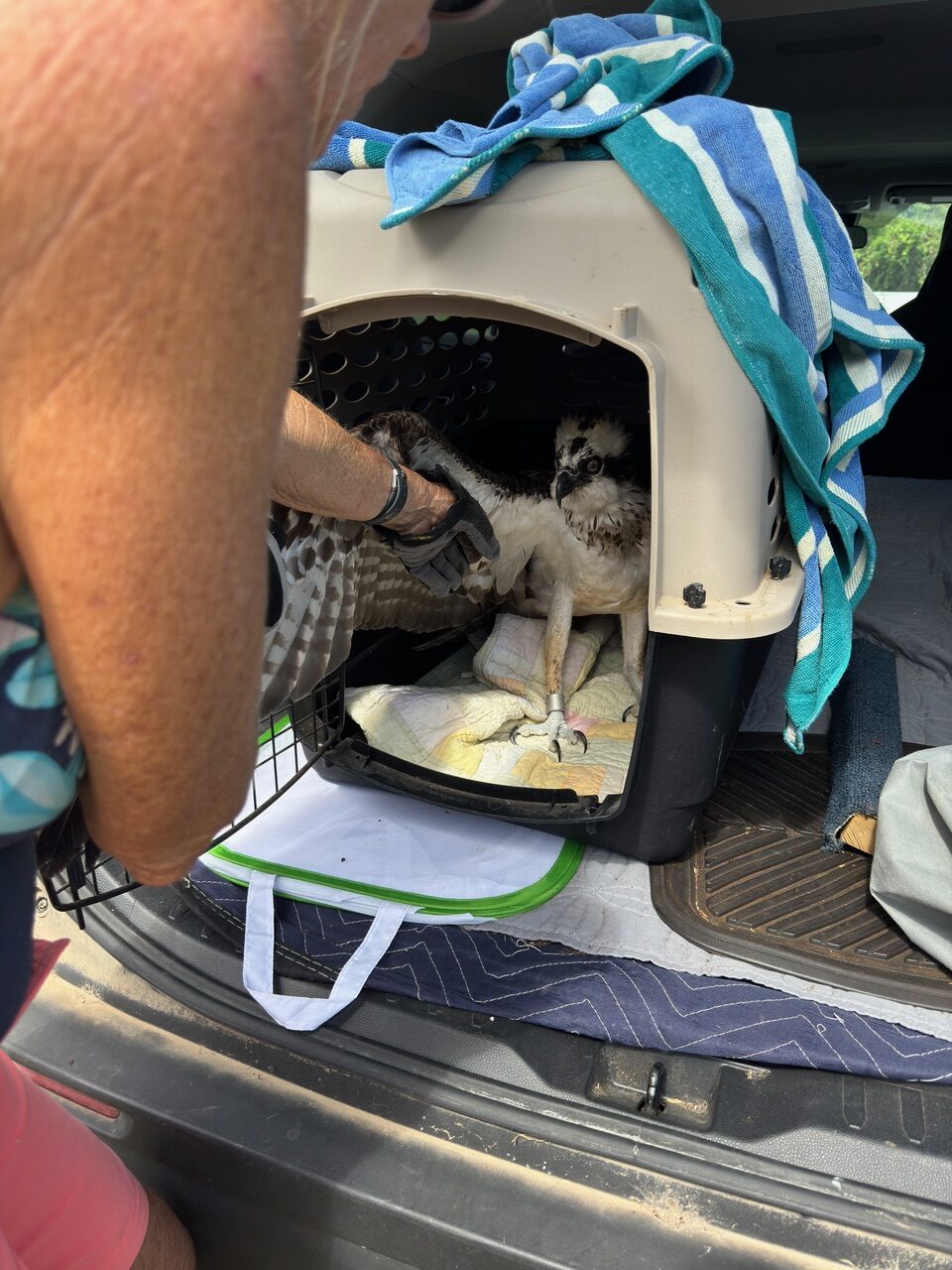
“If Mr. Emmanuel had not picked up the bird, he could have been hit by a car. He could have been eaten by dogs, some bad person might have grabbed him and stuffed him in a cage for the rest of his life, so it was very wonderful that this guy was brave enough to pick up this beautiful bird then call for help,” she continued.

“I happen to have had two other Osprey, they had the exact same thing happen. They had thrown up fish and were neurologically a little mixed up. Maybe the throwing up experience was enough to traumatize his body or maybe there’s a mild amount of toxin. They can get botulism and they do eat rotten fish sometimes, so I assume that’s what it is for him,” Lance said.
Lance drove to Carlton on Wednesday to meet Emmanuel and check the bird. She found the bird looking “very healthy in the cage.” Lance put on gloves but the bird gashed her arm with his long talons. She placed him in a carrier in the back of her vehicle to convey him to the St. Croix Avian Sanctuary.
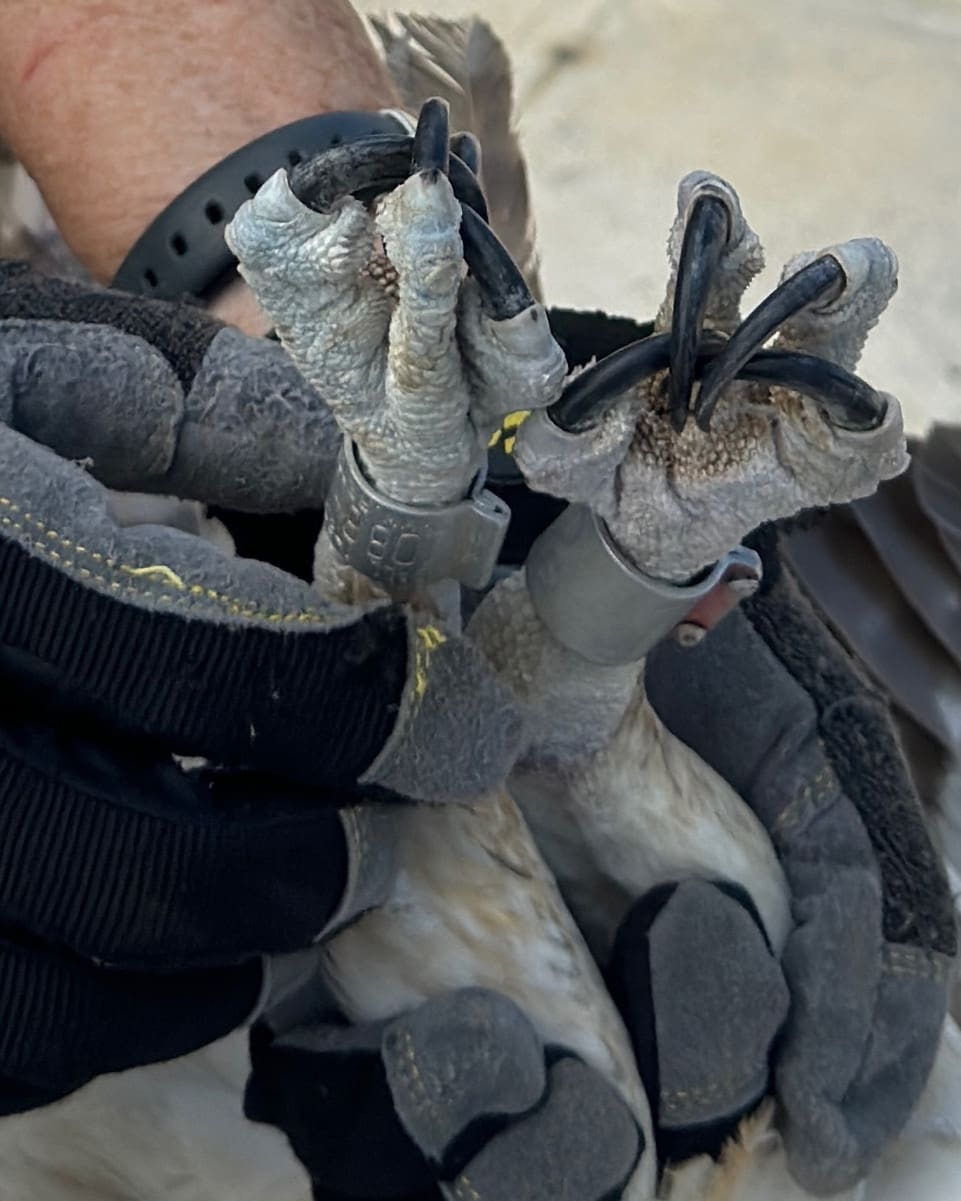
“When I grabbed the bird, I could tell immediately that the bird was a good weight, a nice, big fat osprey in beautiful condition. It had two metal bands on it’s legs.” Lance said. Lance said osprey’s talons are long, rounded and smooth for catching fish. The talons have grooves for holding onto their prey. There are scales up and down, and their legs are set backward, “which keeps them from getting funky legs. Their feet have little rough bumps for holding the fish.”
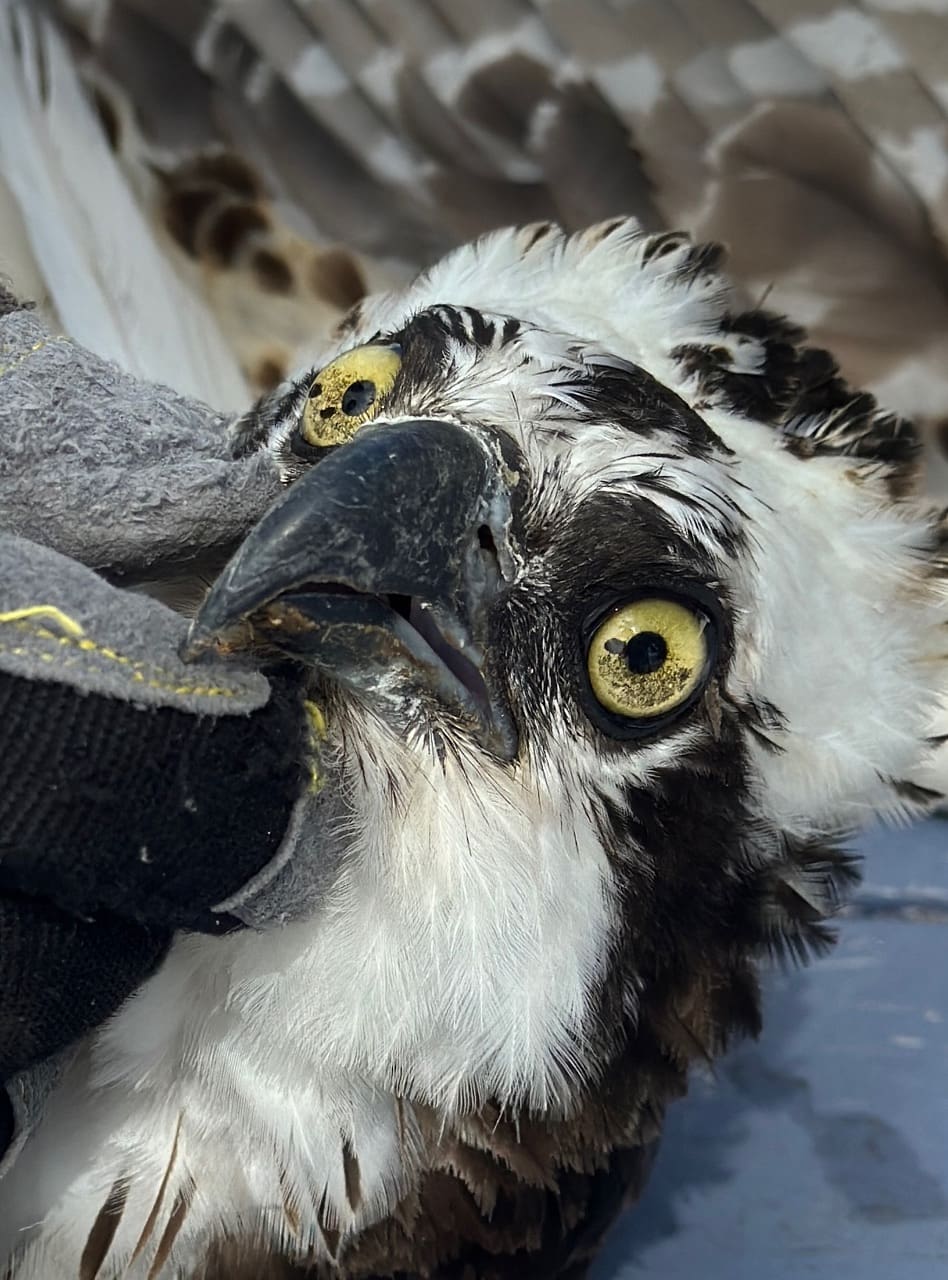
Ospreys’ nostrils close when they dive into the water while hunting. Their eyes have a protective covering called a nictitating membrane that comes across as they dive.
Lance called Lisa Yntema, a local birder, for assistance in obtaining the records for the bird’s bands prior to release. The information was sent to banding experts in the States. They determined that the bird is nine years old and was banded in a nest near Ocean City, New Jersey, along with several nest mates. This bird has gone back and forth from the States to the Caribbean at least eight times.
According to Lance, ospreys live between 25 and 30 years. They are not native to St. Croix and not common. Ospreys migrate south yearly from New York, New Jersey, Canada and along the eastern seaboard. The birds breed in North America then start their annual migration in August and September to the Caribbean and South America, beginning their return north around March.
“They’re not native birds to St. Croix and they’re not really common. As a bird watcher, I see them during the year but I get excited if I see two. Most people don’t even see a bird like this.” Lance continued, “You rarely see these birds close to the land, they’re usually over the water or they’re sitting on a dead branch or something kind of near the water maybe a telephone pole.” Ospreys are bird of prey with a diet of fish. They weigh three to four pounds and can catch a fish as big as 4.5 pounds.
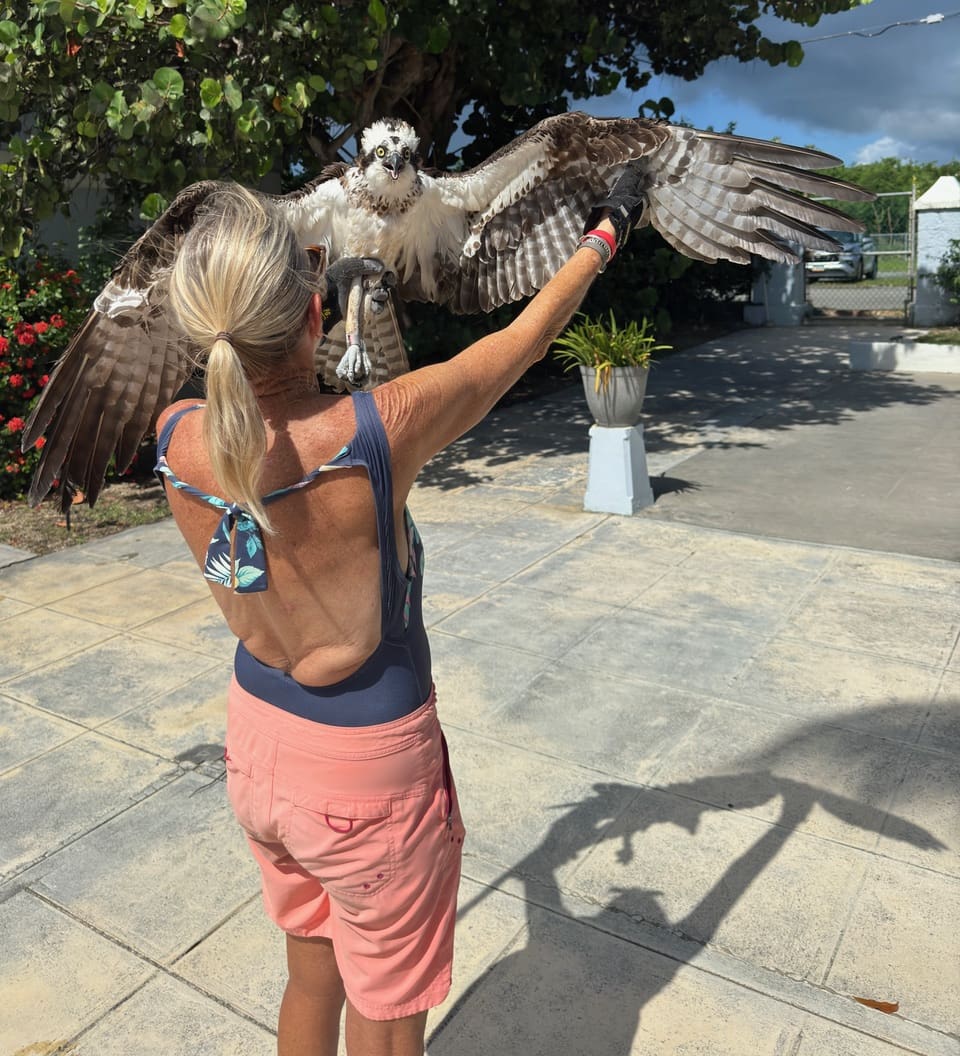
Water was offered to the bird as he was readied for release. His feathers were checked in front and back for any damage that might impede his ability to fly.
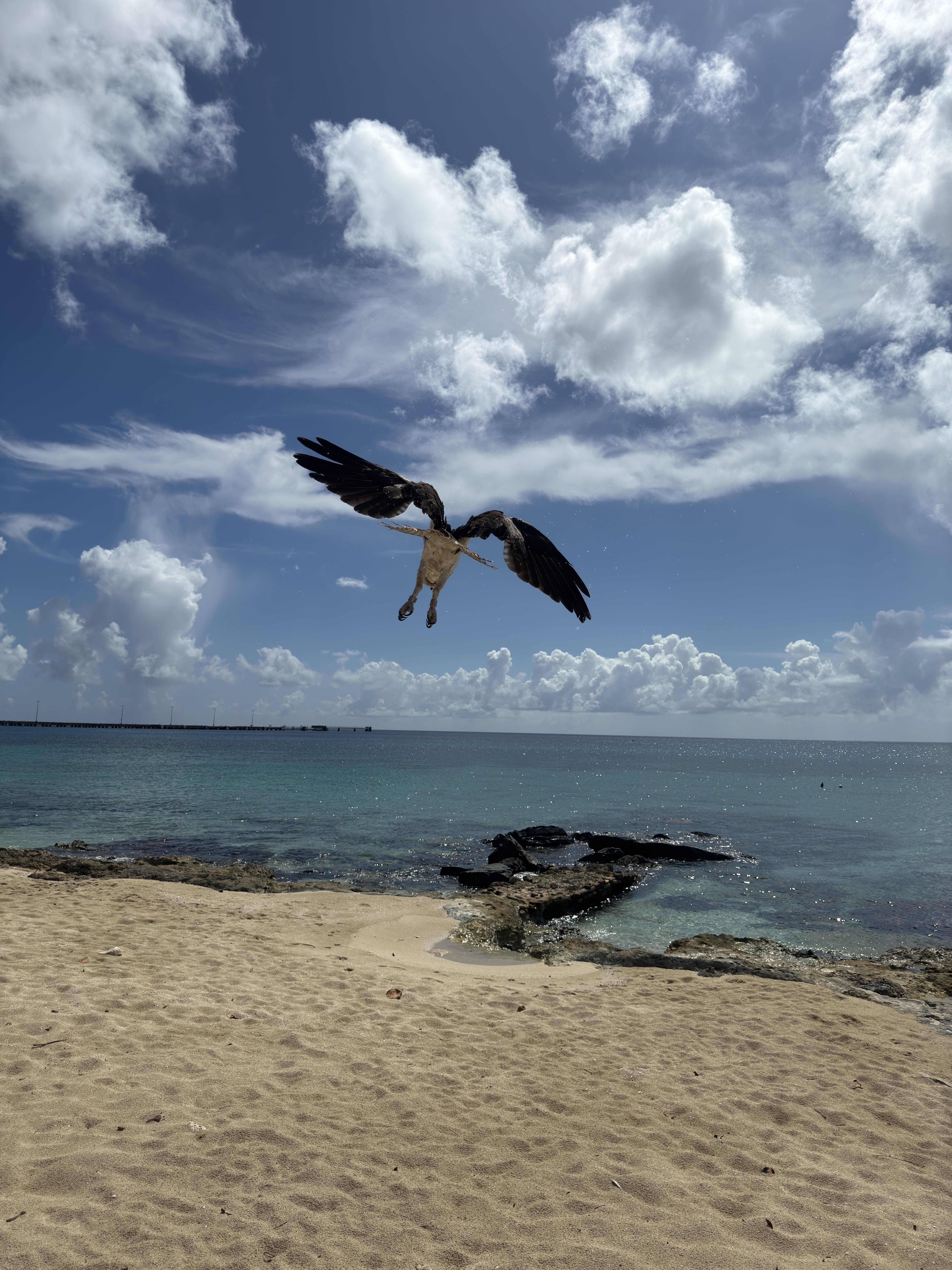
At last, Lance walked him down to the edge of the beach and he flew to freedom.
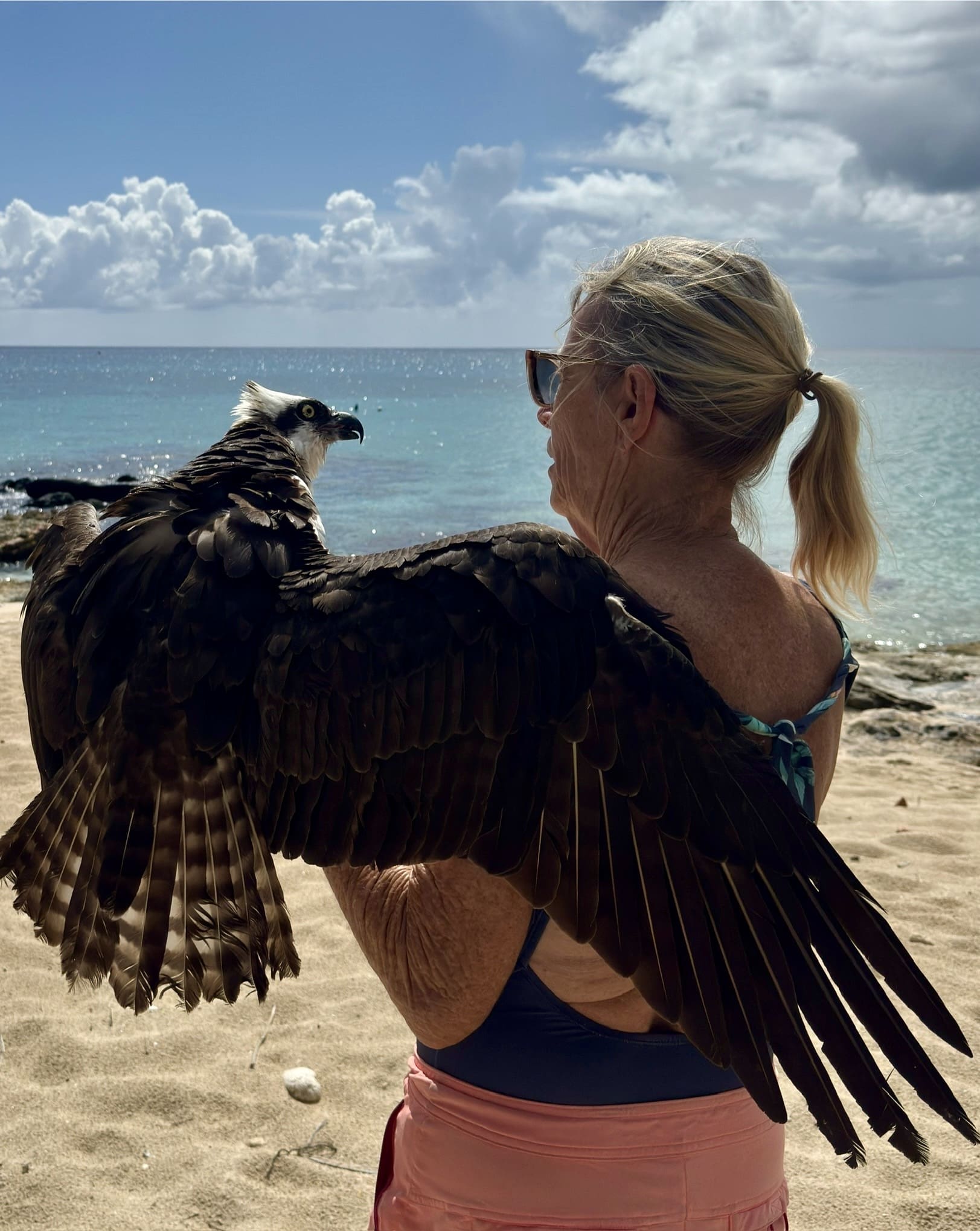
Lance has lived on St. Croix since 1980, rehabilitating birds for the last 44 years. She is licensed as a rehabilitator by the Department of Natural Resources and Fish and Wildlife therefore is allowed to handle birds such as ospreys, falcons, pelicans, kestrels, red-tailed hawks, and many others. Over the years, more than 700 birds have been cared for and rehabilitated for release.
The St. Croix Avian Sanctuary is a 501C3 non-profit located on the south shore. Lance can be contacted at 340-332-6034 for assistance with any type of bird.